In markets
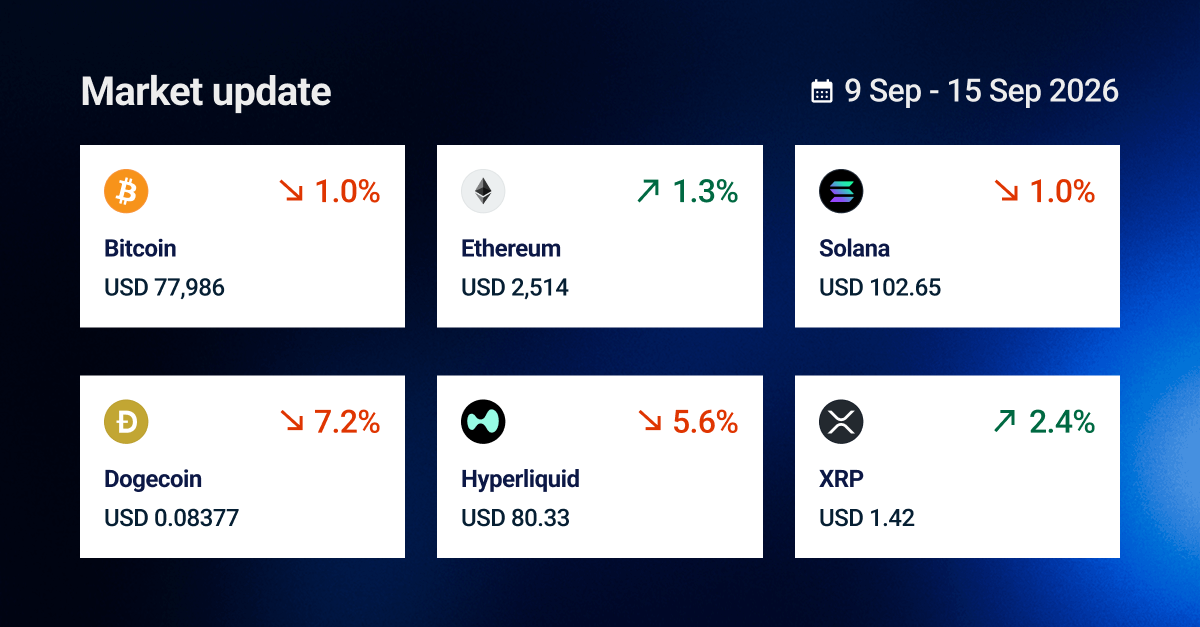
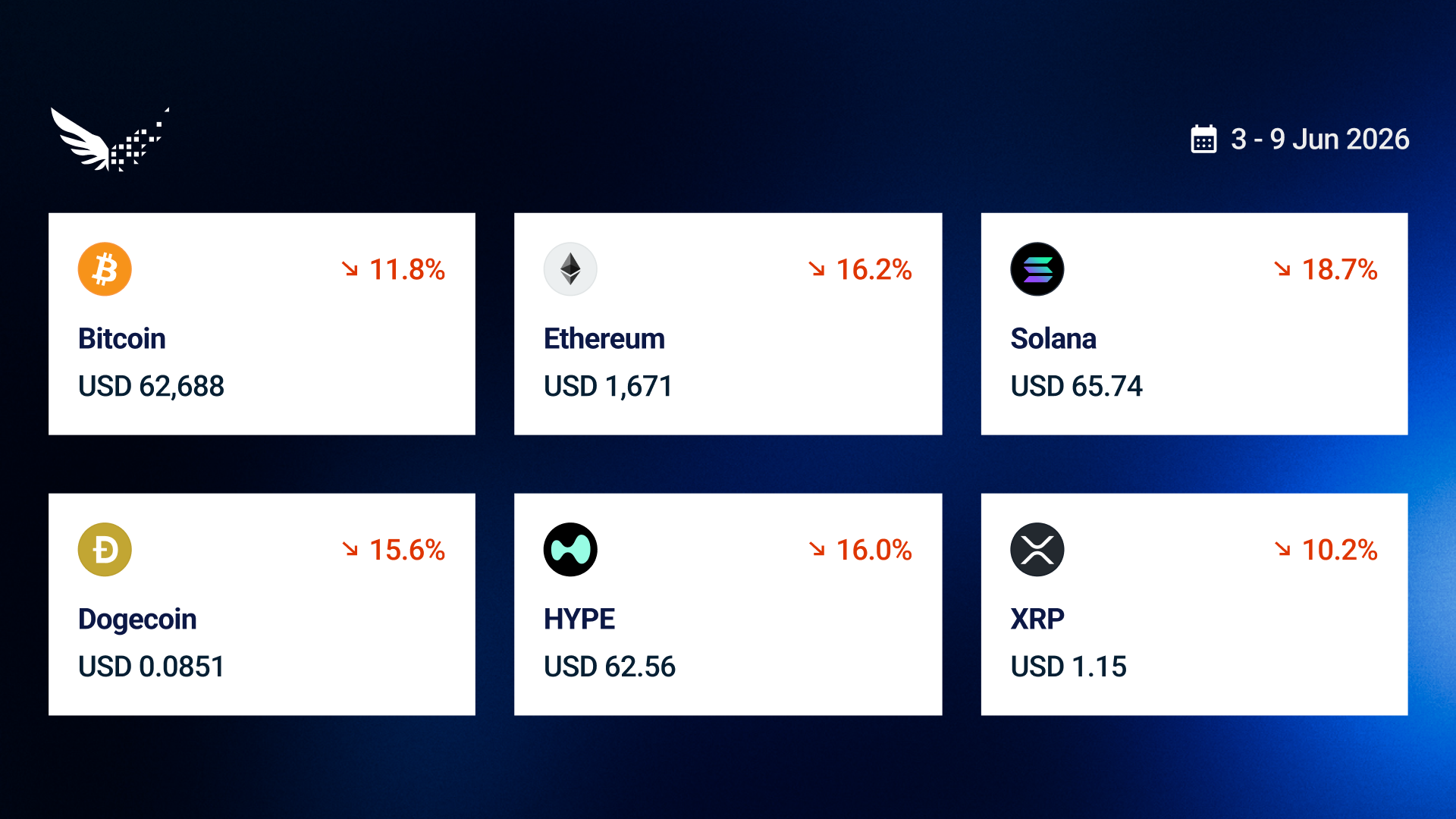
The latest crypto crash has arrived in dramatic fashion, with Bitcoin tumbling US$10K (A$14.2K) in two days and falling below the 200-week moving average for the first time since 2022. It has rarely traded below the 200WMA in its entire history. Just two weeks ago, Bitcoin was trading around US$74K (A$105K) but plunged to US$60K (A$85K), before recovering to its current price of around US$63.3K (A$89,965). At the time of writing, Bitcoin was down 10.8% for the week and 21.5% for the month. Trillions were also wiped from the stock markets late last week, after a strong US jobs report increased the likelihood of interest rate rises to curb inflation. An annoyed President Trump posted, “stocks should go up, not down…growth does not mean inflation!”
This week’s crash was reportedly the most severe since the yen carry trade unwind in 2024, but only the 13th worst overall. Many pointed to Strategy’s 32 Bitcoin sale as the catalyst for the plunge, although CEO Michael Saylor argued that it’s due to capital flowing out of other assets to prepare for US$400 billion (A$568B) in AI company IPO’s, including SpaceX’s IPO this week (AI stocks have also been almost entirely responsible for the S&P 500’s moves since February). Cycle theory proponents argue that Bitcoin is behaving as it always does, while conspiracy theorists suggest (without evidence) that it’s TradFi manipulation aimed at getting better prices before the Clarity Act passes.
Ethereum fell so much that it briefly lost the number 2 spot in the top ten to USDT. It is currently down 16.2% for the week and trading around US$1,695 (A$2,377), which is well below the 200WMA. Solana lost 18.7% and is trading at three-year lows; XRP was down 10.%; Dogecoin fell, while Cardano suffered a wipeout of 27.3%. The Crypto Fear and Greed Index is at 10, or extreme fear, which is in the bottom 1% of historical readings and often a good counter-indicator.
From the OTC desk
Macro headwinds and liquidity rotation
Significant macroeconomic factors and liquidity concerns have weighed on cryptocurrency markets. Equities have pulled back, with the S&P 500 retreating from highs of 7,600 to 7,400 since the start of June, while the KOSPI suffered two consecutive sharp drops from 8,800 to 7,400 over the week. Confidence in Bitcoin has also weakened following Strategy’s first ever sale of 32 BTC since 2022, which has drawn in short sellers looking to profit from a potential unwind of their massive position. STRC traded below par to lows of 93 before recovering to near 97. Liquidity is also likely to rotate toward three anticipated trillion-dollar IPOs in SpaceX, Anthropic, and OpenAI, with SpaceX debuting on 12 June and the latter two filing for Q4 2026 listings. It is worth remembering, though, that sentiment tends to be darkest at the trough.
Federal Reserve uncertainty and a potential contrarian catalyst
Kevin Warsh was sworn in as Federal Reserve Chairman in late May, and his first FOMC meeting on 17 June has amplified fears of a hawkish policy shift. Markets have moved aggressively in one direction: a 42.7% probability of a 25 bps hike, 23.9% for a 50 bps hike, and just 27% for no change. A month ago, 75.1% of the probability was at ‘no change’. That is a significant repricing, with the view here being that expectations are already priced for the worst, and anything short of the most aggressive outcome could trigger a sharp move higher in risk assets. Positioning supports this: shorts have been dominant across Binance, OKX, and Bybit in recent weeks. A crowded short base meeting a less-than-feared FOMC outcome is a potential squeeze setup, and one worth watching closely into 17 June.
OTC desk activity
- Two-way flow over the week, some interest from the market to buy the dip, especially for altcoins
- Seeing more stablecoin onramps overall. Tether prices have been notably choppy for the week.
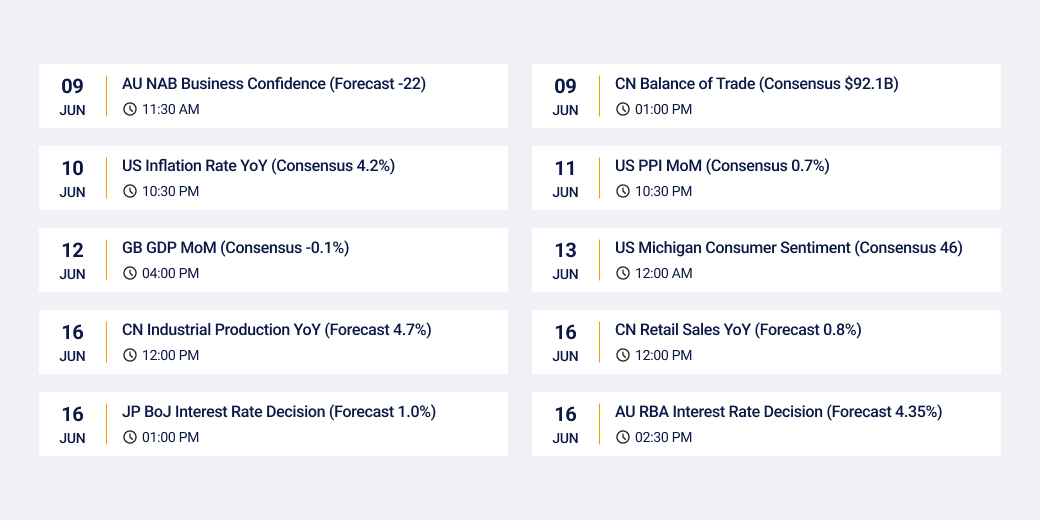
Key Economic Calendar Events (AEST)
In headlines
Have we hit the bottom?
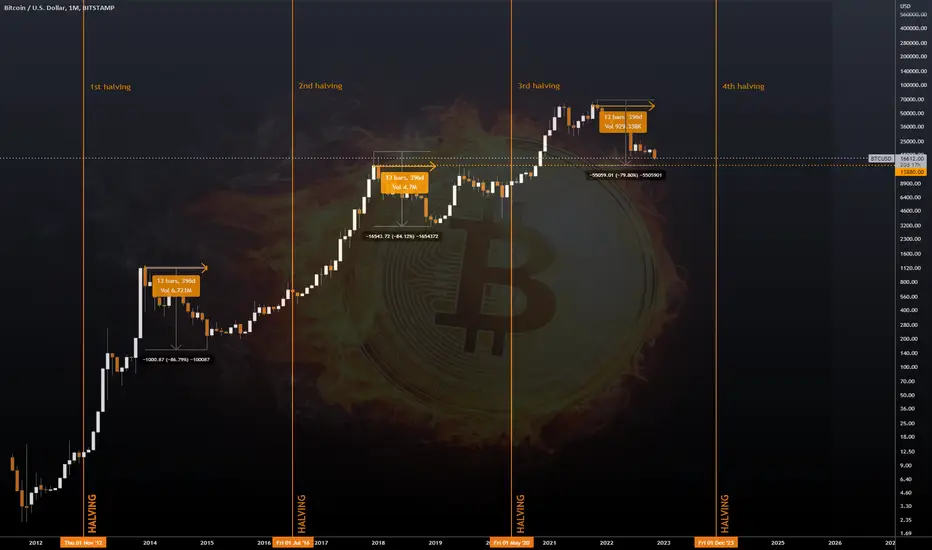
A big bone of contention is whether Bitcoin has hit bottom, or if there’s further to fall. Proponents of the four-year cycle theory say this historical evidence suggests Bitcoin will keep falling for months to come. The cycle theory correctly predicted the top in October. Bitcoin also hit a new all-time high ahead of the halving, suggesting the cycle could still play out differently. Other factors to consider are that Bitcoin has never bottomed without falling below the realised price, which is currently US$53.6K (A$76.1K). Quant trader KillerXBT points out that just 47.91% of the Bitcoin supply is in profit, and the metric has bottomed out between 40% to 50% in previous cycles. “Most people don’t realise how close we are to the bottom,” he argued. Analyst TFTC said that “every Bitcoin bear market bottom is higher than the previous cycle’s top” and noted that the Checkonchain power law model puts Bitcoin in the bottom 4% of its historical level. YouTuber Gerla says that timing the exact bottom is impossible, so the best strategy is to dollar-cost average. Research firm Brownstone says that not buying this dip “will be remembered as a mistake.” Median returns for buying Bitcoin at a 50% discount to the ATH are 124% (1 year), 414% (2 years) and 826% (3 years).
Bitcoin price supported by mining
Jim Ferraioli, Director of Digital Currencies Research and Strategy at Charles Schwab, argues that Bitcoin’s price floor is tied to the cost of mining for the most efficient miners, currently around US$60K (A$85.2K) per Bitcoin. The average cost of production is US$85,604 (A$121,589), meaning the network as a whole is currently operating at a loss. This configuration typically precedes recoveries.
Strategy to sell more Bitcoin?
Strategy’s symbolic sale of 32 Bitcoin caught everyone’s attention, but it has subsequently bought 1,550 Bitcoin, which is 48X more than it sold. If Strategy’s small Bitcoin sale really did help drive the price decline, it means the company saved a lot of money on its larger buy. Analyst Dave Weisberger says that’s why he believes, “they’re gonna do it again and again and again until the market is fully inoculated against it.” Strategy is not in danger of collapse, despite an unrealised loss of around US$12.27 billion (A$17.4K) on its Bitcoin holdings. However, there is some concern that it needs to pay out US$1.7 billion (A$2.41B) in dividends each year. A fun fact unearthed this week: MicroStrategy’s price collapse in 2000 played a key role in the bursting of the dotcom bubble.
Bitmine also doubles down
Tom Lee’s Bitmine is down around US$10.35 billion (A$14.7B) on its Ether holdings. It also doubled down and bought another 126,971 ETH this week, worth twice as much in USD terms as Strategy’s Bitcoin buy. Bitmine is also following Strategy’s playbook, announcing preferred stock that will pay a 9.5% dividend. Unlike Strategy, however, it already earns 10X more from staking ETH than it pays in dividends. Joe Lubin’s Sharplink (another ETH treasury company) is down US$1.7 billion (A$2.41B) at current prices.

Ethereum is down bad
ETH has lost more than a quarter of its value over the past month and touched US$1,500 (A$2K) during the crash, the lowest price since April 2025. Crypto influencer Toast points out that ETH hit a new all-time high just four months after hitting that level in 2025. Around 32.3% of the supply is staked, and there’s been no rush for the exit after the price collapse, with 3 million ETH waiting to be staked and just 5K waiting to exit. Ethereum is also the most widely held asset in crypto, with 3.2 times as many holders as Bitcoin and 24 times as many as XRP. That may help explain why so many more people complain about ETH’s price.
TradFi sets up a tokenised deposit network
JPMorgan, Citi and a number of other big banks have joined forces to launch a tokenised deposit network in the first half of 2027. The network will connect digital asset infrastructure with a traditional payment network operated by The Clearing House. The scheme appears to be an attempt to counter the convenience of stablecoins by offering some of the same speed and programmability inside regular banking channels.
Hong Kong’s high-powered tokenised bond group
The Hong Kong Monetary Authority (HKMA) has established a Tokenised Bond Expert Group, comprising 21 banks, law firms, market infrastructure providers, and crypto companies, to support the development of the city’s tokenised bond market. HSBC, Standard Chartered, UBS, Bank of China (Hong Kong), and JPMorgan Securities are all involved from TradFi, along with Ant Digital and HashKey Group from the crypto space. HashKey said in a statement that the expert group will help develop rules, frameworks and infrastructure to help advance the next phase of market development.
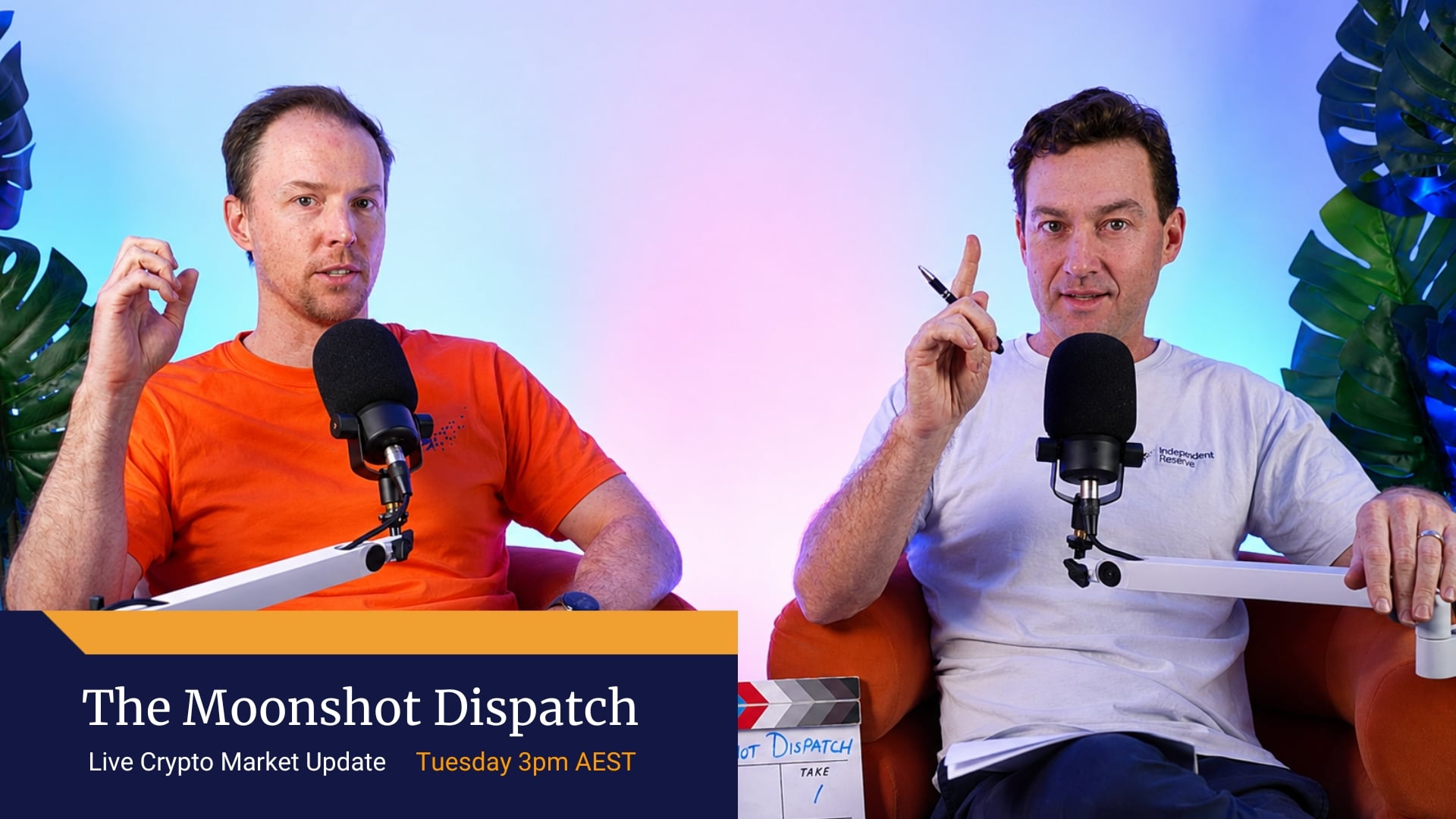
The Moonshot Dispatch
Join us every Tuesday at 3 pm (AEST) as we cover the latest crypto news, price movements and all the Bitcoin banter you may have missed. Tune in weekly on Twitter/X, YouTube, Instagram & TikTok.
Until next week, happy trading!