Market insights
‘Uptober’ failed to arrive for the second year in a row, with Bitcoin declining by 7.3% over the month. Historically, 10 of the past 13 Octobers have seen a median gain of 15.4%.
Instead, crypto suffered through ‘Hacktober’, as Tether’s Paolo Ardoino dubbed it, with US$6.3 billion lost from Binance and four subsequent hacks in the days since. Even Chainalysis got hacked.
The Bitcoin price has held up well, considering, with BTC closing above its 50-week moving average for a seventh week. Capriole founder Charles Edwards called its performance “nothing short of remarkable … the price reaction can only be interpreted as bullish so far.”
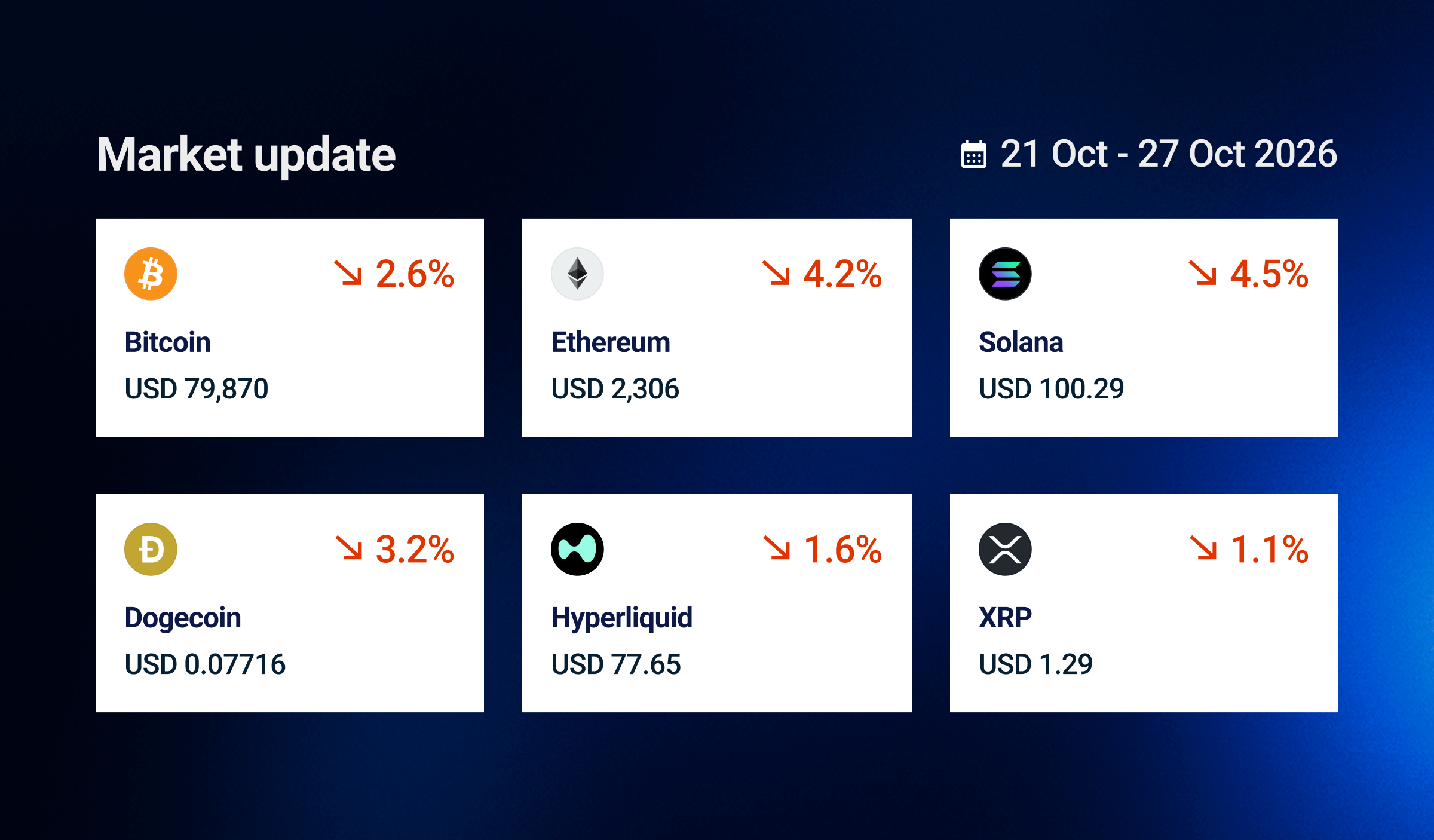
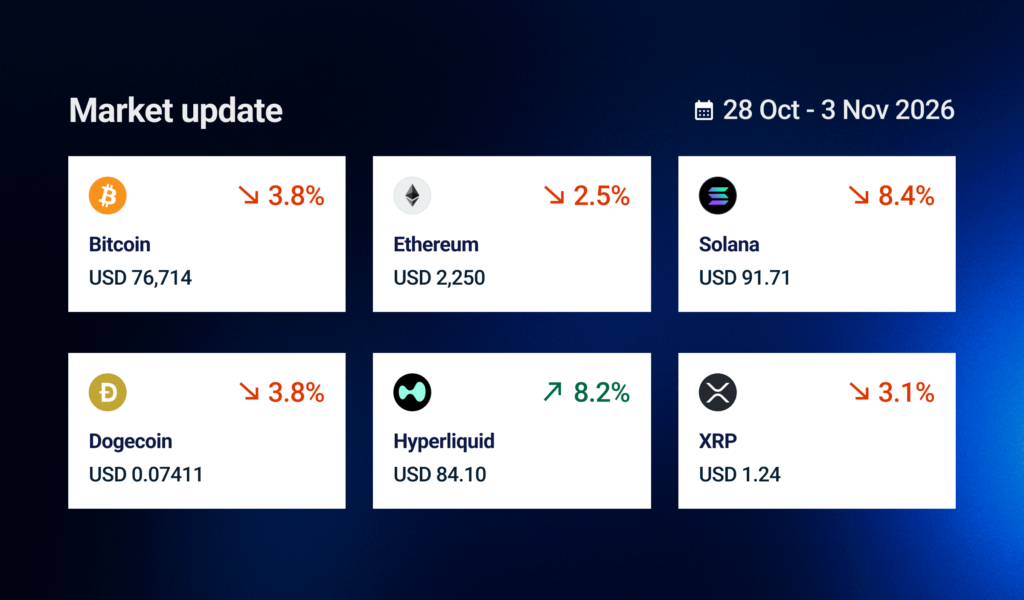
Bitcoin finishes the week down 3.8% to trade around US$76,714, while Ethereum slid 2.5% to US$2,250. XRP declined 3.1%, Solana fell 8.4%, HYPE gained 8.2% (after Intercontinental Exchange announced it intends to launch Hyperliquid’s perps) and Dogecoin lost 4.1%.
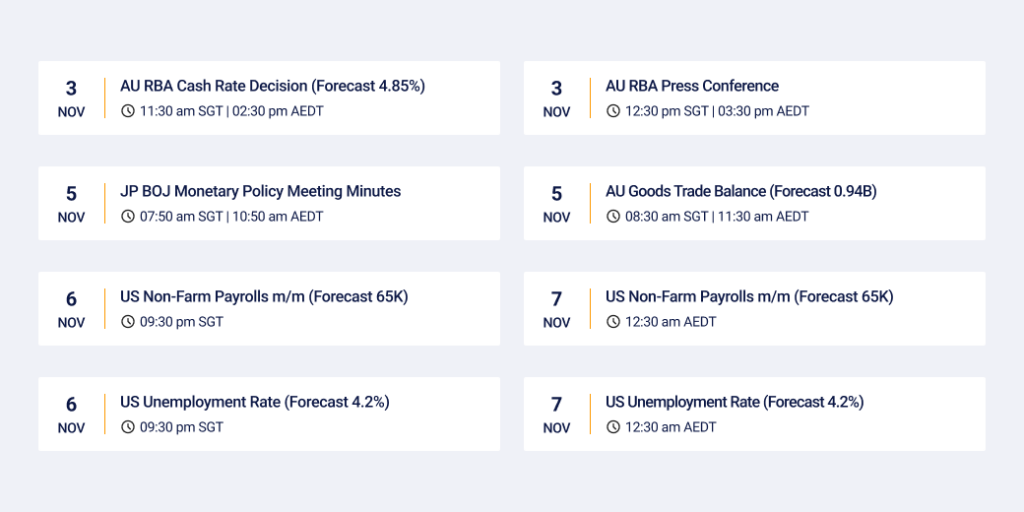
Meanwhile, AI-linked stocks, including Amazon, Alphabet and Intel, sold off after earnings reports, amid fears that revenue may not justify the huge capex. There are also conflicting reports about whether the US is about to escalate the Iran war following this week’s midterms, or if a deal to end the war is close. The RBA is expected to hike interest rates today, but the US Fed has held off. US manufacturing PMI jumped to 55.5 in October for the tenth straight monthly rise.
The Crypto Fear and Greed Index is at 37, or Fear.
Key economic calendar events
In headlines
The biggest hack in history
The FBI pinned the blame for last week’s US$6.3 billion hack of Binance on the TraderTraitor group, which is part of North Korea’s Lazarus Group. The hackers now hold more Bitcoin than Coinbase and more ETH than the Ethereum Foundation
President Donald Trump said if the reports are true, “we’ll talk to North Korea about it.”
Binance has replenished 95% of the stolen crypto and reopened withdrawals over the weekend, with no apparent surge in withdrawal requests.
Elliptic estimates that around US$2.85 billion of the stolen assets, or 44%, were quickly frozen by stablecoin issuers or L2s, with the Secret Service helping to identify linked addresses.
The hackers still managed to convert around US$786 million of stablecoins to TRX and ETH, but their cross-chain platform of choice, THORChain, was unavailable due to an unrelated protocol halt. The FBI warned THORNode operators against processing the funds, but history suggests they’ll ignore the request. Instead of quickly dumping the ill-gotten Bitcoin and Ethereum, Elliptic believes there will be a months-long cash out via OTC brokers.
Crypto stocks and hacks
In the wake of the hack, crypto stocks, including Circle, Coinbase, and Strategy, sold off, and Nasdaq-listed firm Next Technology Holding announced it will sell its 5,833 Bitcoin Treasury, citing increased risks. Morgan Stanley reduced its Coinbase stock price target from $258 down to $120, citing both the hack and last week’s earnings report. COIN is currently at a 970-day low. However, BTIG maintained its price target on the thesis that Coinbase’s security will make it more attractive. The firm custodies the vast majority of Bitcoin from the spot ETFs, and about 12.5% of the entire crypto market cap, so there’s an awful lot riding on how good its security systems are.
Google gets into crypto security
By coincidence, Google is developing a security system that enables banks to safely custody and transfer crypto. Google Multi-Party Compute is in private preview with major institutions right now, and it slices up and distributes private keys to ensure there isn’t a single point of failure. Coinbase reportedly uses a different version of MPC and splits funds between almost 70 million addresses.

AI hack apocalypse
There’s no evidence that AI was used to exploit Binance, and Elliptic says the hackers have been using ordinary automation to launder the funds. But fears of AI-driven attacks on crypto are growing, particularly after Mercado Bitcoin was hacked today for US$40 million, ZachXBT reported an unnamed EU entity lost US$106 million, and BTCPay and Name.com have also lost funds. Blockchain analysis firm Chainalysis was hacked last week, but said the incident was not connected to the Binance attack. The majority of the 129 major cybersecurity incidents during Black October did not involve crypto.

Political reaction
Wyoming Senator Cynthia Lummis used the Binance hack as a reason the Senate should have passed the Clarity Act, stating it “would have given crypto firms legal cover to freeze suspicious transactions the instant law enforcement calls.” The Digital Chamber’s CEO, Cody Carbone, wrote to the leaders of both parties in the US legislature, urging them to immediately pass legislation to give the CFTC spot market authority over US exchanges, set baseline security and operational standards, and safeguard customer assets. “The question is not whether a major attack will reach a U.S. platform. It is whether that platform will be operating under federal standards to prevent harm to U.S. consumers when it does.”
$10K limit to Aussie crypto exchange transfers
Three of the four big banks in Australia now impose a strict A$10,000 limit on customers sending money to crypto exchanges. Westpac was the latest to make the move, but News.com.au reports Commonwealth Bank and NAB impose the same limit, while standard ANZ accounts do not.
Trezor infected, Singapore police warn of Ledger incidents
A tampered Trezor Safe 5 has been reported in CryptoBilis’s supply chain. The reseller is linked to almost US$100M in thefts involving tampered Ledgers. Trezor said no funds have been lost, but warned anyone who has bought a Trezor from the reseller since March to shift funds to a new wallet pronto. Meanwhile, Singapore police have warned the public about tampered Ledgers after two victims lost a combined US$ 2.61 million since September 10.
50 companies reject stock tokenisation plan
As of Monday, 50 companies (out of 62) have objected to their shares being tokenised by the new joint venture between OKX and ICE, the parent company of the NYSE. Crypto in America reports that competitor Nasdaq might be muddying the waters, with sources claiming Nasdaq had convinced some companies to hold off. “Nasdaq is definitely partly behind this,” one exec said.
Until next week, Happy Trading!