Market insights
After slowly rising throughout the week, Bitcoin took a dive earlier today as new signs emerged that the Strait of Hormuz won’t be reopening any time soon. The Japanese yen has also seen a sharp sell-off despite interventions, raising fears of more severe economic ramifications for Japan and the US.
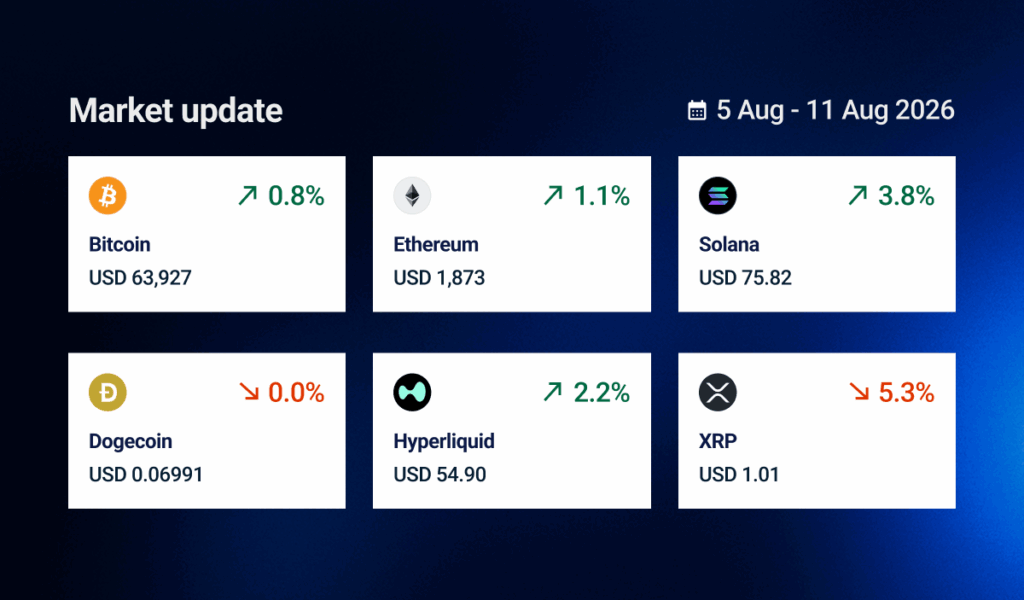
Bitcoin ended back where it began at the start of the week, trading around US$63,927. Ethereum also ended the week flat at US$1,873, while XRP fell 5.3%. Solana rose 3.8% (appearing to benefit from discussions about increasing the burn and reducing inflation) while Hyperliquid gained 2.2% and Dogecoin fell slightly.
Crypto Banter founder Ran Neuner pointed out that Bitcoin has now spent six months trading in a range around US$64K. “When this resolves after such a long accumulation, expect a MASSIVE move,” he predicted.
There are signs this may be starting to happen, with CryptoQuant’s Ki Young Ju noting that hedge funds on CME have “flipped net long BTC futures”, which is rare as the basis trade normally keeps them structurally short. “The suits are betting on upside,” he said.
Another important indicator is that “bad news has stopped moving the market“, according to Bitwise CIO Matt Houghan. “I think we end the year significantly higher on Bitcoin,” he said.
The Crypto Fear and Greed Index is at 30, or Fear.
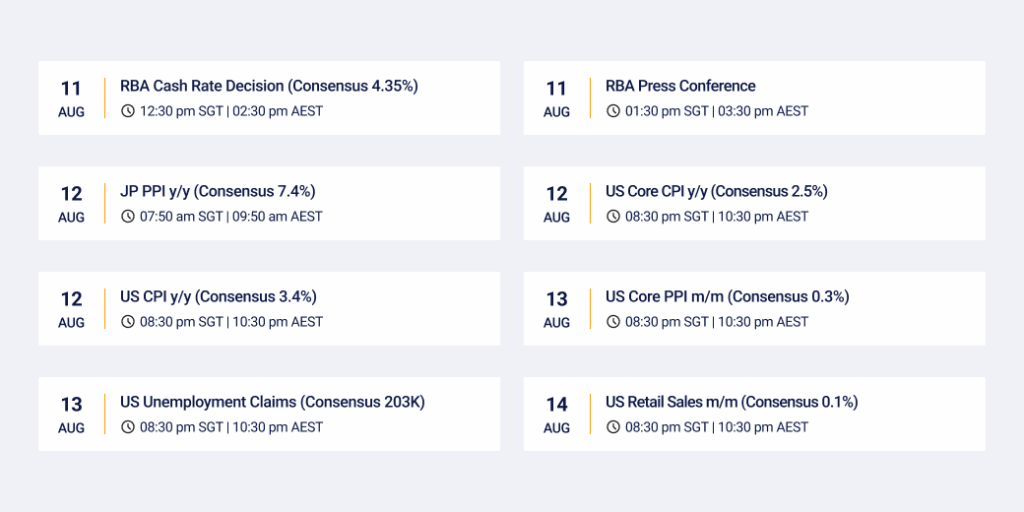
Key economic calendar events
In headlines
ETFs see best week in months
The Bitcoin ETFs took in US$853.5 million last week, for the strongest showing since April and the third best week since the October 10 crash. Bloomberg ETF analyst Eric Balchunas suggested some of those funds may be from hardware wallet users who have lost faith in self-custody following the Coldcard thefts. In a neat piece of timing, BlackRock has just cut its Bitcoin ETF in-kind threshold to US$1 million from US$25 million, meaning that hodlers with more than US$1M in Bitcoin can move funds from a wallet to institutional custody without incurring capital gains tax, according to Altcoin Daily. In other ETF news, the Ether ETFs took in US$243.7 million, and Grayscale has just withdrawn its applications for Cardano, Hedera and Polkadot ETFs.
CLARITY will get a vote in mid-September
Despite hopes of a last-minute deal or forcing Senators to stay behind, the US Senate went into recess last week without a vote on CLARITY. Senate Majority Leader John Thune has now scheduled the key procedural vote for September 15. Invoking cloture to progress the bill requires 60 votes, meaning negotiations in the intervening period will be crucial to getting it over the line. A dozen Democrats have indicated some willingness to vote yes if their demands are met, but a group of Republicans are now signalling opposition due to their longstanding relationships with smaller banks. The White House is yet to respond to an ethics counterproposal that would force Trump to divest from his crypto businesses, and Galaxy’s Mike Novogratz fears that “Trump doesn’t want this to pass, because he wants to be able to say, it’s the Democrats’ fault.” Trump Media scrapped plans for a CRO token accumulation company this week. Polymarket puts the odds of CLARITY passing at 25%, meaning the vote may end up as a record of which Senators the Crypto Super PACs will campaign for, or against, in the midterm elections.
Thailand scraps CGT as Russia passes crypto laws
Thailand has introduced 0% capital gains tax on Bitcoin and crypto sales made via Thai SEC-licensed exchanges. The exemption will be in place for five years. Meanwhile, Russian President Vladimir Putin has signed into law a comprehensive legal framework governing digital currencies, exchanges, custody providers, mining, and investors that goes into effect on September 1. It legalises crypto for international trade via approved exchanges, but crypto payments inside Russia are prohibited, and regular people are only able to buy less than approx. US$4000 through an approved intermediary each year.
Thousands of critical vulnerabilities identified
Following the Coldcard wallet thefts, the volunteer Bitcoin Red Team has been scanning the code of hundreds of Bitcoin projects using AI to look for vulnerabilities before hackers can exploit them. To date, they’ve found 7,958 issues, including 168 critical bugs and 1,120 high-severity issues. Threats seem to be increasing by the day: Bitcoin wallets connected to the BTCPay Server on the Lightning Network were drained this week, and Coldcard users trying to flee to Trezor found the top ad result on Google was a phishing site.
BIP-110 fails, long live BIP-110
The controversial BIP-110 Bitcoin soft fork failed on the weekend, splitting off into a new chain that produced just two blocks before stalling. The proposal aimed to prohibit non-financial data like Ordinals inscriptions on the blockchain, but opponents saw it as censorship. Major proponent Luke Dashjr was subsequently removed as a BIP editor, and he’s announced plans for a Bitcoin hard fork using a new proof of work algorithm and potentially smaller blocks. Bitcoin holders usually receive equivalent coins in a fork.
Ethereum EIP
The percentage of the Ethereum supply staked has skyrocketed past 34% this year. But after a certain point, the security benefits from additional stake become minimal, and researchers worry that it removes real ETH from circulation and increases the role of liquid staking tokens. A proposed EIP-8363 staking overhaul would progressively cut issuance to 0% when 50% of the supply is staked. There’s been a fierce backlash with critics claiming it will hurt DeFi, decentralisation, and institutional adoption. Meanwhile, creator Vitalik Buterin has once again updated the Ethereum roadmap with the latest quantum secure signatures and aggregation techniques, increased privacy protections, and native rollups, which effectively bring back sharding as a way to scale Ethereum while remaining decentralised.

Asian crypto hubs to benefit from CLARITY delay
Singapore and Hong Kong could be the big winners from the US Senate’s delay in passing the CLARITY Act. First Digital founder and CEO Vincent Chok said the delay could give them an advantage in attracting capital and talent as uncertainty weighs on institutional adoption in the US. “For Asia, this delay gives regional financial hubs like Hong Kong and Singapore additional time to demonstrate that clear regulation can coexist with innovation,” he said.
APAC on-chain volume grows 68%
On-chain transaction volume across the Asia-Pacific region grew roughly 68% year-on-year to US$2.36 trillion, according to a new report from Hashed Open Research and SCBX. The report split the six largest crypto economies in the region into two groups. Offensive players include Singapore, Thailand and Malaysia, which are building local stablecoins and tokenised deposit markets. Defensive players include Vietnam, Indonesia and the Philippines and are working to bring existing informal USD stablecoin usage under regulation.
Until next week, happy trading.