In markets
The announcement of a two-week ceasefire between the US and Iran last week gave crypto markets a much-needed boost of confidence. Despite the subsequent failure of lengthy negotiations to reach a deal, Bitcoin and Ethereum both trended up significantly overnight. The just-implemented US blockade of the Strait of Hormuz could see a resumption of hostilities at any moment. The war has contributed to the University of Michigan index of US consumer sentiment falling to the lowest level recorded since 1952.
There are some promising signs, however. On-chain analyst Willy Woo reports “capital inflows into BTC just flipped positive, the first time since January.” Ash Crypto says an ETH weekly MACD (Moving Average Convergence Divergence) bullish cross has been confirmed and “the last 2 times this happened, ETH pumped 183% and 75%.” Ethereum also saw a record 3.6M daily transactions on April 12. But Michael Nadeau from the DeFi Report says he doesn’t see the conditions for a sustained turnaround just yet, with spot volumes at the weakest levels of the bear market and negative funding rates for perps on 30% of trading days so far this year.
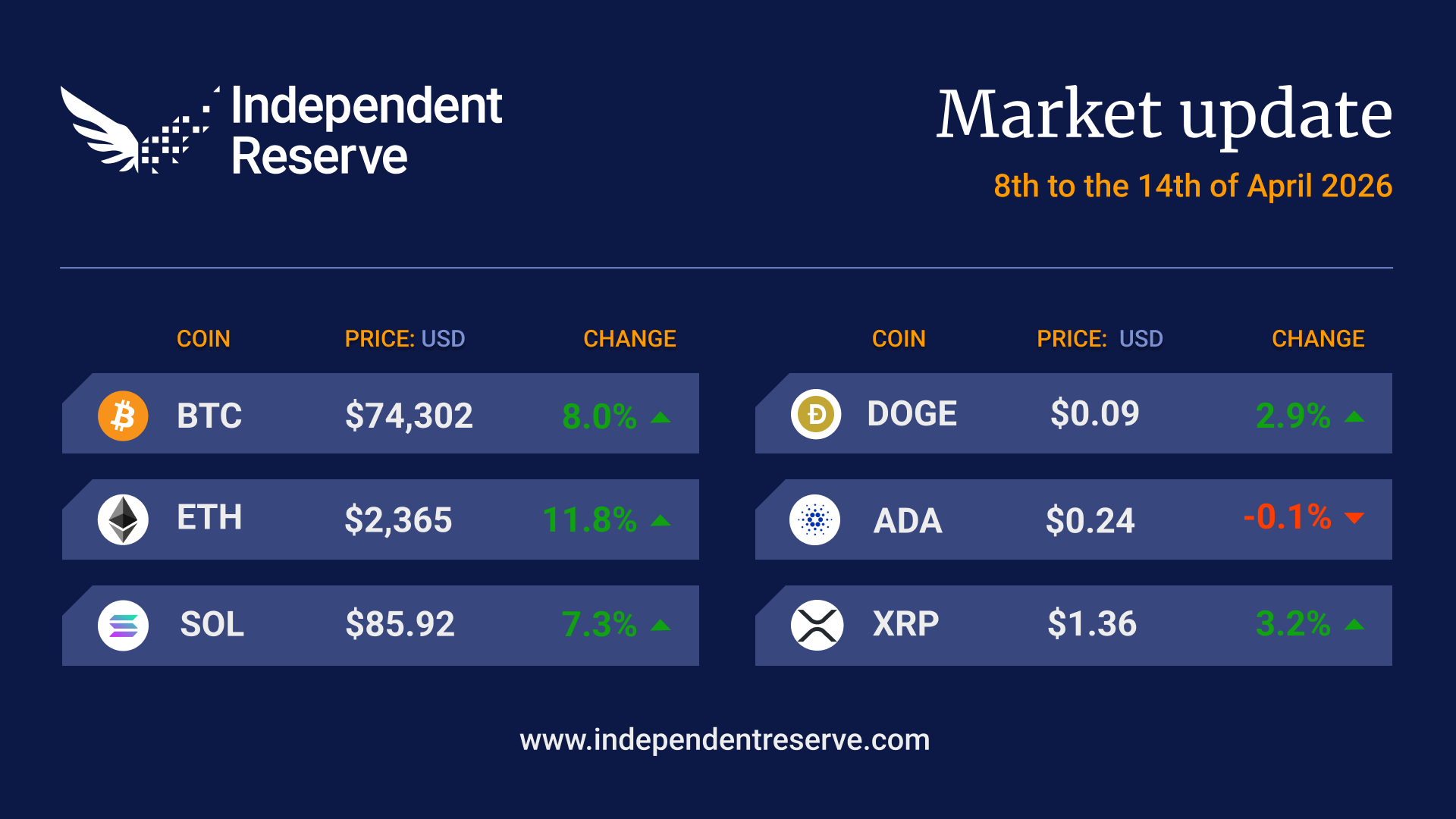
Bitcoin finishes the week up 8% to trade around A$104,823 (US$74.3K) while Ethereum gained 11.8% to A$3,335 (US$2,365). XRP gained 3.2%, Solana was up 7.3%, Dogecoin (2.9%), while Cardano was flat. The Crypto Fear and Greed Index is at 21, or Extreme Fear.
From the OTC desk
Institutions are buying, and it’s moving markets
Institutional inflows appear to be a key driver behind the recent price uptick. Managed crypto investment products pulled in US$1.1 billion last week, their strongest showing since early January, with calmer geopolitical conditions and softer US inflation data credited for reigniting appetite. On the corporate side, Strategy added another 13,927 BTC, bringing its total holdings to 780,000 BTC, while Bitmine made its largest Ethereum purchase since December, acquiring 71,524 ETH for US$157 million. Bitmine’s holdings now stand at 4,874,858 ETH, and the weight of these purchases likely contributed to Ethereum’s move from US$2,100 to a weekly high of US$2,394.
Shorts set squeezed as sentiment begins to turn
After several days of choppy trading amid the Middle Eastern conflict, crypto markets broke decisively out of their tight range, with Bitcoin surging over 5% to approach US$75,000, its strongest intraday move in weeks. The breakout triggered US$430 million in short liquidations within 24 hours. With futures open interest climbing and spot demand picking up, there are growing signs of a potential inflection point. Sentiment has recovered from a score of 11/100 (extreme fear) last week to 21/100 today, still deeply fearful, but moving in the right direction.
OTC desk activity
- Seeing buying from market participants as the market looks to break out of range
- Big on-ramp stablecoin flows, USDT is notably trading at a premium.
Key Economic Calendar Events (AEST)
- Tuesday, Apr 14 2026 – 10:30 PM – US PPI MoM (Consensus 1.2%).
- Wednesday, Apr 15 2026 – 09:50 AM – JP Machinery Orders MoM (Consensus -1.1%).
- Thursday, Apr 16 2026 – 11:30 AM – AU Unemployment Rate (Consensus 4.3%).
- Thursday, Apr 16 2026 – 12:00 PM – CN GDP Growth Rate YoY (Consensus 4.8%).
- Thursday, Apr 16 2026 – 12:00 PM – CN Industrial Production YoY (Consensus 5.6%).
- Thursday, Apr 16 2026 – 12:00 PM – CN Retail Sales YoY (Consensus 2.3%).
- Tuesday, Apr 21 2026 – 10:30 PM – US Retail Sales MoM
- Thursday, Apr 23 2026 – 03:00 PM – SG Core Inflation Rate YoY
- Thursday, Apr 23 2026 – 06:00 PM – EA S&P Global Composite PMI Flash
In headlines
ETF inflows positive
Morgan Stanley’s Bitcoin ETF launched with $30.6 million (A$43.1M) in inflows (and doubled that in the following two days). It was the best ETF launch in the firm’s history, and not far off BlackRock’s US$40M (A$56.3M) opening-day haul. Overall, the Bitcoin ETFs took in US$833.2 million (A$1.17B) for a very strong week. The Ethereum ETFs raised US$187M (A$263M), and Tom Lee’s ETH treasury vehicle, BitMine, has now amassed 4% of the entire supply and is closing in on its 5% goal.
New method makes Bitcoin quantum safe without a fork
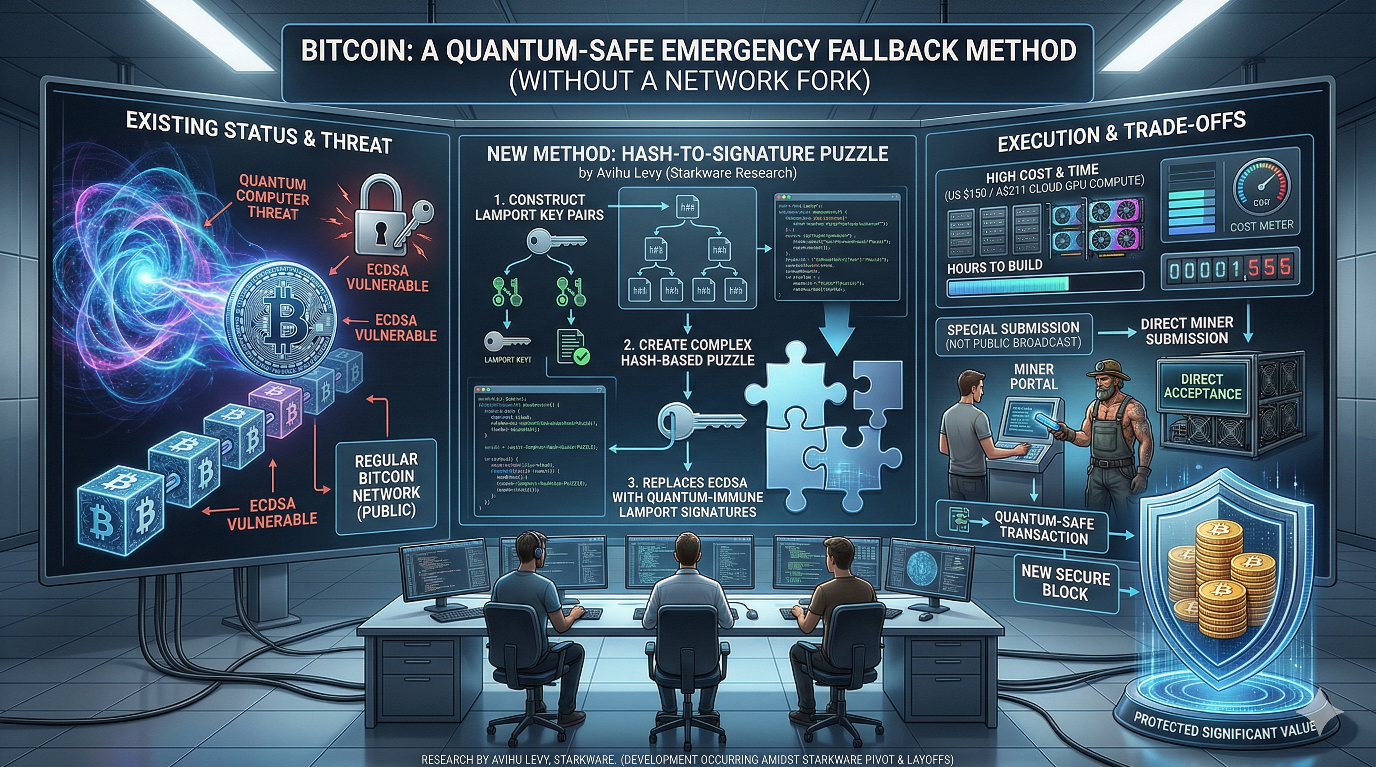
Starkware researcher Avihu Levy has published a new method to make Bitcoin transactions quantum-safe without requiring a protocol upgrade. It replaces Bitcoin’s existing ECDSA signatures with a hash-to-signature puzzle that uses Lamport signatures and is immune to quantum computers. It’s very much an emergency fallback option, however, as it costs up to US $150 (A$211) in cloud GPU compute, takes several hours to build a transaction, and the transaction must be submitted directly to a miner. But it means users can protect significant value in Bitcoin even if the community fails to upgrade it to quantum-safe in time. Starkware’s good work in this area was not enough to prevent the project from announcing layoffs today and a pivot to try to find revenue-generating products.
SEC says DeFi is all good
The SEC in the US has issued guidance saying that DeFi front ends like Uniswap do not need to register as broker-dealers. This has been a big risk to DeFi platforms for years, and could have spelled the end of permissionless trading. To qualify, the platforms must have fixed, transparent fees, exert no control over how orders are routed, and not hold user funds.
Bitcoin payments to Iran
The US blockade may render it moot, but the Financial Times reported this week that Iran is now charging tolls for the Strait of Hormuz in Bitcoin. Some Bitcoiners celebrated the news as highlighting Bitcoin’s censorship-resistant properties. “There is no second best,” said Strike founder Jack Mallers. But TRM Labs says it can’t find any on-chain evidence that this is occurring just yet, and Taproot Wizards cofounder Udi Wetheimer notes the source for the FT article, Hamid Hosseini, doesn’t represent the regime itself and may not “understand the difference between crypto and Bitcoin.” Bloomberg reported last week that oil tankers were paying tolls in Chinese Yuan and stablecoins.
New York Times claims Adam Back is Satoshi
Blockstream co-founder Adam Back was named in the Bitcoin white paper, and there’s long been speculation he might be Satoshi himself. New York Times reporter John Carreryrou (who exposed the Theranos fraud) offered some circumstantial evidence that this was the case, including Back not being online for a time while Satoshi was, along with a stylometry analysis that found stylistic similarities between Back’s writing and Satoshi’s. But following the report’s publication, professional C/C++ programmer Robert Graham said that Back’s code and Satoshi’s code look nothing alike.

White House report clears stablecoin yield
A report from the White House Council of Economic Advisers found that prohibiting platforms from offering yield on stablecoins would have a very limited impact on preventing deposit flight from banks. The model-based analysis found eliminating yield would increase bank lending by just US$2.1 billion (A$2.9B) but result in a US$800 million (A$1.13B) net welfare loss for customers. The banks don’t accept those findings. Despite rumours of an imminent deal coming in pretty much daily, the banks and crypto lobby have yet to formally agree on a compromise that would allow the crypto market structure bill, the CLARITY Act, to proceed. “This is our last chance to pass the CLARITY Act until at least 2030,” Republican senator Cynthia Lummis said this week. Coinbase CEO Brian Armstrong has also changed course and now says “it’s time” for the legislation to pass. Ripple CEO Brad Garlinghouse says, “When people are at their peak frustration, that’s when they finally compromise, and it gets done…I think we’re there.”
Hong Kong stablecoin licenses
Hong Kong has issued its first two stablecoin licenses to HSBC and a joint venture led by Standard Chartered called Anchorpoint Digital. The South China Morning Post reports analysts and bankers were underwhelmed to see just two approvals for traditional banks, having expected “at least three licences for stablecoin issuers from a broader range of backgrounds”, according to Everbright analyst Kenny Ng Lai-yin.
Japan brings crypto inside the tent
Japan has classified cryptocurrencies as financial instruments, treating them under the same regulatory umbrella as stocks. That means insider trading bans, strict disclosure rules, and big penalties for unregistered exchanges. Meanwhile, Dubai’s Virtual Assets Regulatory Authority has issued detailed guidance on the issuance of digital assets.
The Moonshot Dispatch
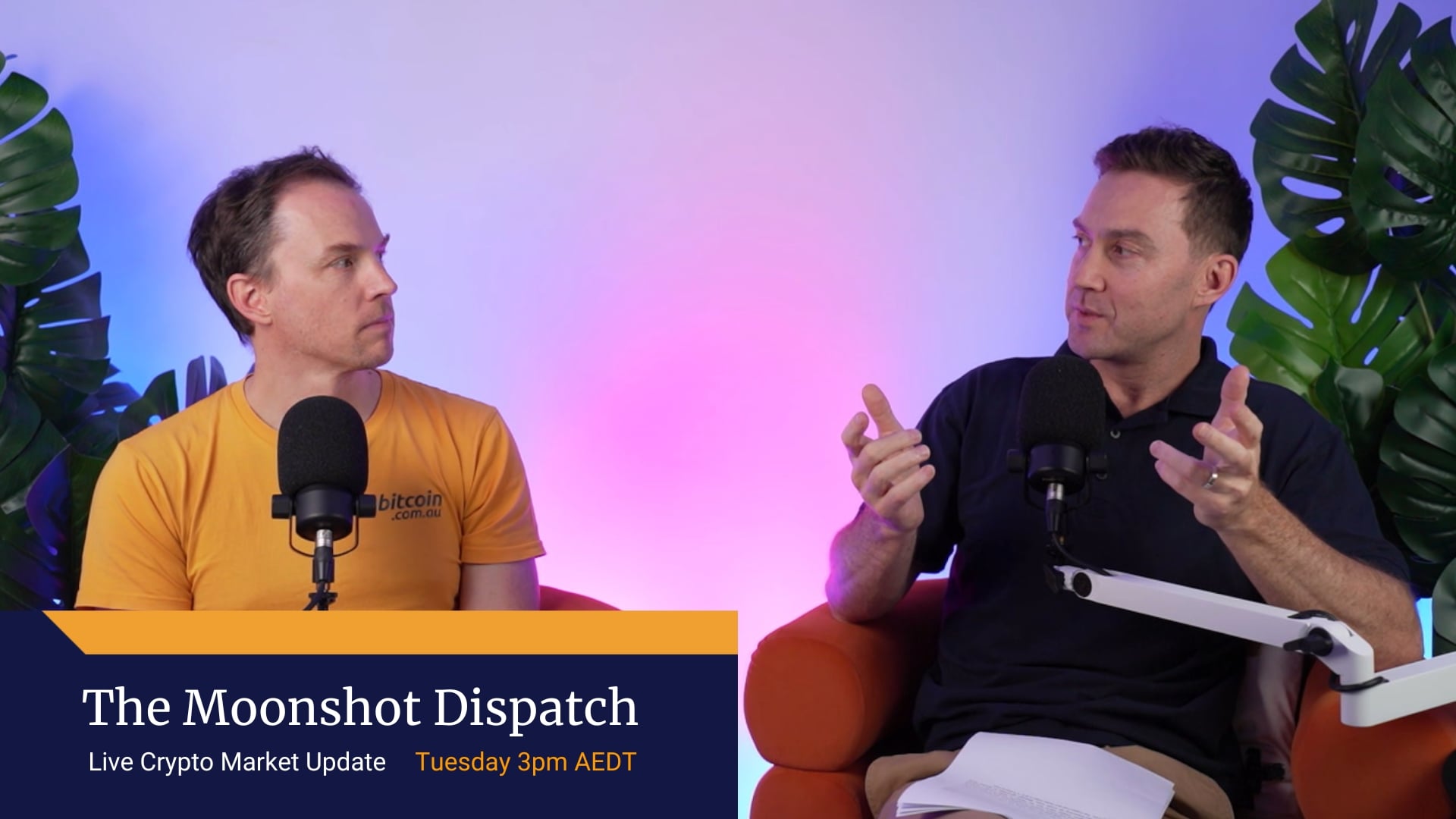
Join us every Tuesday at 3 pm (AEDT) as we cover the latest crypto news, price movements and all the Bitcoin banter you may have missed. Tune in weekly on Twitter/X, YouTube, & TikTok.
Until next week, happy trading!