In markets
Bitcoin has climbed back above US$65,000, despite the Iran war intensifying and the Houthis threatening to block another major oil shipping route.
A surprise fall in the US consumer price index helped restore confidence, even as oil prices rose again. CryptoQuant data suggests large holders added another 66,700 Bitcoin over the past 60 days, while mid-sized wallets sold. This pattern has shown up before previous rallies.
Spot trading on the world’s 10 biggest exchanges plunged 27.9% in the second quarter to US$1.95 trillion, according to CoinGecko. Figures from The Block show seven-day moving average volumes are now down 80% from the all-time high in October.
But sentiment is beginning to shift. JPMorgan analysts report there are “encouraging signs” for Bitcoin’s price, with increased institutional demand for Bitcoin futures and concerns over Strategy abating after it increased its cash reserves to pay dividends. The spot Bitcoin ETFs saw a second week of inflows, taking in US$75.7 million, while the Ether ETFs saw even more, taking in US$105.4 million.
Some big options traders are now betting billions that Bitcoin will climb to US$72,000 by the end of the month.
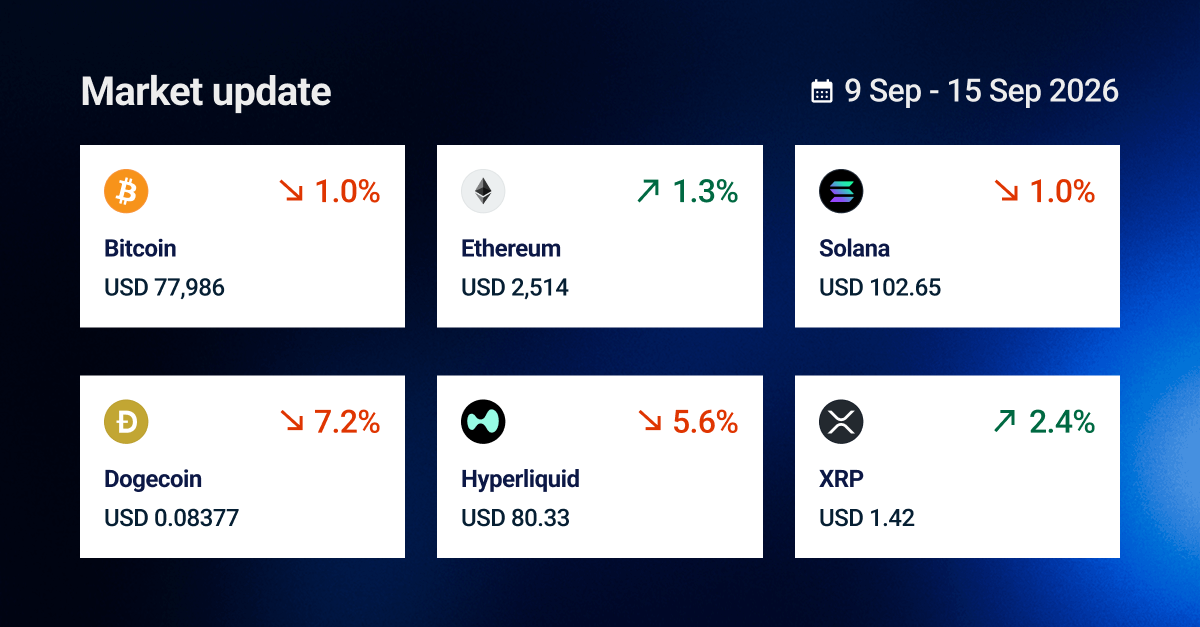
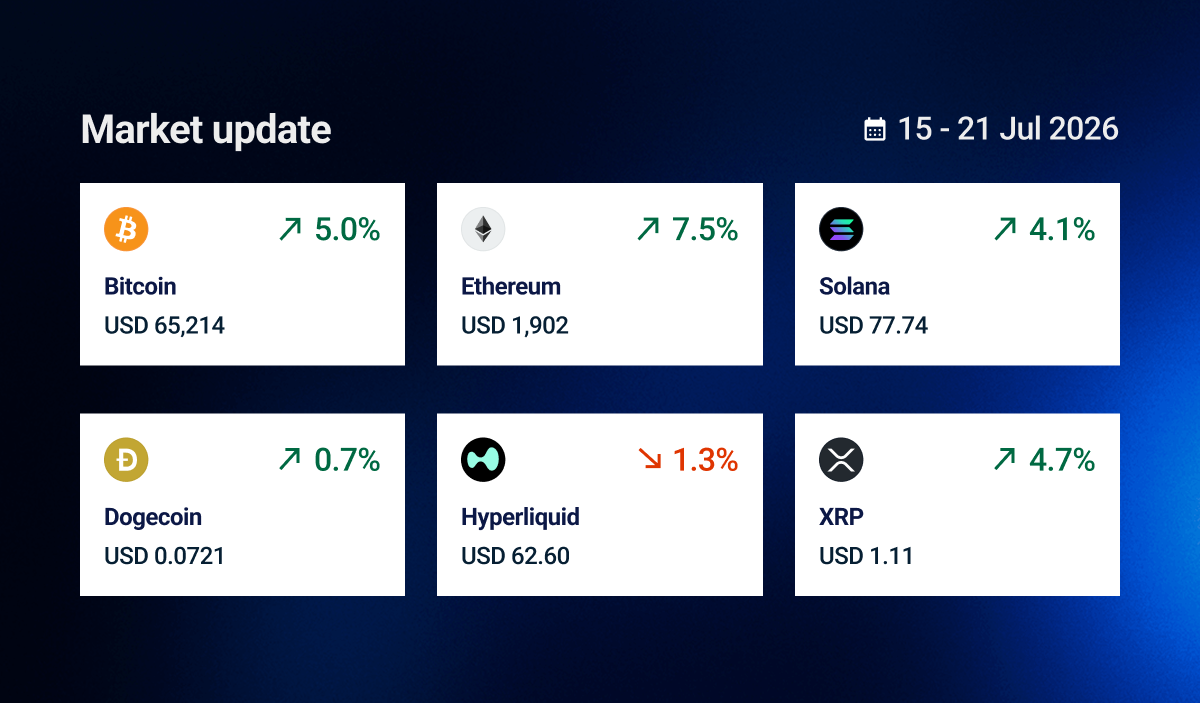
Bitcoin finishes the week up 5% to trade around US$65,214, while Ethereum gained 7.5% to trade around US$1,902. XRP, which has just gained a license to offer services across the EU, gained 4.7%, while Solana increased 4.1%. Hyperliquid lost 1.4%, and Dogecoin was flat. The Crypto Fear and Greed Index is at 25, or Fear.
From the OTC desk
A State of Transition
A softer-than-expected reading on inflationary numbers came in last week for Headline Inflation Rate and Producer Price Index (PPI), which continues to align with our previous mentions of inflation likely peaking. As economic data comes in to support a disinflationary narrative, risks are shifting away from higher inflation towards geopolitical pressures in the Middle East. Unfortunately, further escalation between the US and Iran has caused oil prices to rise 25%, adding further complication to the macro backdrop, with all eyes on how long this round of bombing will last.
Meanwhile, against this backdrop, Bitcoin ETF flows remain resilient, albeit with a muted net inflow of US$75.5 million last week. Options positioning reflected this muted price action, as market-makers hedging could help stabilise Bitcoin’s price levels between US$65,000 and US$72,000, especially around US$70,000, although volatility may rise if prices fall towards US$60,000. Nonetheless, calling the end of the bear market is different from calling the start of a bull market; we might be somewhere in the transition between these two states and building a position via accumulators or spot longs might pay dividends towards the end of 2026.
OTC desk activity
- Some selling of spot Bitcoin alongside a good mix of on-ramps and off-ramps, stablecoin flows
- USDT continues to trade at a discount throughout the week
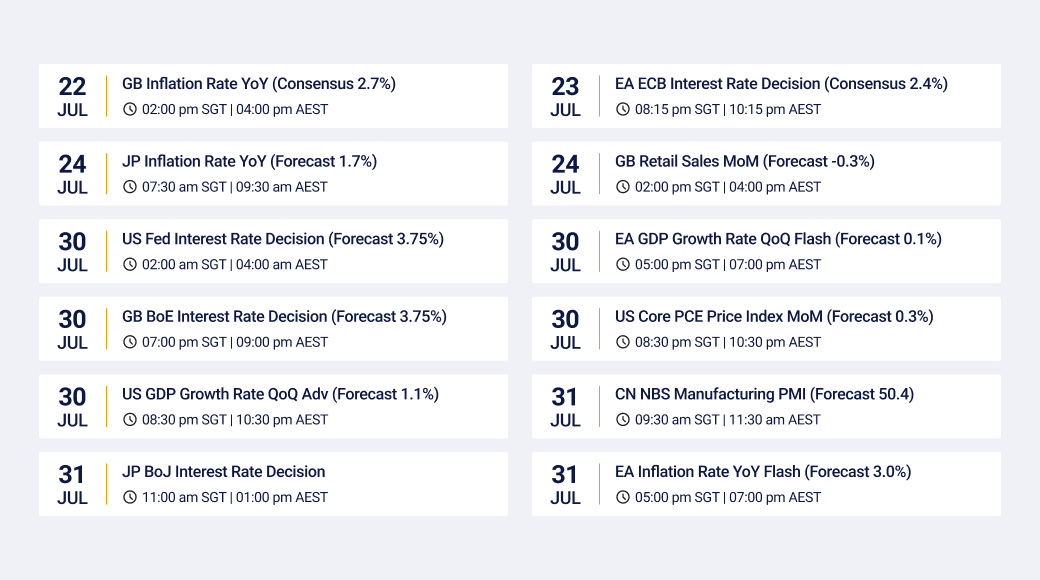
Key economic calendar events
In headlines
Three weeks for CLARITY
The CLARITY Act has just 14 business days to get through the US Senate before the August recess. It’s going to come down to the wire, as no date has been set for a vote, and the final text is yet to be released. Despite a White House meeting with Donald Trump to discuss an “ethics” ban on elected officials profiting from crypto, no compromise has been announced. Democrats won’t vote for the bill without it, and Senator Elizabeth Warren is pressing for Trump to disclose his crypto earnings for 2026 ahead of the vote. Plume general counsel Salman Banaei reports that the banks are still trying to relitigate the yield issue, there’s division among law enforcement bodies over developer protections (BRCA), and Democrats also want stronger conflict-of-interest protections for vertically integrated crypto businesses. The odds of passage have plunged to just 32% on Polymarket, although former CFTC commissioner Summer Mersinger says Polymarket is underpricing the odds — because insiders have been banned from betting on it! White House crypto advisor Patrick Whitt has been called back from the army to help negotiate. He points out that even Russia is getting close to passing crypto laws.
DTCC tokenised stock trading
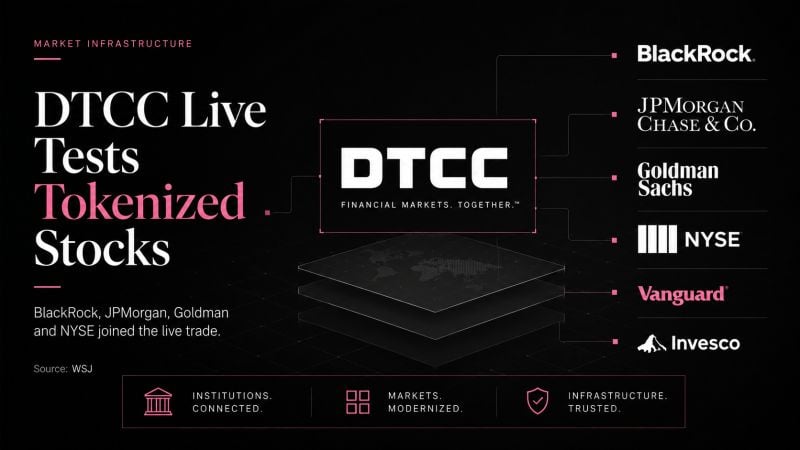
The Depository Trust & Clearing Corporation processed US$4.7 quadrillion in securities transactions last year (yes, quadrillion), and last week it launched a production trial of tokenised securities with the same rights as traditional securities. 40 financial firms are participating in the tokenisation pilot, including BlackRock, JPMorgan, Goldman Sachs, Vanguard, and NYSE. The formal launch is scheduled for October.
Visa Stablecoin Platform
Visa has introduced the Visa Stablecoin Platform to make it easier for banks and fintechs to build products using stablecoins. It allows institutions to issue, store, transfer and redeem stablecoins, and supports the new Open USD stablecoin.
Ethereum accelerates
Ethereum’s Glamsterdam hard fork is due to land on the Sepolia and Hoodi testnets soon and is reportedly “very close” to “being ready to ship.” Glamsterdam will speed up the L1 by increasing the gas limit over time from 60 million to 200 million – but it might run even faster than that, with the latest devnet trialling performance at 300 million. In related news, a third spinoff from the Ethereum Foundation, a for-profit company called EthSystems, will focus on building “confidential systems for institutional Ethereum.”
Singapore crypto news
The Monetary Authority of Singapore (MAS) is examining lowering taxes on investment fund managers, possibly as low as 10%, to remain competitive with proposed changes in Hong Kong. MAS has also issued an information paper raising concerns about how crypto firms are applying money laundering controls. Paymonade, founded and led in Singapore, has obtained a licence under the EU’s MiCA regulations, enabling it to provide services across the 30-member European Economic Area.
Japan passes crypto amendments
Japan’s parliament has passed new rules that recognise crypto as “financial assets”, removing it from the Payment Services Act. The revised Financial Instruments and Exchange Act introduces new insider trading rules, stricter disclosures, tougher penalties for unregistered crypto firms, and new oversight requirements. The changes open the door to Bitcoin ETFs and lower crypto taxes of around 20%, but won’t take effect for a year.

South Korea adds crypto to national wealth framework
South Korea intends to include digital assets in the legal foundation for how the government manages public wealth. It would make South Korea’s National Asset Basic Act the first sovereign asset management statute to explicitly include crypto as a category of property the government is legally obligated to manage. Legislators have also restarted talks on the Digital Asset Basic Act after four months, and the Bank of Korea will launch the second phase of its CBDC pilot in September, which has been expanded to nine banks.
Crypto news from Asia
Network School founder Balaji Srinivasan has threatened to pull out of Malaysia after a controversy over Israeli citizens attending resulted in an official investigation. Vietnamese authorities will fine retail crypto users up to US$1,900 for using unlicensed offshore crypto exchanges, despite the country not having licensed any local exchanges yet. Hong Kong’s Securities and Futures Commission has approved the Baillie Gifford Enhanced Yield Fund. It’s the first “digitally native” tokenised fund, and allows professional investors to directly own the underlying assets on a public blockchain.
The Moonshot Dispatch
Join us every Tuesday at 1:00 pm / 3:00 pm (SGT / AEST) as we cover the latest crypto news, price movements and all the Bitcoin banter you may have missed. Tune in weekly on Twitter/X, YouTube, Instagram & TikTok.

Until next week, happy trading.