In markets
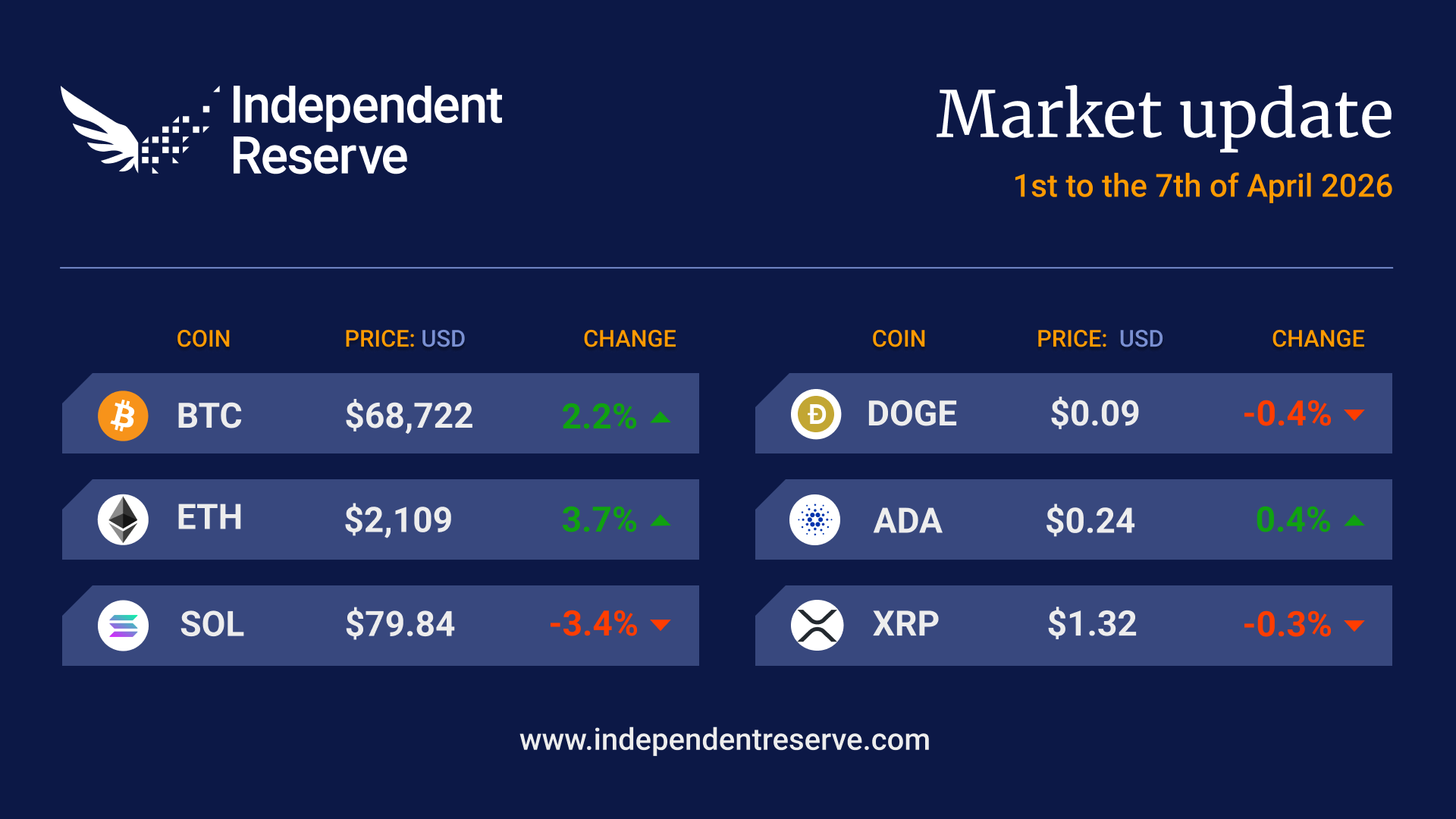
Crypto markets rose this week, but seem unlikely to settle on a clear direction until the Iran conflict heats up or cools down. A potential 45-day ceasefire agreement looks unlikely at the time of writing, with Trump’s latest deadline for knocking out Iran’s power grid and bridges expiring later today. Bitcoin got a 2.5% bump on Monday after the last deadline was extended. Concern is growing about oil price-linked stagflation if the stalemate continues, but Citrini reports from a hotel overlooking the Strait of Hormuz that many more oil tankers – 15 per day – are getting through than previously believed. Bloomberg reports that some of the ships are paying tolls to Iran in crypto. Meanwhile, US manufacturing is looking healthier, with the US ISM manufacturing PMI coming in at 52.7%, which was above expectations of 52.5%. It’s the third month in a row above 52%, which has preceded big moves from stocks, gold and altcoins in the past. Bitcoin finished the week up 2.2% to trade around A$99,380 (US$68,722), and Kalshi prediction markets suggest Bitcoin is on track to reach A$108.4K/US$75K by the end of the month. Ethereum gained 3.7% to trade around A$3,052 (A$2,109). XRP, Cardano, and Dogecoin were flat, while Solana lost 3.4%. The Crypto Fear and Greed Index is at 11, or Extreme Fear.
From the OTC desk
The bond market storm intensifies
As the ongoing conflict escalates, inflation begins to weigh on markets. Central banks globally are becoming more hawkish. Rates are expected to remain unchanged towards the end of the year, rather than the 50 bps rate cut just one month ago. One metric the market is watching is Japanese Government Bonds, now trading at 2.426% for the 10-year, moving up from 2% at the start of the year. This is the highest level in 27 years and could lead to significant contagion as the yen carry trade unwinds, likely resulting in a structural reallocation as investors pivot from US treasuries back to Japanese treasuries.
Bitcoin miners pivot to the AI space
There has been significant movement by Bitcoin miners into the AI space, and, correspondingly, several of them have liquidated their holdings. 15–20% of miners are currently operating at a loss, with the hash price dropping from $63 in 2025 to $29 at its current price. This is a brutal compression of miner revenue and will push weaker operators out, potentially signalling the late stages of miner capitulation. Some of the selling pressure has come from firms like MARA and Riot Platforms, which have sold 15,133 BTC and 3,778 BTC over the last few months, respectively.
OTC desk activity
- Muted volumes over the Easter period as the market still searches for direction; noticed more sellers in spot coming in early this week
- One-way stablecoin buy flows
Key Economic Calendar Events (AEST)
- Thursday, Apr 09 2026 – 05:00 AM – US FOMC Minutes
- Thursday, Apr 09 2026 – 11:30 PM – US Core PCE Price Index MoM Feb (Consensus 0.2%).
- Thursday, Apr 09 2026 – 11:30 PM – US GDP Growth Rate QoQ Final Q4 (Consensus 0.7%).
- Friday, Apr 10 2026 – 12:30 PM – CN Inflation Rate YoY Mar (Consensus 1.1%).
- Friday, Apr 10 2026 – 11:30 PM – US Inflation Rate YoY Mar (Consensus 3.1%).
- Friday, Apr 10 2026 – 11:30 PM – US Core Inflation Rate YoY Mar (Consensus 2.6%).
- Tuesday, Apr 14 2026 – 11:00 AM – SG GDP Growth Rate QoQ/YoY (Consensus n/a).
- Tuesday, Apr 14 2026 – 02:00 PM – CN Balance of Trade Mar (Consensus $105B).
In headlines
Bitcoin’s year-to-date performance
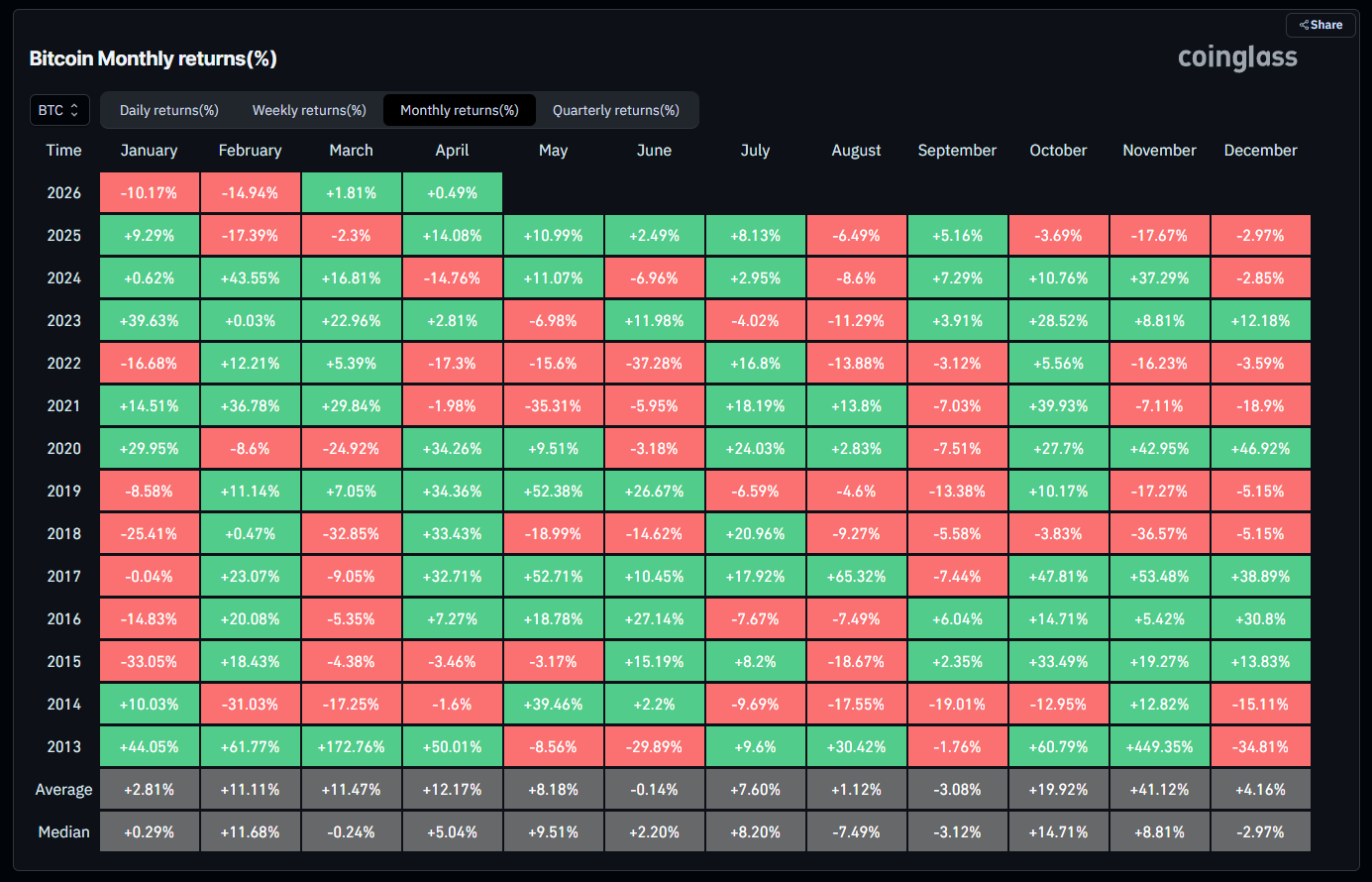
Bitcoin narrowly avoided its sixth month in the red in March, down by less than 2%. Overall, the first quarter was the worst we’ve seen since 2018, with the price dropping 22.2%. Andri Fauzan Adziima, Research Lead at Bitrue, told The Block the decline was driven primarily by ETF outflows, inflation and a broader risk-off sentiment across markets. Ecoinmetrics reports that on a 12-month basis, Bitcoin has been the weakest major asset. The Bitcoin ETFs have begun to turn around, however, with the outflows of US$1.8 billion (A$2.6B) in the first two months largely offset by US$1.32 billion (A$1.91B) of inflows in March. Ethereum gained seven per cent in March, and avoided its seventh month in the red.
Australia passes crypto legislation
Parliament has finally passed Australia’s long-awaited crypto legislation. The Corporations Amendment (Digital Assets Framework) Bill 2025 cleared both houses last week. It requires exchanges and custody platforms to obtain an Australian Financial Services License and to comply with stronger capital, custody, and risk control rules, along with enhanced consumer protections and disclosures. Digital assets and platforms are now subject to many of the same “bank-grade” rules and laws as other assets and platforms. ASIC gains broad enforcement powers under the laws, while businesses will get 18 months to comply.
Hong Kong’s stablecoin licence delayed
Hong Kong’s first batch of stablecoin licences, expected by March, has been delayed, likely due to a slower review process and regulators’ cautious approach. The Hong Kong Monetary Authority said it is still advancing the process, with licences expected to be limited in number and subject to strict capital, reserve, and redemption requirements. Industry experts view the delay as a deliberate move to prioritise financial stability and robust regulation, with analysts saying it will not disrupt Hong Kong’s broader digital asset strategy.
Clarity deal, maybe, possibly
There are signs of tentative agreement on the US Clarity Act’s rewritten text, which bans stablecoin yield on deposits. Crypto in America reports that sources from both industries say they’ve reviewed the latest compromise language and are “hopeful a workable solution has been reached this time.” Nobody has announced anything on the record just yet. If the yield issue is indeed resolved, the Senate Banking Committee members have 2 weeks to address any remaining issues related to DeFi, tokenisation, and ethics. An April 25 TRUMP memecoin event featuring the President could be a wildcard, however, as it occurs around the time of a potential markup and will highlight crypto issues that Democrats are unhappy with.

Genius stablecoin bill set for operation
The US Genius stablecoin legislation is gearing up to go into operation, with the Federal Deposit Insurance Corporation meeting this week to begin formal implementation. The meeting will discuss reserve requirements and standards for FDIC supervised bank issued stablecoins. The US Treasury has released its first set of proposed rules and opened a 60-day public comment period, and the Office of the Comptroller of the Currency has also proposed new rules and is seeking comment.
Quantum issue hots up
Google researchers put out a paper this week, suggesting that Bitcoin and Ethereum’s elliptic curve cryptography is much more vulnerable to quantum computers than believed. They say that reverse engineering private keys now requires fewer than 500,000 physical qubits and that attacks could take just 9 minutes, theoretically enabling attacks on coins while the public key is exposed in the mempool. Google is upgrading all its own systems to post-quantum by 2029. Separately, research from Oratomic examined neural atom architectures for quantum computers and suggested that ECC-256 could be broken in 10-52 days using just 19,000 to 26,000 physical qubits. Given long enough to run, just 10K qubits could break Satoshi’s wallets. That’s a four times order of magnitude reduction in the estimated number of qubits required to break the encryption in the space of a year. Solana trialled out post-quantum signatures on its test network late last year. As the signatures are 20x to 40x larger, network speed dropped by 90%, demonstrating a major overhaul is required to upgrade chains to post-quantum.

Charles Schwab to launch crypto trading
US$12 trillion (A$17.3T) financial services giant Charles Schwab plans to launch spot trading in Bitcoin and Ethereum before the end of June. It’s setting up a new platform called Schwab Crypto, run via the Charles Schwab Premier Bank, SSB. Tome Dunleavy, the Head of Venture at Varys Capital, said Schwab will “net new buyers” into the market. CEO Rick Wurster says that fewer than 5% of Schwab’s 38M accounts have crypto exposure today (outside of the platform), but that’s set to change. The initial offering would be a trial limited to a select group of clients, before opening up to all later in the year.
Sophisticated social engineering heist nabs $280M
Drift Protocol, on the Solana network, was hacked for US$280 million (A$405M) — and the social engineering required to pull off the attack was astonishing. A fictional ‘quant trading firm’ with a flashy website approached team members of the protocol at a conference, then built up a business relationship over six months in a messaging group and via in-person meetings, and deposited US$1 million (A$1.4M) onto the platform. But it was all just an old-fashioned long con, and they used the trust they’d built to trick Drift’s security council members into signing transactions they didn’t understand, leaving open permissions for the exploits. A North Korean-linked hacking group is believed to be responsible.

Until next week, happy trading!