In markets
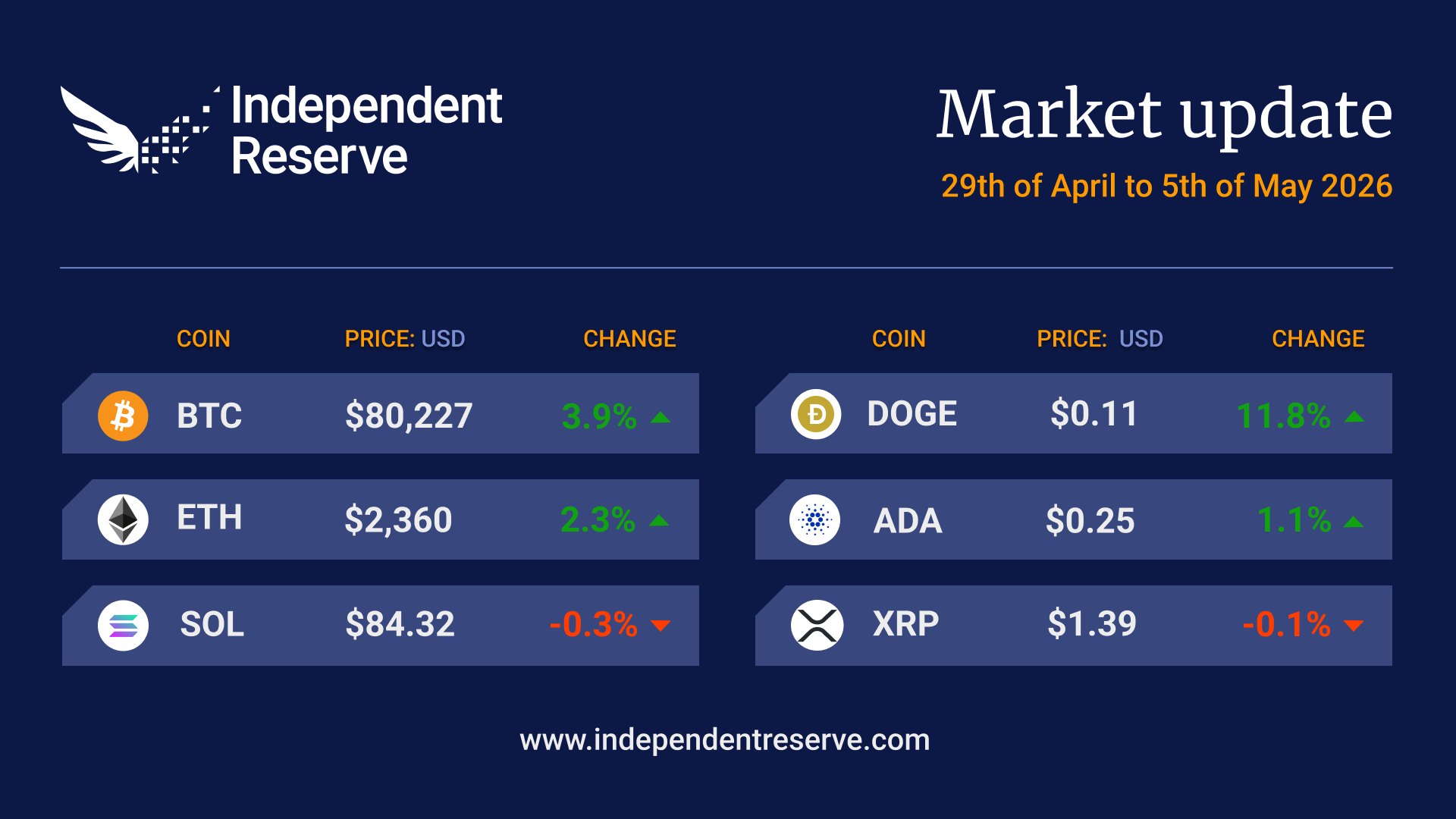
Bitcoin broke above US$80K yesterday for the first time since January, but wobbled after missiles began flying again as the US began escorting ships through the Strait of Hormuz. However, the Iranians have reportedly softened their position on the nuclear issue, raising hopes of a negotiated end to the conflict. At the time of writing, Bitcoin was 4% up on the same time last week, and trading around A$112,318 (US$80,227).
Bitcoin closed April with an 11.9 per cent gain, for the best monthly return in 2026, and the best monthly gain since April last year. It marks two green months in a row after five red candles, and May historically returns around 8%. The Bitcoin ETFs also saw A$2.97B/US$1.97B in inflows, the highest month-to-date in 2026. Analyst Charles Edwards says that institutional demand for Bitcoin is now 500% larger than the daily miner supply, a signal that has preceded a 25% rally in the past. CoinBureau reports the average 14-day correlation between altcoins and Bitcoin is at its lowest level since July 2025.
Ethereum wrapped up April with a 7.3% gain, and finished this week up another 2.3% to trade around A$3,304 (US$2,360). XRP and Solana were flat, Dogecoin surged 11.8%, and Cardano was up 1.1%. The Crypto Fear and Greed Index hit Neutral this week and sits at 50.
From the OTC desk
King Bitcoin pulls away from the pack
Bitcoin dominance has staged a notable resurgence. Having peaked at 57.4% during the bull market in September 2025, it has since climbed to 61.3% as market sentiment has turned increasingly positive. Several factors are driving this shift.
The recent price uptick, fuelled by optimism around the passage of the CLARITY Act, has improved Bitcoin mining profitability, easing fears that declining network hash power could trigger additional sell pressure. Miner reserves had recently hit 10-year lows, with firms such as RIOT having offloaded US$250M in BTC last quarter. On the demand side, ETFs have been leading the charge, with Friday alone seeing over US$600M in inflows as institutional buying continues to support Bitcoin’s market share.
Altcoins, meanwhile, have faced significant headwinds following a series of hacks across the DeFi space in April. Amid the broader altcoin market’s struggles, institutional investors appear to be firmly rotating toward Bitcoin.
GameStop’s eBay ambitions could come at Bitcoin’s expense
As Bitcoin approaches a potential breakout from its earlier trading range, speculation is growing that GameStop may liquidate its Bitcoin holdings. The company has announced plans to acquire eBay, a deal CEO Ryan Cohen has described as “way more compelling than Bitcoin,” prompting suggestions that GameStop could sell its crypto position to fund the transaction. The company currently holds 4,709 BTC, worth approximately US$380M at current prices.
OTC desk activity
- Small BTC buying as the market begins to break out of its range
- Steady on-ramp flows in size are seen over the week
Key Economic Calendar Events (AEST)
- Tuesday, May 05 2026 – 10:30 PM – US Balance of Trade MAR (Consensus -$61.4B)
- Wednesday, May 06 2026 – 10:30 AM – SG S&P Global PMI APR (Previous 56.7)
- Wednesday, May 06 2026 – 11:45 AM – CN RatingDog Services PMI APR (Consensus 52.5%)
- Wednesday, May 06 2026 – 10:15 PM – US ADP Employment Change APR (Consensus 70.0K)
- Thursday, May 07 2026 – 09:50 AM – JP BoJ Monetary Policy Meeting Minutes
- Thursday, May 07 2026 – 11:30 AM – AU Balance of Trade MAR (Consensus A$4.0B)
- Thursday, May 07 2026 – 07:00 PM – EA Retail Sales YoY MAR (Consensus 1.1%)
- Thursday, May 07 2026 – 10:30 PM – US Initial Jobless Claims MAY/02 (Consensus 205.0K)
- Friday, May 08 2026 – 09:30 AM – JP Average Cash Earnings YoY MAR (Consensus 3.4%)
- Friday, May 08 2026 – 10:30 PM – US Non Farm Payrolls APR (Consensus 95.0K)
- Monday, May 11 2026 – 11:30 AM – CN Inflation Rate YoY APR (Previous 1%)
In headlines
CLARITY comes into focus
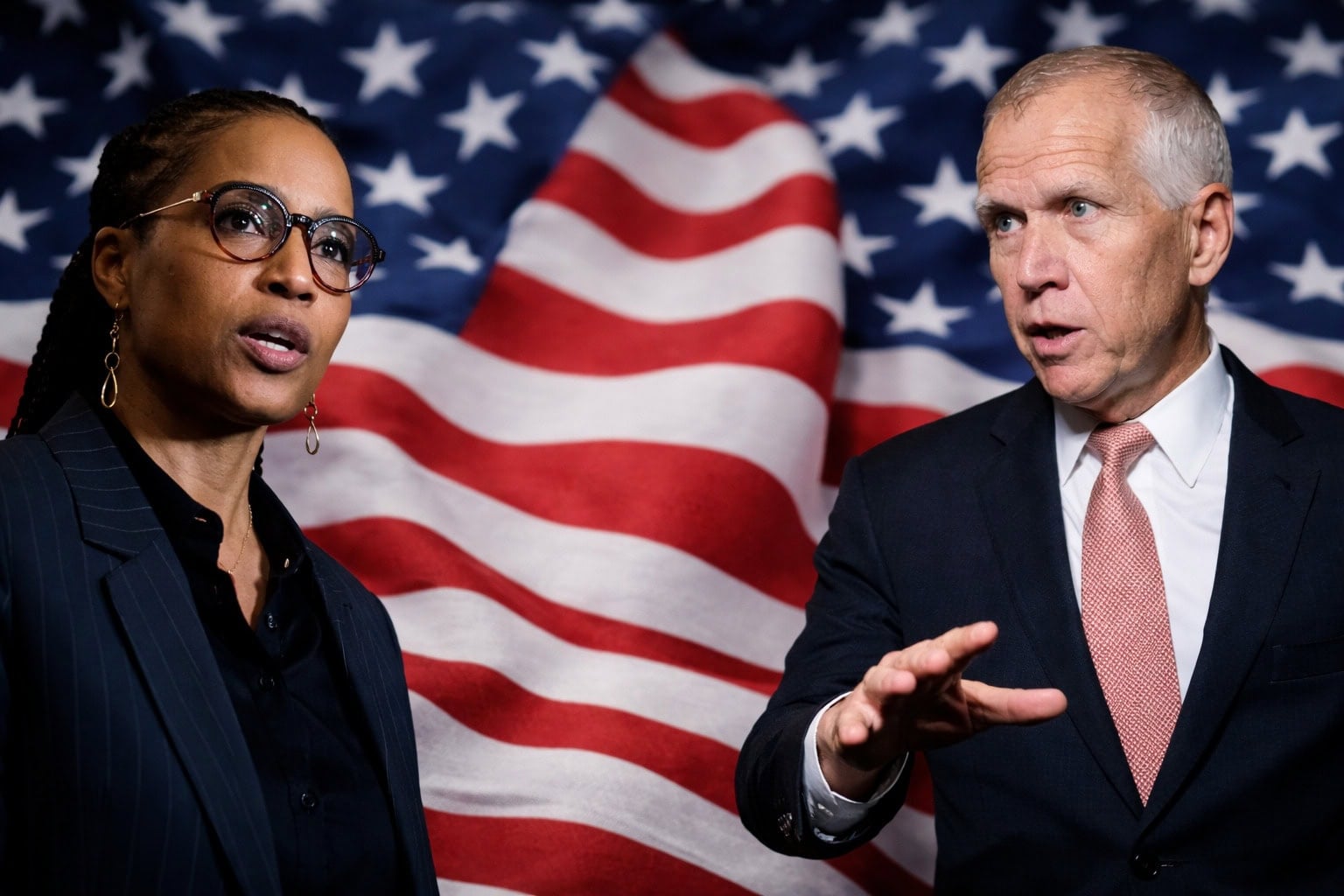
After four months of negotiations, the banks and the crypto industry have finally nailed down a deal on stablecoin yield, following Republican Senator Thom Tillis and Democrat Senator Angela Alsobrooks agreeing on the text. Rewards will not be paid on static stablecoin deposits but can be paid out on activity-based rewards “calculated by reference to a balance, duration, tenure, or any combination of the foregoing.” The SEC and CFTC will issue joint rules within a year to clarify what is permitted. Nobody seems particularly delighted with the compromise, but Coinbase CEO Brian Armstrong, who had previously withdrawn support, urged the Senate Banking Committee to “mark it up”. This seems likely to happen in the week of May 11 or the following week. The next big hurdle will be ethics language designed to get President Trump out of crypto, along with safe-harbour protections for DeFi developers. The odds of the bill passing this year are currently 68% on Polymarket, but it’s still a long way from being a done deal.
Crypto-friendly Fed chair
The Senate Banking Committee this week approved the nomination of the crypto-friendly Kevin Warsh to chair the US Federal Reserve, clearing the way for the nomination to proceed to the Senate. Warsh holds stakes in more than a dozen crypto firms and trading platforms.
DTCC to trade RWAs from October
The US Depository Trust & Clearing Corporation will pilot trading of tokenised securities in July with the goal of launching the full service in October. The DTCC is like a much larger version of Australia’s CHESS and also oversees the clearing and depository infrastructure. The DTCC custodies $114 trillion in liquid assets. More than 50 TradFi and DeFi firms will participate in the scheme to tokenise ETFs, US Treasury bills, bonds and notes, including BlackRock, Circle and Fireblocks.
Western Union on Solana
Western Union has launched a USD-backed stablecoin, USDPT, on the Solana network. The new stablecoin has been issued in partnership with Anchorage Digital, the only crypto-native firm holding an OCC federal banking charter. USDPT is designed as an internal settlement asset rather than a consumer product, allowing Western Union and its partners to move tokenised dollars across borders in seconds at fractions of a cent.

Is DeFi still safe?
DeFi Llama reports that April was the “most hacked month in crypto history by number of incidents”, with more than two dozen reported. The US$629 million (A$877M) stolen in the month was also the largest amount since February 2025, with the Drift and KelpDAO hacks accounting for 95% of the total losses. Many are now concerned that hackers are using AI tools to identify flaws in smart contracts and in infrastructure. Arbitrum was slapped with a restraining order and a demand to hand over US$71M (A$99M) in ETH, which it froze from a North Korea-linked hacker this week. The claim was to make good on a 2015 judgment awarding US$877M (A$1.2B) to the terror victims of the DPRK. Aave has since filed an emergency motion to vacate the restraining notice.
Australia to integrate digital assets into payments
Australia’s payment system planners have been examining how to integrate stablecoins and tokenised fiat money into the country’s account-to-account infrastructure. A draft document from the Account-to-Account Payments Roundtable, which includes representatives from various payments systems, as well as the Reserve Bank and CommBank, said: “Tokenised forms of money, such as stablecoins and tokenised liabilities, are moving from experimentation to adoption.” The document outlined some of the steps needed to support the move in our payments infrastructure.
Asia crypto news
North Korea has denied any involvement in a wave of crypto hacks, including Drift and KelpDAO, claiming it’s all just US propaganda. The Hong Kong Monetary Authority has warned that stablecoins with the tickers HKDAP and HSBC are fake and are not associated with the two approved issuers, HSBC and Anchorpoint Financial. Japan’s Financial Services Agency has designated stablecoin issuer JPYC as a fund transfer service, similar to PayPay and Rakuten Pay. South Korea’s National Tax Service has begun preparations for a 22% tax on crypto gains, which will appear on tax returns in May 2028. Korean internet bank Kbank has partnered with Ripple to test cross-border remittances. Taiwan legislator Dr Ko Ju-Chun has formally presented a policy report about a potential Bitcoin Reserve to Premier Cho Jung-tai and Central Bank of China Governor Yang Chin-long.
Q Day proposal
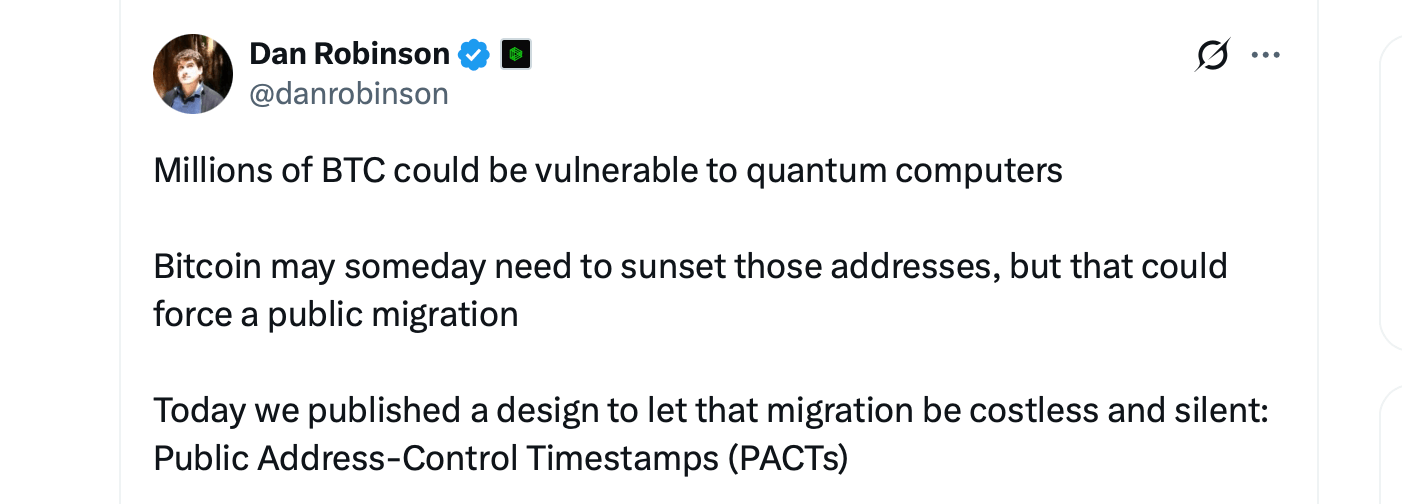
Paradigm researcher Dan Robinson has proposed a new way for Bitcoiners to prep for the day quantum computers break Bitcoin. It’s called Provable Address-Control Timestamps (PACTs) and allows holders to timestamp proof of key ownership without performing a transaction. That means that if the network decides to freeze insecure coins at some point, the real owner could recover their coins (as their private keys could have been stolen by a quantum attacker).
Crypto ATMs to be banned in Canada
Canada’s Liberal government has proposed a nationwide ban on Bitcoin and crypto ATMs. Officials say the ATMs are a “primary method” for scammers to defraud victims and launder money. Vancouver actually hosted the world’s first Bitcoin ATM back in 2013.
Have you used Bitcoin to buy property in Australia?
A national news outlet is preparing a feature on Australians taking non-traditional routes to home ownership, and they’re looking for case studies. Have you, or someone you know, used Bitcoin to help buy a property — whether as collateral, as part of a deposit, or to purchase a home outright with crypto?
As part of an interview, you may be asked:
- Whether you own Bitcoin
- Whether you’d use it (or cash it in) towards a property deposit
- How confident you feel about Bitcoin as part of your property strategy
- Whether your crypto holdings are shaping how you approach the property market
We understand that personal financial information can be sensitive, and we can keep certain private details out of the final publication if you prefer. If you’d like to contribute to the broader conversation around digital asset ownership, get in touch with Emma at emmam@profilemedia.com.au.
The Moonshot Dispatch
Join us every Tuesday at 3 pm (AEST) as we cover the latest crypto news, price movements and all the Bitcoin banter you may have missed. Tune in weekly on Twitter/X, YouTube, & TikTok.
Until next week, happy trading!
g Kong Monetary Authority has warned that stablecoins with the tickers HKDAP and HSBC are fake and are not associated with the two approved issuers, HSBC and Anchorpoint Financial. Japan’s Financial Services Agency has designated stablecoin issuer JPYC as a fund transfer service, similar to PayPay and Rakuten Pay. South Korea’s National Tax Service has begun preparations for a 22% tax on crypto gains, which will appear on tax returns in May 2028. Korean internet bank Kbank has partnered with Ripple to test cross-border remittances. Taiwan legislator Dr Ko Ju-Chun has formally presented a policy report about a potential Bitcoin Reserve to Premier Cho Jung-tai and Central Bank of China Governor Yang Chin-long.