In markets
After last week’s plunge, crypto markets rose sharply on a trifecta of positive news: Vanguard is now offering crypto ETFs, Charles Schwab plans to launch spot crypto trading in 2026, and the US CFTC will enable spot crypto products to trade on futures markets. Some wild price swings over the weekend suggest leveraged trading is best kept to weekdays. Partly due to the US government shutdown, the economic picture over there isn’t particularly clear, with conflicting data on the health of the jobs market and inflation. Despite all this, the S&P 500 is near record highs. Polymarket puts the odds of a US interest rate cut this week at 94% and some pundits are tipping the Fed will announce up to A$68B/US$45B in monthly T-bill purchases this week, which would improve liquidity (but not match the money printing of the past). Meanwhile, Japan is stimulating its economy with A$203B/US$135B even though the Central Bank is expected to hike rates, which the Kobeissi Letter described as “contradictory”.
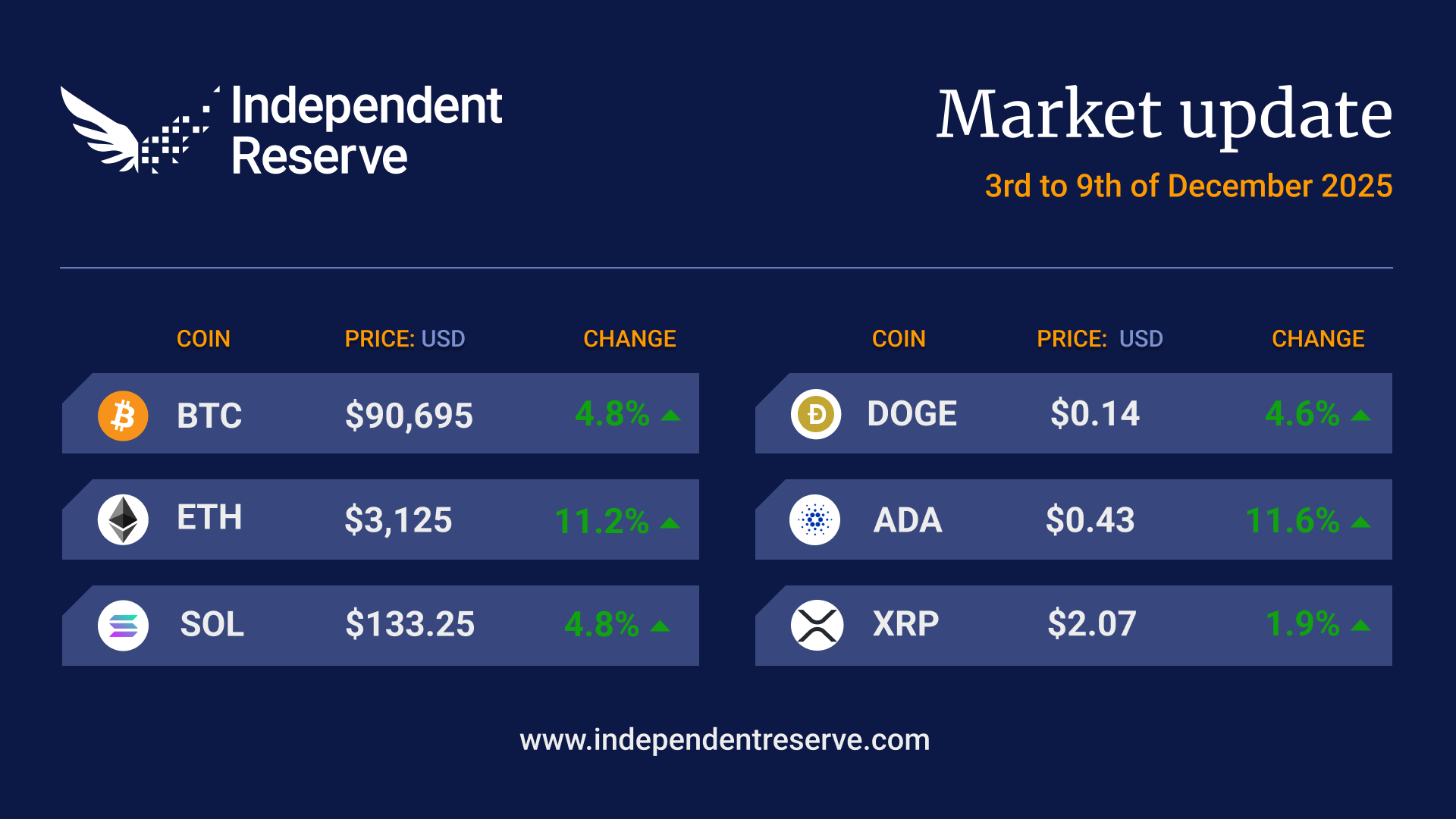
Strategy has just bought 10,624 Bitcoin in its most significant buy for months, and Bitcoin finishes the week up 4.8% to trade around A$136,805 (US$90,695). Bernstein analysts now believe that Bitcoin has broken the four-year cycle and have moved their 2026 target to A$226K/US$150K. BitMine purchased an additional 138,452 ETH, and Ethereum has increased by 11.2% to trade around A$4,719 (US$3,125). Analyst Michael van de Poppe notes that for the first time in three months, ETH is holding above the 20-day moving average against Bitcoin and tips it will outperform in the near term. The rest of the top 10 made smaller gains under 10%, apart from Cardano, which surged by 11.6%. It’s been a terrible year for the top altcoins, with only Bitcoin Cash, BNB, Hype and Tron making gains year to date. The Crypto Fear and Greed Index is at 20, or Extreme Fear.
From the OTC desk
All eyes on the US Federal Reserve
With prices this low, everyone is looking to the macro landscape for some hope, and hope we shall get with attention squarely on the US Federal Reserve, which meets 9-10 Dec for its final policy decision of 2025. Markets are essentially pricing in a 25-basis-point cut, bringing the funds rate target to 3.50-3.75%. However, because the market has been leaning this way for weeks, a standard 25-basis-point move may not light any real fire under risk assets.
In Australia, the Reserve Bank of Australia appears to be digging in. According to a recent poll and commentary ahead of its December meeting, economists expect the cash rate to be held at 3.60% – and potentially for much of 2026. The shift reflects persistent inflation (recently above 3%) and a strong labour market.
What does this mean for crypto? Well, let’s be honest. The cash rate in Australia has no bearing, but the US has the capacity to shake things up. With some Fed officials calling for a 50bp cut, things could get interesting.
Bitcoin seems to have officially bounced off US$80k, and thus far has been making higher lows; a quiet confidence is growing. As long as we can keep overextended leverage out of the market, we might have a chance.
OTC desk activity
- This week on the desk, we saw a holding pattern. Fairly even buyers and sellers, reduced large swings, and more cautious position-taking.
- We have been receiving a lot of interest in XAUt (Tether’s gold token), but, in a surprise to no one, altcoin trading is lower, with the majority selling.
Key Economic Calendar Events (AEDT)
- Wednesday, Dec 10 2025 – 12:30 PM – CN YoY Inflation Data (Consensus 0.9%)
- Thursday, Dec 11 2025 – 06:00 AM – US Fed Interest Rate Decision (Consensus -0.25%)
- Thursday, Dec 11 2025 – 11:30 AM – Australian Unemployment Update (Consensus 4.4%)
- Monday, Dec 15 2025 – 01:00 PM – CN YoY Retail Sales (Forecast 3.3%)
In headlines
New listing: AUDM (Macropod AUD)
We are pleased to share that AUDM (Macropod AUD), a 1:1-backed Australian dollar stablecoin, is now available on Independent Reserve. AUDM is supported by Macropod, which operates under Australian Financial Services Licence (AFSL) No. 566313. It is the first AUD stablecoin connected to an AFSL-regulated framework, providing additional oversight, transparency, and operational controls.
For customers, AUDM provides a fast and efficient way to hold and move Australian dollars on-chain. It helps avoid banking delays, keeps capital trade-ready, and makes it easier to move into a stable AUD position when taking profits or managing risk. AUDM is now available for trading on Independent Reserve.
Charles Schwab will launch crypto trading
Brokerage Charles Schwab, which manages US$12 trillion (A$18.1T) in client assets, plans to launch spot crypto trading in 2026 alongside stocks, bonds and retirement accounts. Schwab is known for zero-fee trading. Bank of America announced this week that it will allow its wealth advisors to recommend crypto ETFs starting January 5. And JPMorgan boss Jamie Dimon says the bank is racing full steam ahead on its tokenisation and stablecoin plans.
BlackRock’s staked ETH ETF
BlackRock has filed an S-1 registration form for a Staked ETH ETF. Separate from its spot ETH ETF, which has US$11B AUM (A$16.6B), the new ETHB ETF will provide additional yield from a variable amount of staked ether. Grayscale and REX-Osprey already have staked ETH ETFs in the market, but BlackRock is by far the biggest player.
Fusaka upgrade
Ethereum’s Fusaka upgrade went live last week, unlocking an 8x throughput increase for L2s over time, preconfirmations, and the ability to approve transactions and store ETH on Android and iOS phones. Blob fees increased by 15 million times, but are still very cheap. The change aims to improve supply and demand economics for data blobs. Arbitrum transactions have doubled since the upgrade, and mainnet fees are now around 1-2 cents. An automated blob parameter fork, scheduled for later today, will increase the blob target from 6 to 10 (with a maximum of 15), which enables L2 throughput to increase by two-thirds. The fork wasn’t incident-free, with a bug in the Prysm client knocking 25% of validators offline. But Ethereum’s client diversity (competing software clients that can run the network) meant everything still ticked along fine.
Crypto innovation exemption
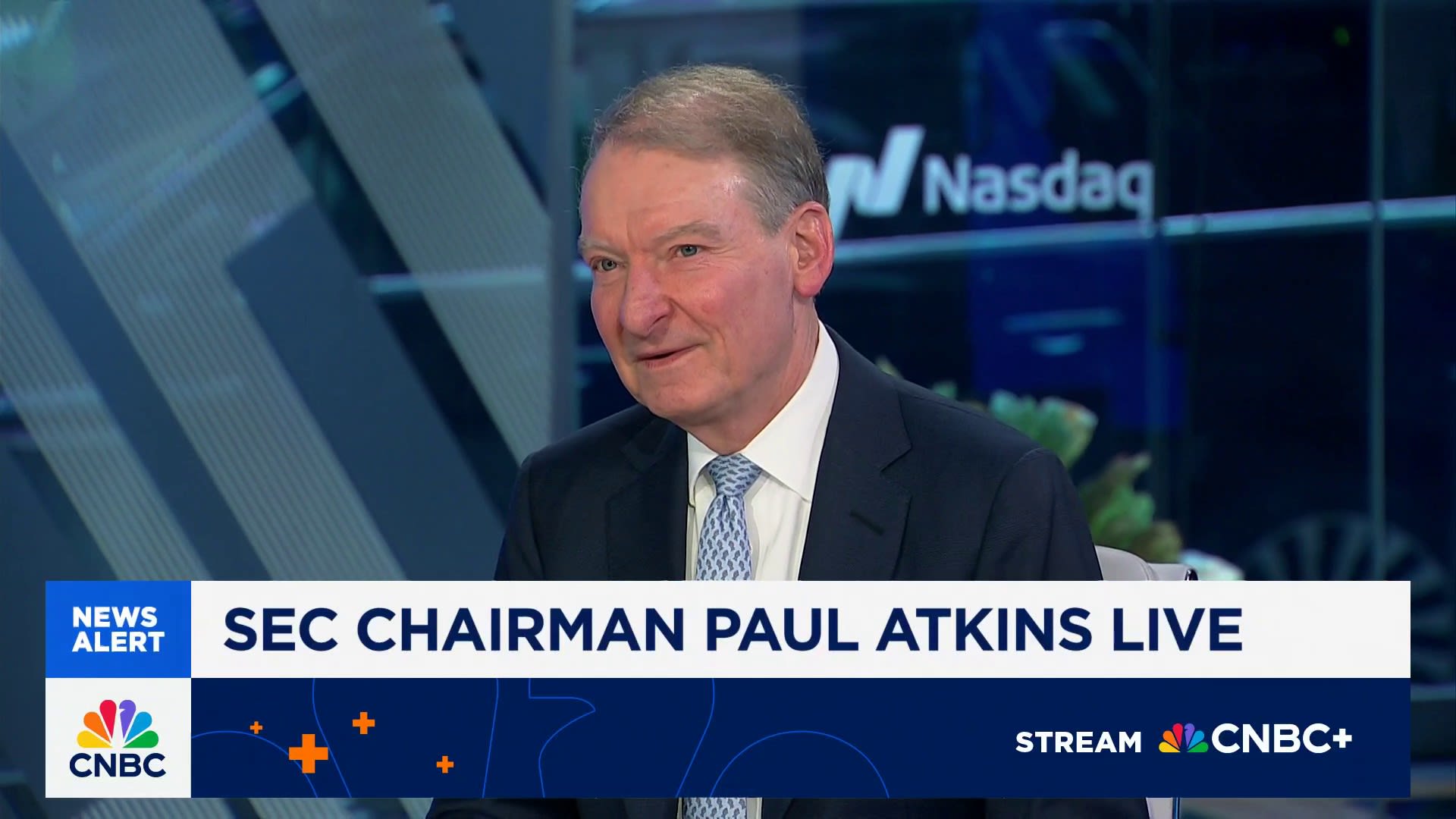
The US Securities and Exchange Commission chair, Paul Atkins, told CNBC an “innovation exemption” for crypto companies will take effect in January 2026, allowing projects to issue tokens without having to seek complete SEC registration. It will only be in effect until the Senate passes the crypto market structure bill. Atkins then told FOX Business that tokenisation of TradFi markets could happen potentially within “a couple of years from now.” This could have unpredictable results for crypto, however, with Citadel Securities urging the SEC to impose the same rules for trading tokenised securities in DeFi as on traditional exchanges.
Asian crypto news
Taiwan’s legislature is expected to pass a Virtual Assets Services Act within the next few months, and the chair of the local regulator believes the independent territory could see the first stablecoin launched by a financial institution in the second half of 2026. Meanwhile, South Korea’s ruling Democratic Party has urged the Financial Services Commission to submit a stablecoin bill this week so that it can be passed in January. If it doesn’t, the party will introduce its own bill.
European crypto news
Early crypto investor Christopher Harborne has made the single largest donation (US$12M/A$18M million) from an individual in UK history to right-wing populist political party Reform, which is leading in the polls. The UK is considering banning crypto donations as part of its new Elections Bill. A group of ten European banks, including BNP Paribas and ING, plans to launch a Euro stablecoin in the second half of 2026 through a company called Qivalis. Meanwhile, the EU’s European Securities and Markets Authority is taking over the regulation and supervision of crypto platforms.
Solana validator numbers plunge
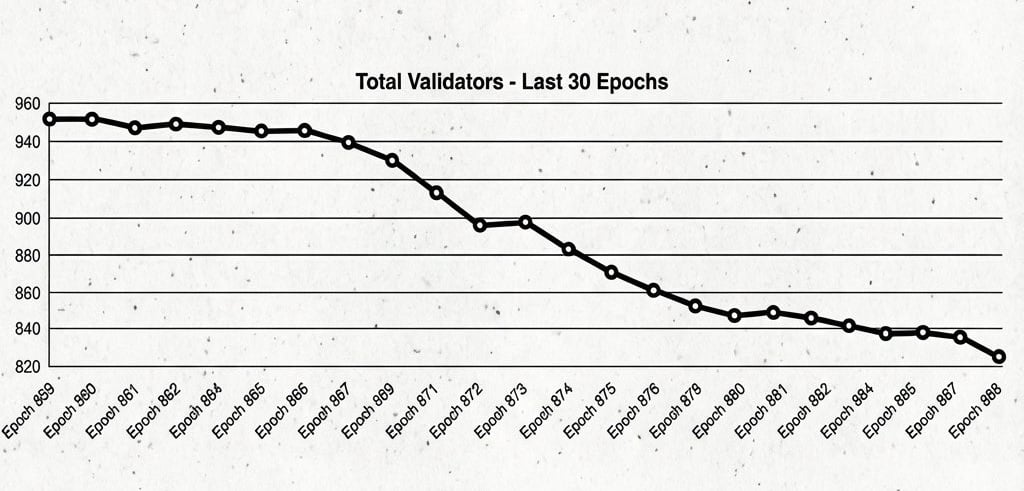
The independent Solana validator collective Layer33 noted with sadness that the number of validators on Solana has decreased significantly over the past 30 epochs, from 950 to 820 (Solana’s site currently reports a further decline to 801). In November 2022, it had 2100, and the network has lost around one-third of its validators this year due to reduced emissions rewards and centralised staking pools. Layer33 estimates that it takes 140,000 SOL, worth approximately US$20 million (A$30.2M), for a validator to break even after vote fees, hardware, and bandwidth costs are factored in.
Bullish predictions
BitMine’s Tom Lee predicts that Bitcoin will hit US$250K (A$377K) in early 2026 – and if it does, Ethereum could reach US$62,000 (A$93.6K). He said TradFi’s shift to tokenisation was comparable to the change to digital in the 1970s and means that Ether is grossly undervalued. “If Ethereum returns to its eight-year average ratio against Bitcoin, that’s US$12,000 (A$18.1K). But if it gets to 0.25 relative to Bitcoin, that’s US$62,000,” Lee concluded. Milk Road poured some cold water on the idea, saying that Bitcoin would need to surge 177% to hit US$250K, which it hasn’t done since 2020. And even if Bitcoin hits that figure, an ETH/BTC ratio of 0.25 has never happened before (the highest point was 0.15 in 2017). “We definitely agree $ETH is “grossly undervalued”… But US$62,000 in a few months is seriously ambitious,” it said.
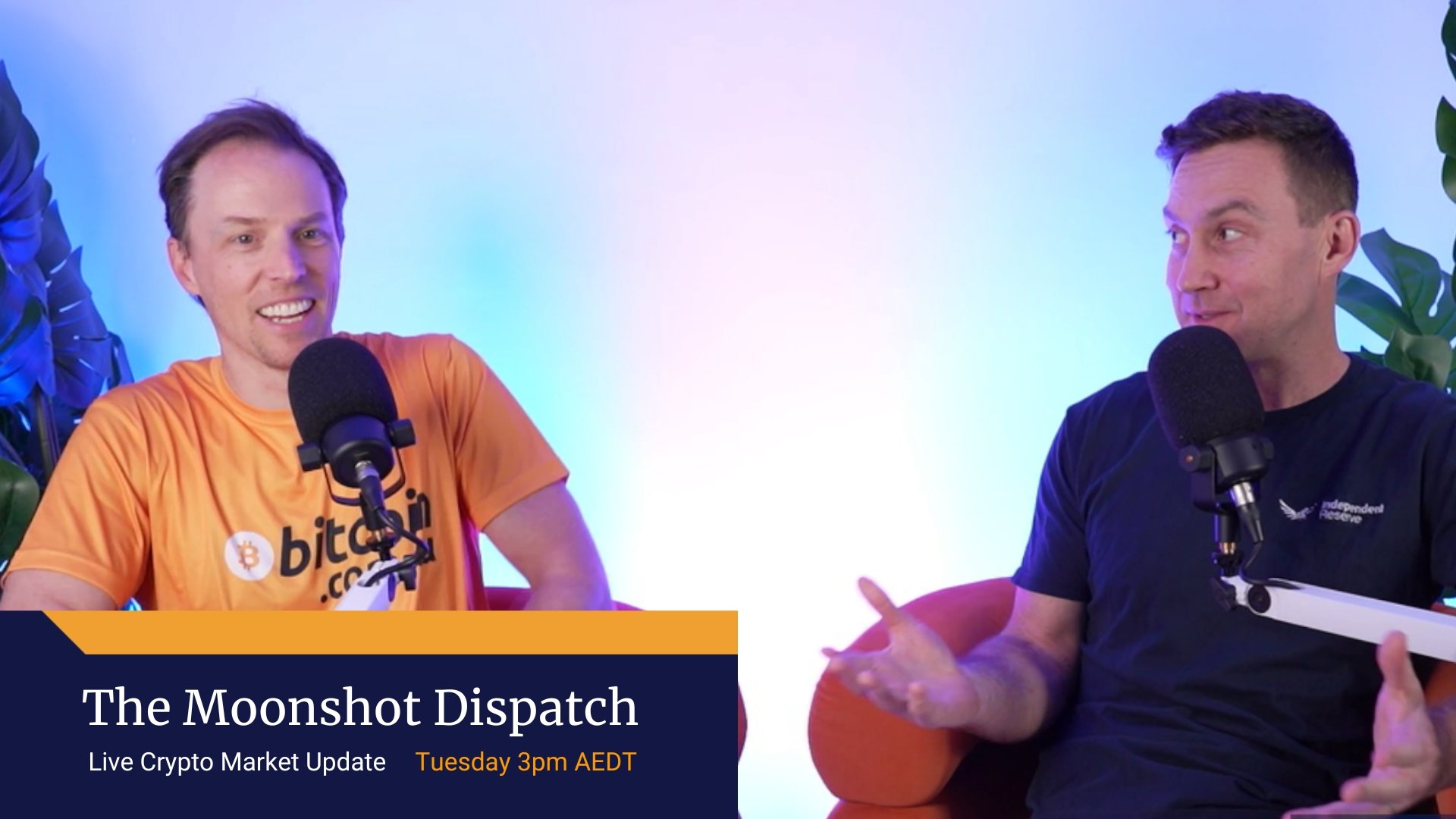
The Moonshot Dispatch – Live Crypto Market Update
Join us every Tuesday at 3 pm (AEDT) for a live market update. This week, Roman Stefanidi joins Nick in the studio to cover the latest crypto news and price movements. Tune in weekly on Twitter/X, YouTube & TikTok.
Until next week, happy trading!