Market insights
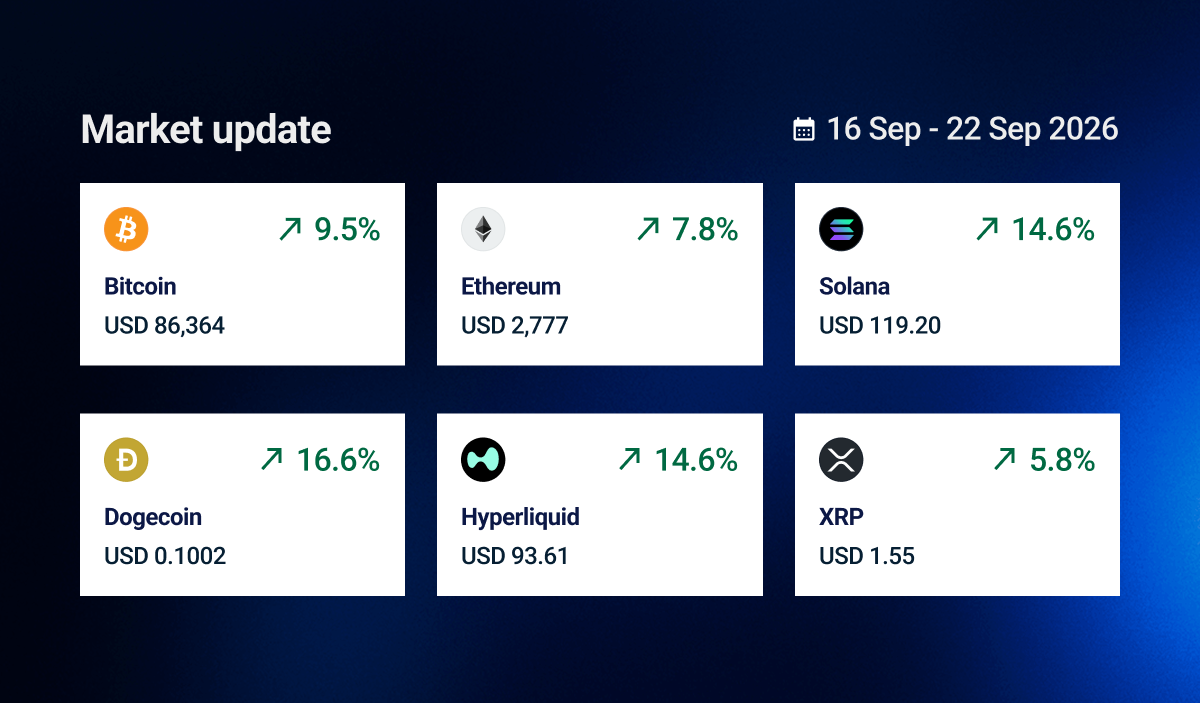
Bitcoin closed the week at US$84,450, above the May high of US$82,400 and marking a technical breakout. The Bitcoin price is now up more than 40% for the quarter, representing its best Q3 since 2017.
Crypto markets dipped following reports over the weekend that the Iran conflict was heating up, but, as usual, the script quickly flipped, and reports today suggest Iran and the US are actively negotiating an end to the conflict. President Trump emphatically denied that he is offering Iran sanctions relief.
At the time of writing, Bitcoin is down 3.4% on seven days earlier, and trading around $83,557. Ethereum lost 2.9% to trade around $2,691. Ripple fell 2.5%, Solana remained stable at 0.1%, Hyperliquid lost 6.8%, and Dogecoin was down 5.7%. The altseason indicator is creeping back up and is currently at 61, below the 75 threshold that would mark altseason. Twenty-two altcoins have doubled in price over the past 90 days, while only nine have seen negative returns.
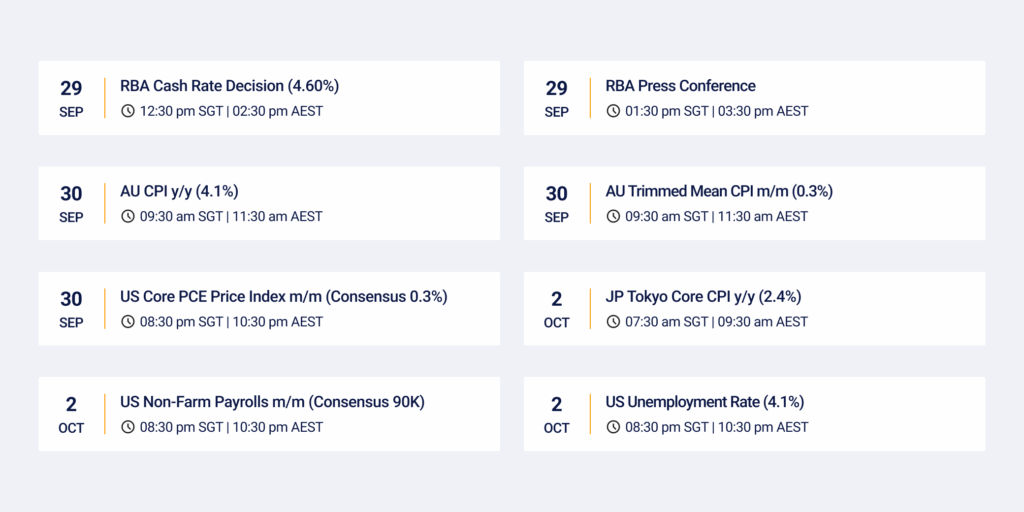
Markets in the US expect interest rate hikes in October. Closer to home, the Reserve Bank of Australia is expected to hike interest rates this week to the highest level since 2011. New figures show Australia’s Federal debt and deficit are worsening, but more slowly than forecast.
The Crypto Fear and Greed Index is at 74, or Greed.
Key economic calendar events
In headlines
Bitget loses US$387.5 million in a hack
North Korean hackers are suspected to be behind the US$387.5 million hack of Asia-focused exchange Bitget. CEO Gracy Chen said the attackers found a zero-day exploit in a third-party security product that allowed them to gain “high-level internal credentials.” Chen called on the Australia-founded project THORChain to block identified addresses from trading on its protocol. It has refused to do so on the grounds that it is decentralised and permissionless, and previously allowed funds from the Bybit hack to be swapped. This sparked a furious debate, with critics arguing that THORChain nodes could quickly halt the project when US$10.7 million of its own funds were taken in May. However, proponents argue that blacklisting addresses is entirely different and that the protocol retired its admin key in 2025. NEAR has taken the opposite approach: its SHIELD program blocked an attempt to swap US$50M in stolen Biget funds via NEAR Intents, and it turned down the 5% bounty on offer, too.
The SEC goes too far
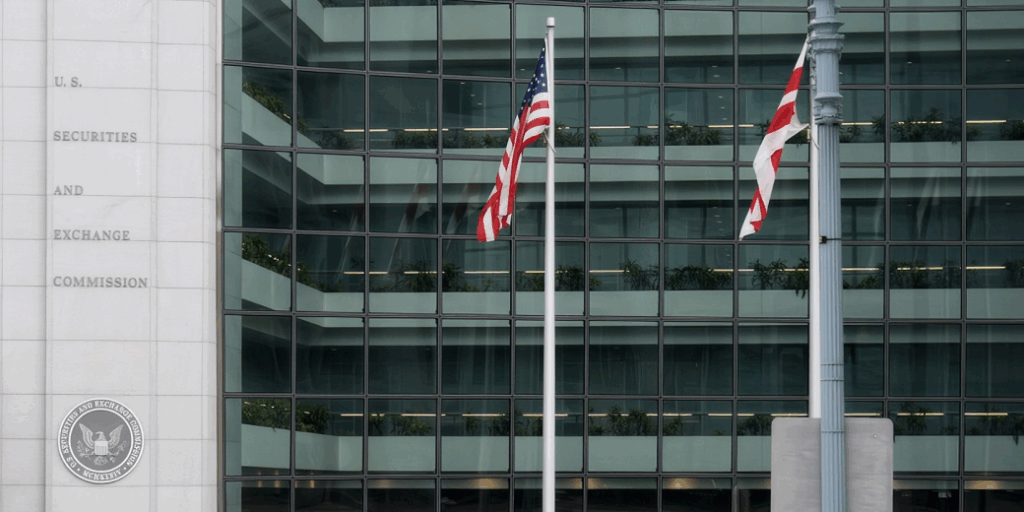
The SEC issued new pro-crypto guidelines this week that even some in the industry believe go too far. The new guidance states that a crypto project buying back its own token (effectively a tax-free way to distribute dividends) does not make the project’s commodity token into a security. a16z’s general counsel, Miles Jenning, warned that “any startup can tokenise any revenue stream, sell those tokens to the public, and avoid securities laws. Maybe the biggest loophole ever.” The SEC has subsequently modified the guidance to specify that projects must have no central party in control to qualify. The SEC also stated that liquid staking tokens, which users receive when they stake assets such as Ethereum in a pool, are not securities.
Crypto Mom retires, proposes ZK-KYC
The crypto industry’s favourite US SEC commissioner, Hester Peirce, has just announced her resignation. She will join Regent University Law School as an associate professor. Known affectionately as Crypto Mom, she devised a token safe-harbour proposal in 2020, which was an early iteration of the recently announced Innovation Exemption. Peirce this week called for the financial system to move on from collecting ID documents for KYC, arguing that it results in an endless number of databases that act as honeypots for hackers. She proposed using ZK proofs instead, which can verify identity without requiring the transmission of ID documents or private information.
Bitcoin ETFs are positive, NEAR sentiment is more positive
The US spot Bitcoin ETFs took in US$2.4 billion last week, which flipped the year’s inflows positive for the first time since July, when they were almost US$6 billion in the red. The Ether ETFs also took US$690 million in net inflows. NYSE Arca approved Bitwise’s NEAR ETF under the ticker NRR, suggesting the ETF is close to launching. NEAR combines blockchain sharding and AI and offers cross-chain swaps via Intents and private perps. Bitwise’s investment case for NEAR states that the “base case” is a price target of US$155, while the bull case is US$562. It’s currently trading at US$4.71.
Asia dominates grassroots adoption, Singapore is No.1 elsewhere
Nine of the top 20 countries in the world for grassroots crypto adoption are in the Asia Pacific region. According to the Chainalysis index, Australia ranks 15th, while Japan ranks 4th, followed by South Korea (5), India (6), Thailand (8), China (12), Indonesia (14), Vietnam (18), and the Philippines (19). Surprisingly, Singapore doesn’t make this particular list, which is focused on adoption by end users, but its regulatory framework was singled out for helping to drive stablecoin adoption. Singapore recently topped the Henley Crypto Adoption Index for a fourth straight year with a score of 47.1. The index looks at how easy it is to get residence or citizenship, as well as 900 data points about how countries embrace and regulate crypto and blockchain. Australia ranked 18th with a score of 34.5.
Ethereum moves beyond blockchain
Ethereum creator Vitalik Buterin says the Hegota Fork next year, which will follow Glamsterdam, is likely to be the last “normal fork” that someone from 2015 would recognise as a blockchain. The underlying tech is switching to zero-knowledge proofs and formal verification of the stack, and it’ll be post-quantum safe too. Buterin says the new architecture “combines blockchains with cryptographic privacy and verification, and powerful decentralised off-chain components.” Shifting to verifying ZK proofs of computation performed off-chain dramatically scales up capability, and Buterin says Ethereum really is becoming a “cryptographic world computer.” In related news, Chainlink’s CCIP 2.0 is integrating the Fast Confirmation Rule, which speeds up bridging and interoperability while maintaining security
AI agents will drive crypto adoption: BlackRock
BlackRock’s latest report suggests that AI Agents could become one of the biggest drivers of digital asset adoption. The global asset manager sees agents buying services, moving money and sourcing computing power via blockchain and stablecoin rails. However, it notes that agentic payments are still in their infancy, and the report was unable to tease out how much of today’s US$11.2 trillion in annual stablecoin volume is attributable to agents.
Until next week, happy trading.