In markets
With sentiment around the CLARITY Act improving, crypto markets have continued to edge higher. The risks to the global economy from the war against Iran remain, but stock markets appear priced for perfection, and Kalshi now puts the odds of a US recession this year at just 17.5%. CoinShares reports the improved odds of CLARITY passing were likely the catalyst for a sixth straight week of inflows into global digital asset funds of A$1.18B/US$857.9 million.
Santiment notes that Bitcoin has just experienced the fastest decline in holders in nearly two years, losing 245,000 wallets in just five days. But it said capitulation was “one of the key ingredients to the beginning of bull runs” and that similar declines in the past have preceded the next leg up. CryptoQuant, meanwhile, believes Bitcoin is in profit-taking territory, with hodlers realising net profits of more than 20,000 Bitcoin over the past month. However, the firm believes the recent price action is more indicative of a “bear market rally” than the start of a new bull market.
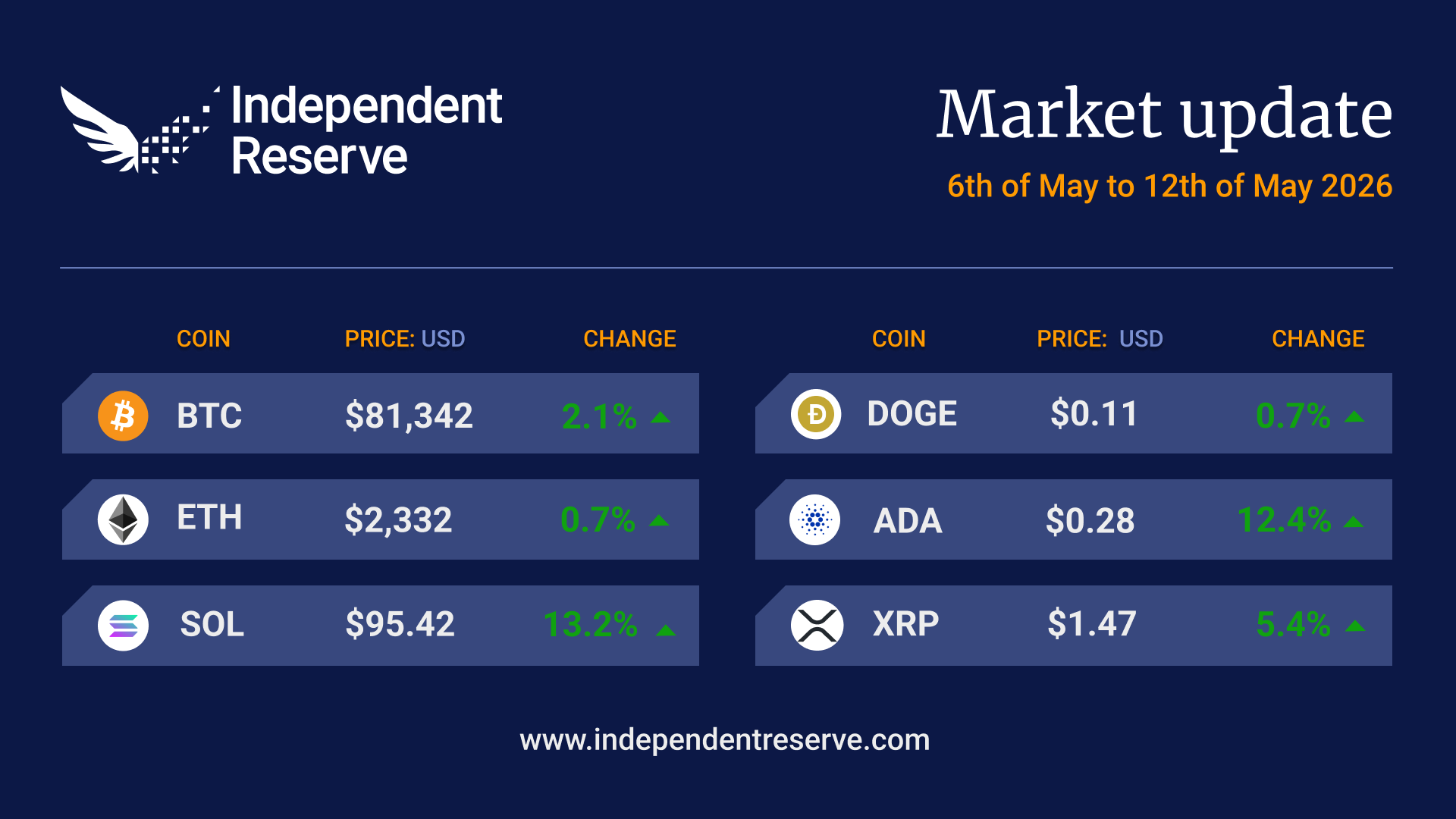
Bitcoin finished the week up 2.1% to trade around A$112,625 (US$81,342), while Ethereum was flat at around A$3,228 (US$2,360). XRP gained 5.4%, having this week secured a A$276M/US$200 million credit facility to expand the lending capacity of its institutional prime brokerage business. Solana gained 13.2%, Dogecoin was flat, and Cardano increased by 12.4%. The Crypto Fear and Greed Index is at 49, indicating Neutral sentiment.
From the OTC desk
Fed chair in focus: The Warsh appointment and what it means for markets
Kevin Warsh is set to become the next Federal Reserve chairman, with Senate approval widely expected to be a formality. Markets will be watching closely to see how the dot plot evolves under his leadership, and what stance he takes toward the cryptocurrency sector. Notably, at the most recent FOMC meeting, three central bankers expressed openness to a potential interest rate hike.
While President Trump has indicated he expects Warsh to cut rates, Warsh himself has stated he made no promises regarding monetary policy. Bears point to his traditionally hawkish record, while bulls cite his pro-cryptocurrency views, including calling Bitcoin the “new gold” for investors under 40, as well as his personal investments in crypto-related ventures. It is likely, however, that the incoming chairman will be required to divest his digital asset holdings to avoid potential conflicts of interest.
Bitcoin bulls return, but the hedges stay on
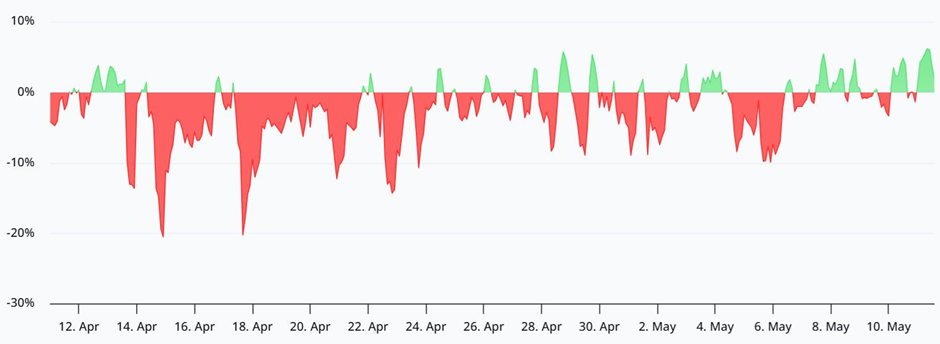
Bitcoin derivatives are reflecting improved sentiment among traders as the asset continues to hold above US$80,000. The annualised funding rate for Bitcoin perpetuals climbed to a recent high of 6%, having traded in negative territory for much of April. This is a signal that buyers are increasingly using leverage to fund their positions. Concurrently, however, the options market tells a more cautious story: demand for downside protection remains elevated, with put-call skew holding steady at 10%, unchanged from the prior week despite the recent rally, suggesting traders are not yet willing to rule out a sharper correction.
OTC desk activity
- Desk sees mostly profit-taking flows into this rally as BTC/USD trades to local highs last seen in late January.
- Stablecoins are seeing dominant one-way onramp flows
Key Economic Calendar Events (AEST)
- Tuesday, May 12 2026 – 10:30 PM – US Core Inflation Rate YoY APR (Consensus 2.7%)
- Wednesday, May 13 2026 – 10:30 PM – US PPI MoM (Consensus 0.5%)
- Thursday, May 14 2026 – 04:00 PM – GB GDP MoM (Consensus -0.2%)
- Thursday, May 14 2026 – 10:30 PM – US Retail Sales MoM (Consensus 0.5%)
- Monday, May 18 2026 – 12:00 PM – CN Industrial Production YoY
- Monday, May 18 2026 – 12:00 PM – CN Retail Sales YoY
In headlines
Capital punishment?
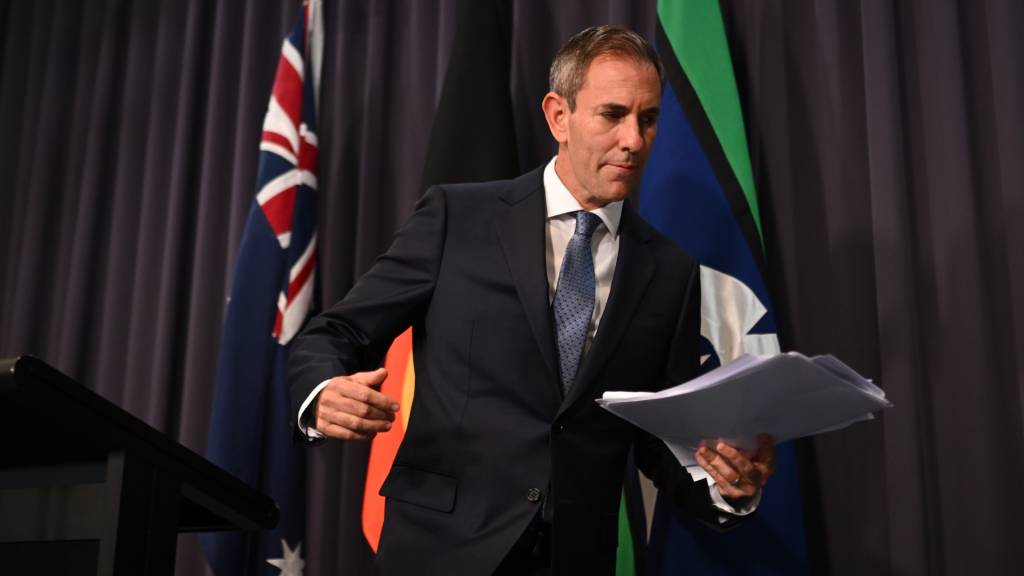
Aussie crypto holders reportedly face a big increase in capital gains tax from mid-2027 in tonight’s budget — though the precise details are yet to be confirmed. Under the current system, if you hold crypto for more than 12 months, you can get a 50% discount on gains. The new system will revert to the pre-1999 system, which allows holders to adjust the asset’s cost basis only by the annual inflation rate and then pay their marginal tax rate on the gain. Former Reserve Bank of Australia economist Christian Gillitzer’s analysis in the AFR suggests it equates to CGT rates of 33% to 47%, among the highest in the world. StockSpot’s calculator suggests that if an ordinary wage earner made $100,000 of gains in a year and then sold, they’d pay $16,000 CGT under the existing rules, but $34,173 under the new rules. The ABC also reported the budget will include funding for a “market analysis” for a proposed tokenised government bond.
CLARITY odds increase to 66%
The US crypto market structure bill, the CLARITY Act, is finally heading to markup in the Senate Banking Committee on May 14. Polymarket predicts a 66% chance it will be signed into law this year. The bill has already received bipartisan support in Congress and passed the Agriculture Committee thanks to a Republican majority. It also looks set to pass the Banking Committee with 13 Republican votes, but Galaxy’s Alex Thorn says that the odds of the bill getting 60 votes to pass the Senate will be diminished if it passes the committee only on Republican votes. Big differences remain with Democrats over ethics provisions targeting President Trump’s crypto interests and protections for DeFi developers. Some factions among the banks are also now fighting a rearguard campaign against the “stablecoin loophole” in the yield compromise deal. A new poll from HarisX found that 52% of registered voters support the CLARITY Act. Among crypto users, 72% said they would vote for someone who supported the bill over their preferred candidate.
BlackRock’s tokenisation plans for Ethereum
BlackRock is preparing two new tokenised money market products on Ethereum. The new tokens include a digital share class tied to BlackRock’s US$6.1 billion (A$8.4B) Select Treasury-Based Liquidity Fund, and a new stablecoin fund called BRSRV targeting investors who hold cash in stablecoins and prefer self-custody. In other TradFi news, Australia’s Computershare has partnered with Securitize on “Issuer Sponsored Tokens” in the US, which will have all the same rights as traditional shares — making them superior to Kraken’s xStocks or Robinhood’s tokenised shares.
Q1 was not great
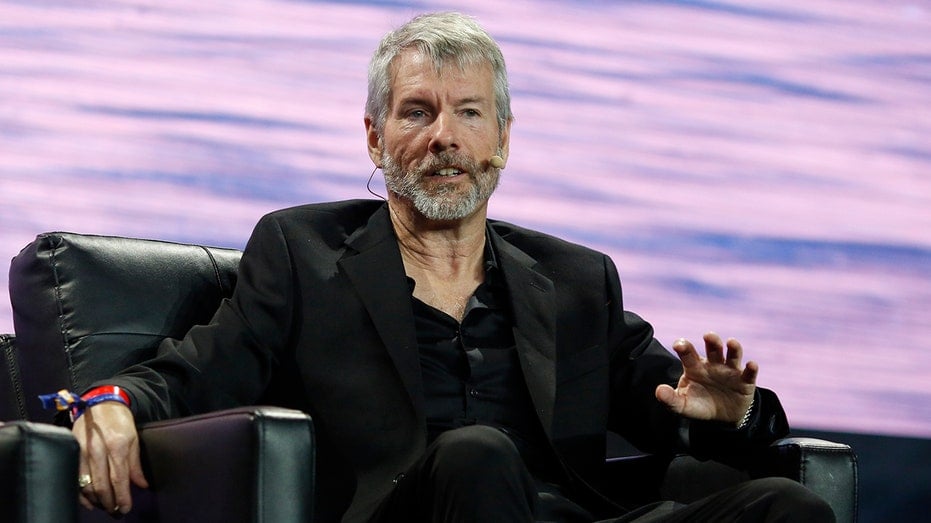
Michael Saylor’s Strategy reported a US$12.54 billion (A$17.3B) net loss in the first quarter. The loss was attributed to a US$14.46 billion (A$20B) unrealised loss on its Bitcoin holdings, in line with expectations. On the earnings call, Saylor upset some Bitcoiners by saying MSTR might sell some of its stack. “We’ll probably sell some Bitcoin to fund a dividend, just to inoculate the market, just to send the message that we did it,” Saylor said. Coinbase’s quarterly earnings report also looked bad, in part due to a US$482 million (A$665M) Q1 paper loss on its Bitcoin and Ethereum holdings, and the Trump-backed American Bitcoin reported a US$82 million (A$113M) net loss for the period.
Crypto fundraising
a16z has led a US$300 million (A$414M) fundraising round at a US$3 billion (A$4.14B) valuation for Digital Asset Holdings, the company behind TradFi blockchain Canton. USDC issuer Circle also raised US$222 million (A$306.5M) in an Arc token presale at a $3 billion valuation for its new blockchain. Galaxy and Sharplink have teamed up on a US$125 million (A$173M) fund targeting higher returns in DeFi.
Bits and pieces
AUSTRAC has launched two supervisory campaigns: the first focusing on over-the-counter cash-to-crypto conversion businesses, and the other on local crypto exchanges. VanEck’s Head of Digital Assets Research told CNBC that Bitcoin could reach US$1 million (A$1.4M) within the next five years. The Bank of England Governor, Andrew Bailey, said he expects to “wrestle” with the Trump administration over international standards for stablecoins. Bailey is concerned that US stablecoins could flood into the UK during a financial crisis owing to stricter convertibility rules. Ethereum’s TVL has taken a battering from the wave of DeFi hacks in April, falling from a 63.5% share down to 54%. That’s still more than eight times greater than its closest rival, Solana, on 6.66%. Morgan Stanley’s ETF has accumulated US$193.6 million (A$267.3M) in inflows since its launch a month ago.
Asia Crypto News
Japan intends to launch a 24/7 blockchain-based system for trading government bonds, potentially as early as this year. Crypto holdings on South Korean exchanges have plunged from 121.8 trillion won (A$113.7B) at the beginning of 2025 to just 60.6 trillion won (A$56.6B) at the end of February. Korean exchange Bithumb is expanding into Vietnam following a partnership with local digital asset firm SSI Digital to satisfy new local ownership rules. BNY Mellon will offer crypto custody in Abu Dhabi.

Bitcoin Super: The quiet Aussie revolution
The 2026 Independent Reserve Cryptocurrency Index shows that 45% of self-managed super fund holders now allocate to Bitcoin or other digital assets, up from 13% in 2019. A further 46% say they are likely to invest, indicating current and prospective allocators have effectively converged.
Demand extends beyond the self-directed segment. 25% of Australians aged 18 to 44 want their APRA-regulated fund to offer Bitcoin exposure. The institutional response remains minimal: AMP Super is the only major fund to have acted, and its 0.05% Bitcoin futures allocation reads more like a research expense than a portfolio decision.
The divergence is the story. SMSF holders, who control their own allocation, have moved decisively. Members of pooled funds, who do not, are signalling preferences that their fund managers have declined to accommodate. Whether industry funds close that gap or continue ceding ground to the SMSF sector will shape the competitive dynamics of Australian retirement savings in the years ahead.
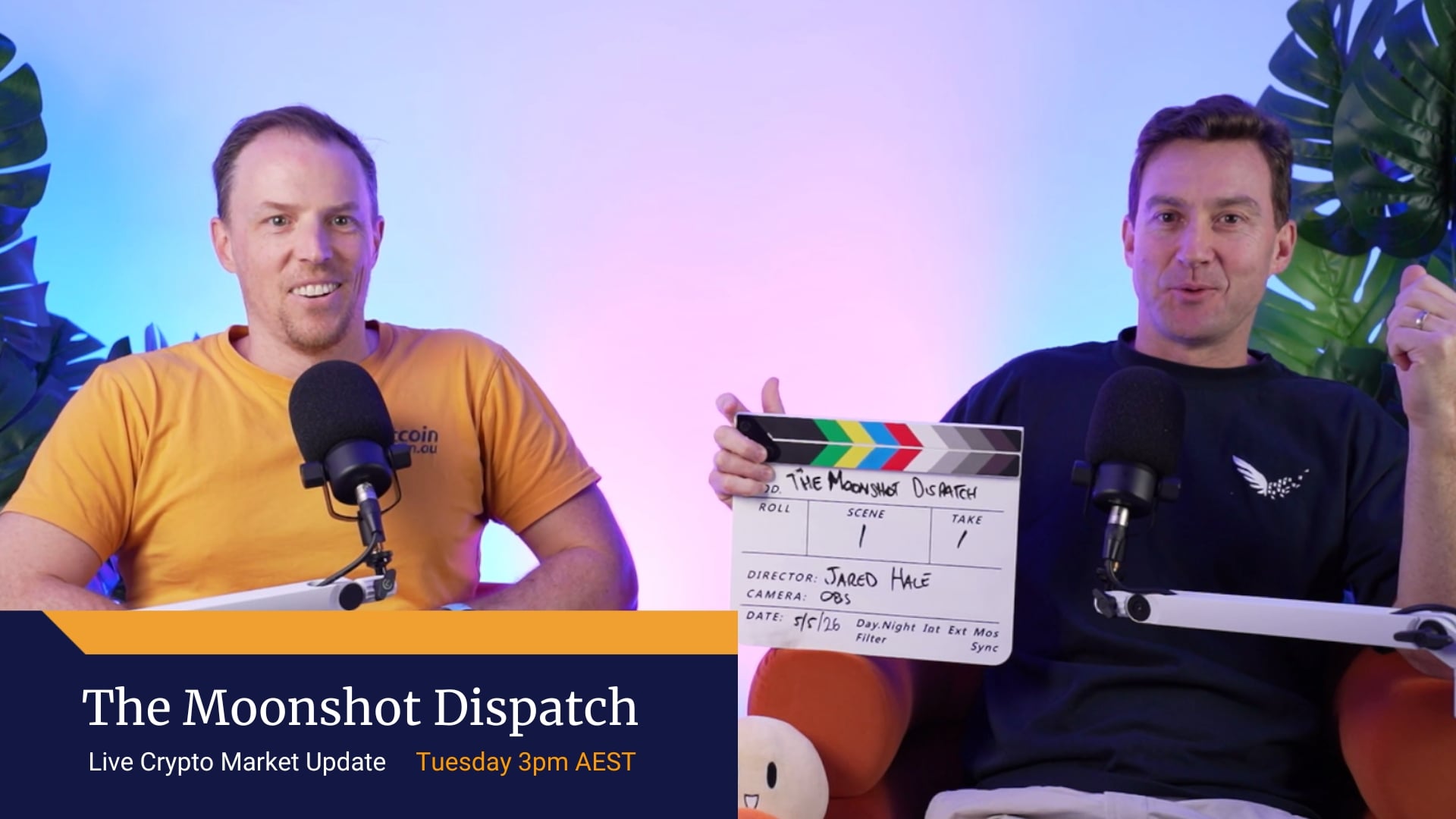
The Moonshot Dispatch
Join us every Tuesday at 3 pm (AEST) as we cover the latest crypto news, price movements and all the Bitcoin banter you may have missed. Tune in weekly on Twitter/X, YouTube, & TikTok.
Until next week, happy trading!