In markets
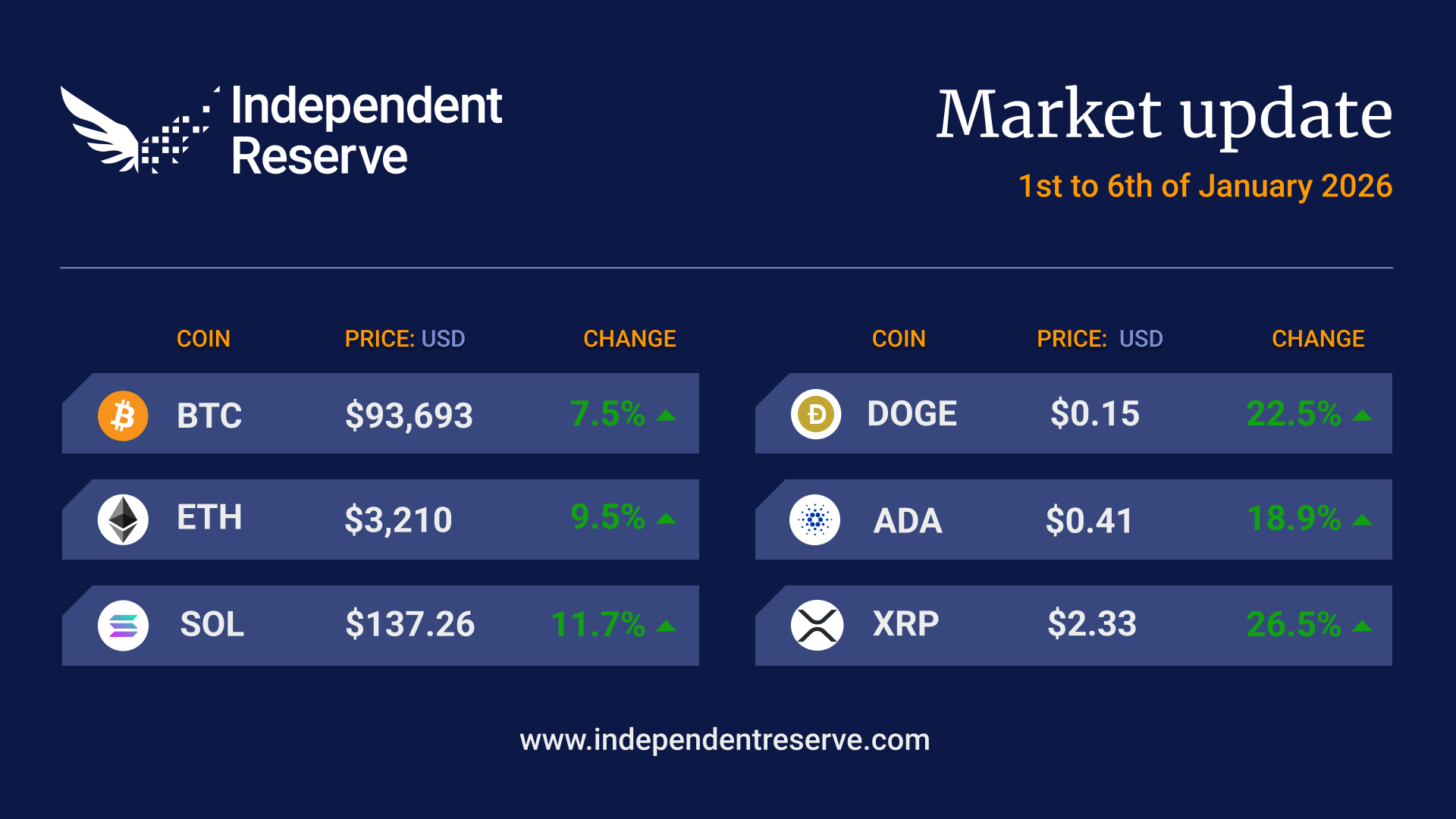
After a tumultuous end to 2025, in which the Bitcoin price declined for the first time in a post-halving year, 2026 is already looking more promising. Bitcoin is up 7.5% from the same time last week, trading around A$139,529 (US$93,693), while Ethereum gained 9.5% to trade around A$4,781 (US$3,210). XRP surged by a whopping 26.5% while Solana (11.7%), Dogecoin (22.5% and Cardano (18.9%) all saw significant gains. Geopolitical strife typically weighs heavily on markets, but the US military operation in Venezuela has seen both crypto and traditional markets rise in its aftermath. One theory suggests that President Trump’s promises of increased oil production will result in lower energy prices. Crude oil has already fallen, which will, in turn, result in lower inflation and, consequently, boost asset prices. While the end of sanctions could lead to a bump in near-term oil production, analysts say that getting Venezuela back up to full production will likely take years and US$100 billion (A$149B) in infrastructure. Another bright spot for crypto was the fact that end-of-year crypto tax loss harvesting in the US (AKA wash trading that pushes down prices) stopped on December 31. Sentiment has risen, and after three weeks of extreme fear, the Crypto Fear and Greed Index is finally back to just 44 or Fear today. Santiment analyst Brian Quinlivan said its social media analysis showed sentiment is even better than that and is actually “very positive at the moment.”
From the OTC desk
Crypto ETFs leading the rally
US spot Bitcoin ETF flows turned strongly positive at the start of 2026, signalling a sharp rebound in institutional demand after heavy outflows and volatility at the end of 2025. BlackRock’s iShares Bitcoin Trust (IBIT) led the surge with approximately US$287.4 million in single-day inflows on January 2, which represents the largest daily haul in nearly three months. This has contributed to total net inflows of US$471 million for US spot Bitcoin ETFs on the first trading day of the year. The momentum carried into the week, with total weekly net inflows reaching about US$459 million as investors rotated capital back into crypto exposure following year-end tax-loss harvesting and positioning adjustments amid stabilising broader risk sentiment.
While Bitcoin ETFs captured the majority of fresh capital, Ethereum spot ETFs also showed resilience with US$174 million in net inflows on January 2. Smaller altcoin products, including XRP and Solana ETFs, posted modest positive flows as well, reflecting broadening altcoin ETF interest.
Overall, the robust return of net inflows, particularly into leading Bitcoin products like BlackRock’s IBIT, points to renewed confidence in regulated crypto vehicles heading into 2026. This is supported by improving macroeconomic conditions, regulatory clarity, and market maturity after a challenging late-2025, hopefully setting a bullish tone for institutional crypto adoption in 2026.
OTC desk activity
- Market participants showed renewed buying interest in spot Bitcoin and some altcoins heading into the new year.
- Fierce one-sided sell flows for stablecoins for the week.
Key Economic Calendar Events (AEDT)
- Wednesday, Jan 07 2026 – 11:30 AM – AUS Inflation Rate YoY (Consensus 3.7%)
- Wednesday, Jan 07 2026 – 09:00 PM – EA Inflation Rate YoY (Consensus 2%)
- Thursday, Jan 08 2026 – 02:00 AM – US Jobs Openings (Consensus 7.64M)
- Thursday, Jan 08 2026 – 11:30 AM – AU Balance of Trade (Consensus A$4.8B)
- Thursday, Jan 08 2026 – 04:00 PM – JP Consumer Confidence (Consensus 37.8)
- Friday, Jan 09 2026 – 12:30 PM – CN Inflation Rate YoY (Consensus 0.8%)
- Saturday, Jan 010 2026 – 12:30 AM – US Unemployment Rate (Consensus 4.5%)
In headlines
Four-year cycle broken
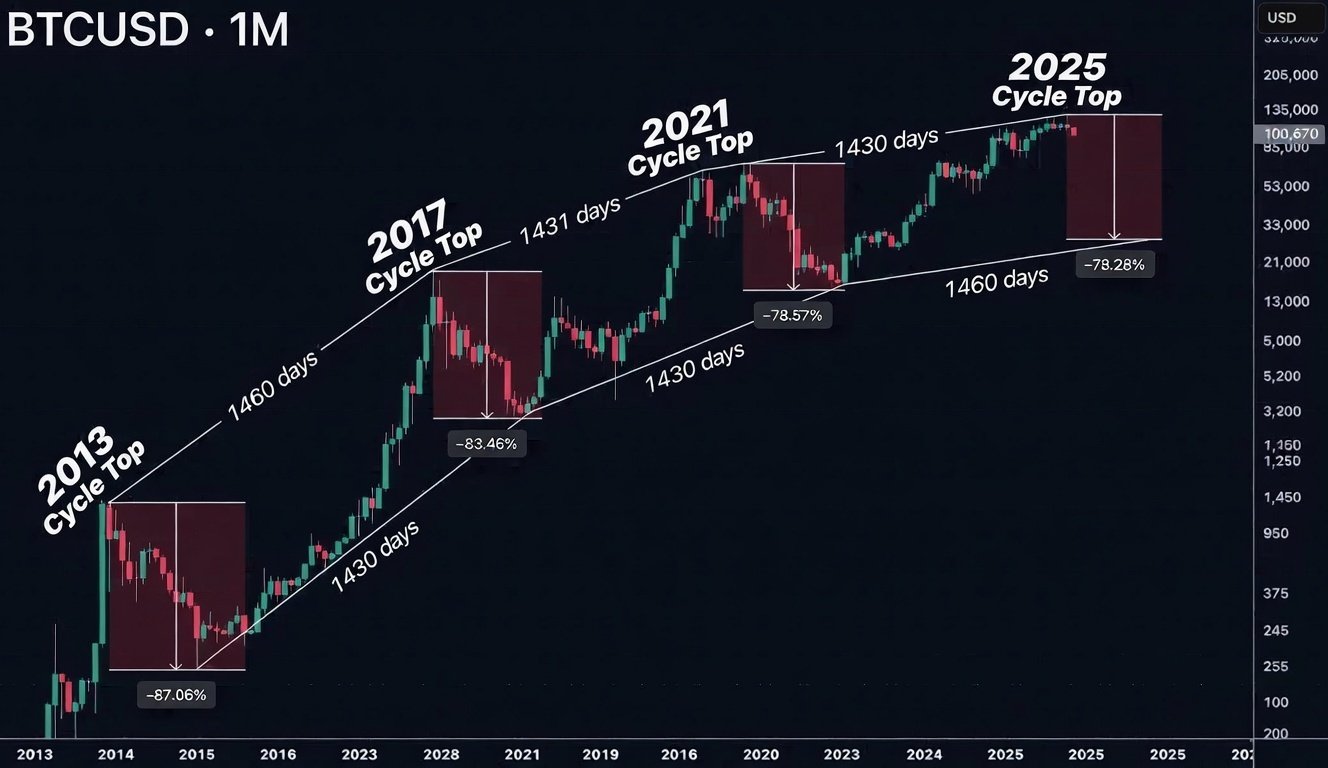
For the first time in history, Bitcoin finished a post-halving year down by 8%. That has been interpreted by many as proof that the traditional four-year cycle has broken and that literally anything could happen from here. While the exact mechanism of crypto’s four-year boom-bust cycle to date has been debated — some attributed it to fluctuations in the money supply or the business cycle — most people believed it was linked to Bitcoin’s halving event, which reduces the supply and boosts prices before a subsequent crash. The impact of pro-crypto politicians, the pro-crypto SEC, billions flowing into ETFs, and big banks and TradFi firms starting crypto projects means this cycle could play out very differently. ARK Invest CEO Cathie Wood, BitMEX co-founder Arthur Hayes and Bitwise’s Matt Hougan all believe the four-year cycle is a thing of the past.
CLARITY Act gets a date
The expected markup date for the US crypto market structure legislation, the Digital Asset Market CLARITY Act, is January 15. Previous attempts to schedule the markup in 2025 fell apart after Republicans and Democrats couldn’t agree on DeFi rules and whether stablecoin issuers should be allowed to offer yield. Before the Christmas break, Banking Committee Chair Tim Scott said that “strong progress” had been made, and industry figures who attended a bipartisan meeting with committee members also seem confident a deal can get done. One sticking point will be the fact that there are no Democrat commissioners left at the SEC or CFTC following the resignation of Caroline Crenshaw. Crypto fans have high hopes for prices if the bill gets passed, but veteran trader Peter Brandt commented, “Is it a world-shaking macro development? Nope. Needed for sure, but not something that should redefine value,” Brandt told Cointelegraph. Goldman Sachs, however, cited the bill’s passing in a research report as the “key to crypto ecosystem growth” and assigned a buy rating to Coinbase, Robinhood and crypto lender Figure.
Bank of America recommends Bitcoin ETFs to clients
Around 1,500 U.S. wealth advisors from Merrill, Bank of America, and Merril Edge are now permitted to recommend Bitcoin ETFs to a broader range of clients — with a maximum portfolio allocation of 4%. No word yet on whether they’ll be allowed to recommend ETH ETFs any time soon.
Strategy and BitMine
Strategy kicked off the new year with another purchase of 1,287 Bitcoin, bringing its total reserve to 673,783 BTC. Its closest Digital Asset Treasury rival is Ethereum-focused BitMine, which has now amassed 4.143 million ETH following a purchase of 32,977 ETH this week.

Spot crypto ETFs pass $2 trillion in volume
The US spot crypto ETFs have now surpassed US$2 trillion (A$2.97T) in total trading volume, two years after the first Bitcoin ETFs went live. The first trillion in volume was achieved in 16 months, while the second trillion was reached in just eight months. The year has also started well, with the Bitcoin ETFs taking in $471.3 million (A$702M) on January 2 and the Ethereum ETFs taking in US$174.5M (A$260M).
CARF is coming
The Crypto-Asset Reporting Framework, developed by the OECD, is set to take effect officially in 2027. However, as of Jan 1 this year, crypto service providers in 48 participating jurisdictions started collecting the necessary data for tax reporting purposes. Australia is part of the second group of 27 nations, which will begin recording this data on January 1 next year, in preparation for a 2028 launch.
Bitcoin celebrates 17 years
January 3 marked 17 years since Satoshi Nakamoto mined the genesis block of the Bitcoin blockchain back in 2009. To celebrate the US government debt surpassing US$38.5 trillion (A$57.3T), suggesting the USD may have an expiry date unless politicians act to address the ever-increasing debt. “Happy Bitcoin Genesis Block day,” said Paolo Ardoino, the CEO of stablecoin issuer Tether, which bought 8,888 Bitcoin on January 1st, bringing its holdings to 96,000 BTC.

Ethereum in 2026
Ethereum appears to have got its mojo back, thanks to its renewed focus on scaling the L1. Creator Vitalik Buterin proudly announced that it has solved the blockchain trilemma after a decade’s work, thanks to ZK EVMs. The gas limit was recently raised to 60 million, and L1 processed a record 2.2 million transactions in a single day last week, with fees of just US$0.17 (A$0.25). Back in May 2022, users had to pay US$200 (A$298) per transaction. Fourth quarter data from Token Terminal also showed the number of new smart contracts on Ethereum reached a high of 8.7 million and stablecoin transfers hit a high of US$8 trillion (A$11.9T). Active addresses also surged to a record 10.4 million in December. Ethereum saw more than US$4 billion (A$5.95B) in net inflows in 2025, dwarfing any other chain. And recently, the entry queue for staking not only flipped the exit queue for the first time in six months, but it’s now an order of magnitude higher, 1.13 million ETH queued up to stake and virtually nothing waiting to leave.
Venezuela and crypto
Many people in Venezuela turned to Bitcoin to help them survive the regime and hyperinflation, including opposition leader Maria Corina Machado. She has spoken of setting up a Bitcoin reserve and using it as a payment solution. There are also persistent rumours that Venezuela has amassed a stack of 600,000 Bitcoin, but there’s little in the way of hard evidence. A new account on Polymarket won US$400,000 (A$596K) in 24 hours betting on Maduro’s ousting, prompting insider trading concerns. Democratic congressman Ritchie Torres said he will introduce a bill banning elected officials or government employees from trading on prediction markets.
Until next week, happy trading!