In markets
Crypto gained ground after the shaky US-Iran negotiations concluded with a roadmap to a permanent deal and progress on the nuclear issue. The US Federal Reserve has kept interest rates on hold, but the prospect of rate rises later this year has weighed on markets.
Tech stocks fell on Monday, with SpaceX erasing more than Ethereum’s entire market cap, but the Russell 2000 small-cap index is now trading at all-time highs. This has traditionally been a strong indicator for crypto, but there’s little sign that’s happening this time around.
Concerns over Strategy’s STRC eased overnight, as the company bought more Bitcoin and added A$429M/US$300 million to its cash pile to pay dividends. The bleeding from Bitcoin ETFs also slowed considerably this week, but they still saw A$323M/US$226M in outflows.
Glassnode summed up the week’s price action as volatile but range-bound, with the “market caught between fading momentum and underlying strength, awaiting its next directional catalyst.”
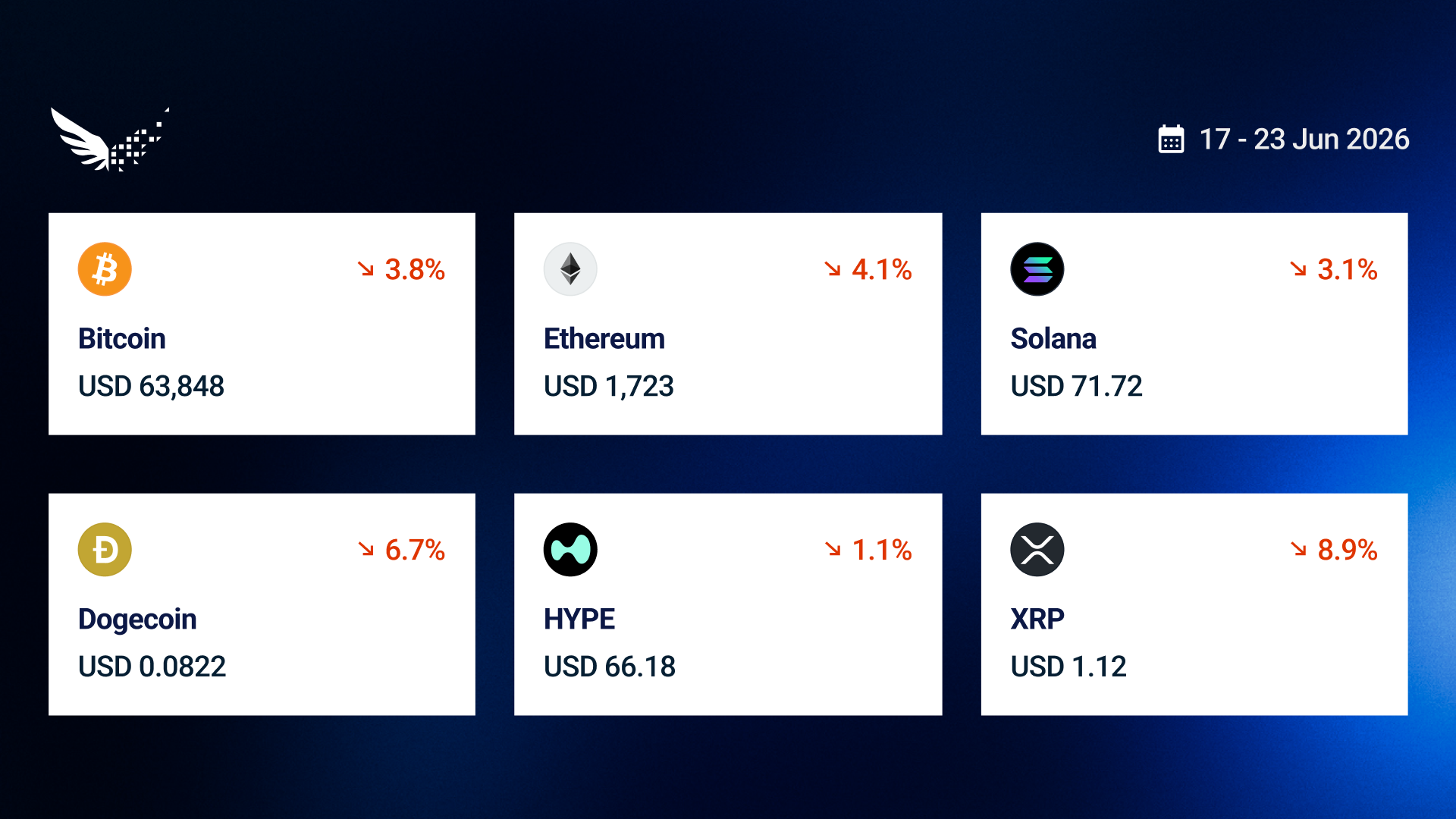
Bitcoin and Ethereum are both at risk of notching up a third consecutive negative quarter. Bitcoin finishes the week down 3.8% to trade around A$91,292 (US$63,848) while Ethereum lost 4.1% to trade around A$2,465 (US$1,723). XRP was down 8.9%, Solana fell 3.1%, and Dogecoin lost 6.7%. The Crypto Fear and Greed Index is at 23, or Extreme Fear.
From the OTC desk
A new FED era
With his first Fed press conference now behind him, Fed Chair Warsh wasted no time in establishing his authority at the helm of the Federal Reserve. In a significant pivot, he stated that forward guidance will be dropped to maximise policy flexibility and prevent policymakers from anchoring to outdated forecasts as economic conditions shift. Coupled with half the committee expecting a hike before year-end, the announcement left markets more uncertain, casting an overhang over risk assets while giving the dollar a firm lift. Nonetheless, Bitcoin remains broadly stable, trading in the US$63,000-US$65,000 range. On the bright side, oil is trading lower following a tentative MOU signed by Iran and the US, though the durability of that agreement is flakier than your favourite politician’s promise on the eve of an election.
Crypto liquidity remains challenging
Liquidity remains muted, with USDT and USDC market capitalisation decreasing by 1.80% and 2.81%, respectively. US buyers have also shied away from Bitcoin, with the Coinbase Premium Index staying in negative territory. The lack of a catalyst for crypto to reprice higher is also reflected in the continued outflows from BTC ETFs, where we saw a net outflow of US$70 million in the past week. It’s also worth noting that this amount pales in comparison to the large outflows at the start of the month. None of this constitutes a bull case in isolation. Without a fresh catalyst, whether a dovish pivot from the Fed, a resolution on the CLARITY Act, or a reversal in stablecoin supply growth, the path of least resistance remains sideways to lower into the November midterms, albeit the worst of the selling might be already behind us.
OTC desk activity
- Stablecoin 2-way flows
- Light spot buying for BTC on dips
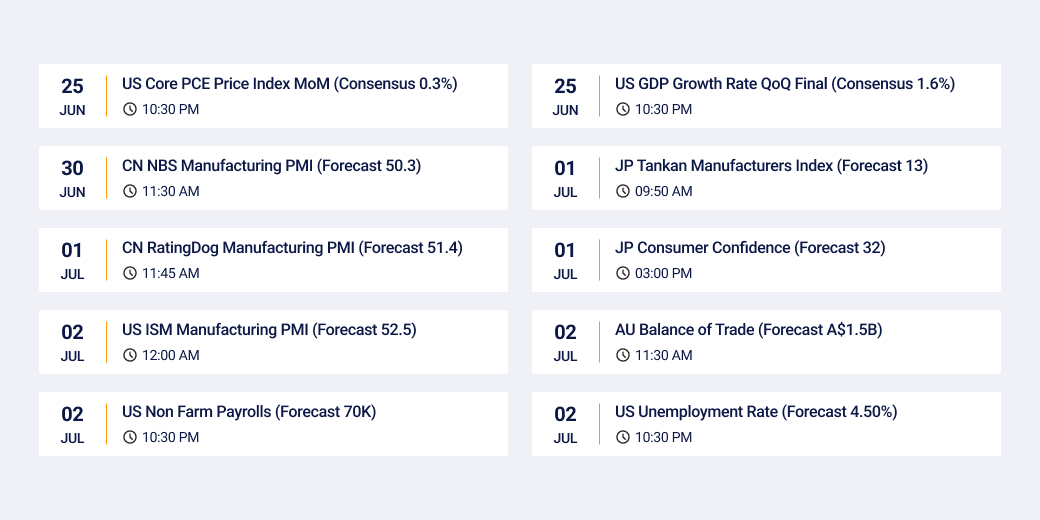
Key Economic Calendar Events (AEST)
In headlines
Strategy’s STRC slumps
Strategy’s preferred stock, STRC, plunged to US$82.50 (A$118) last week after losing its so-called “peg” of US$100 (A$143). Despite concerns online about a Terra/Luna-style death spiral, STRC isn’t a stablecoin and isn’t actually pegged to anything — the yield just gets better the lower it goes below $100. Incredibly, it emerged this week that Michael Saylor cooked the whole mechanism up with ChatGPT. Strategy says it can pay dividends for 32 years with its current holdings, and helped alleviate fears it would sell more Bitcoin to pay dividends by buying another 520 BTC and increasing its cash holding to US$1.48B (A$2.11B).
The cycle bottom debate
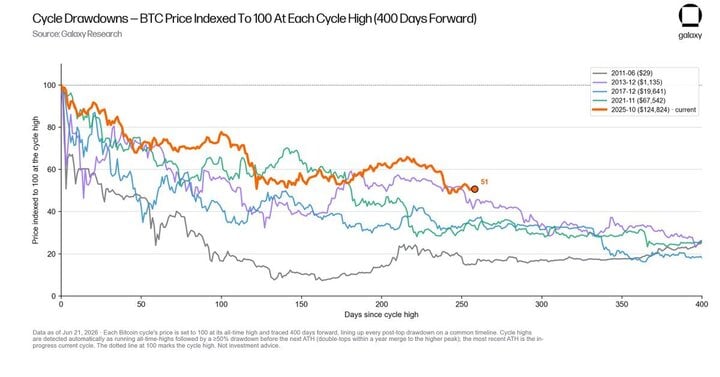
Galaxy Research notes that Bitcoin’s current 49% decline from its cycle high is much less severe than the 70% to 90% drawdowns of previous cycles. It released a chart with the various cycles overlaid that shows this price this time around trending toward a much shallower drawdown. However, analyst CryptoCon says the “Logarithmic MVRV” indicator has not yet reached the cycle’s bottom, and says Bitcoin could decline 66% from the top to around US$42.5K (A$60.8K). Altcoin sellers appear exhausted, and Glassnode’s Altcoin Cycle Signal is back in Altcoin Season territory (but that’s mostly due to Bitcoin’s weakness).
Glamsterdam approaches
Ethereum’s next big upgrade, Glamsterdam, is entering the home stretch, with the EIPs currently being tested on devnets. “This is the last phase before we work on hardening and then shipping the testnets. There’s no fixed timeline, but we’ve made massive progress,” said EF dev Parithosh Jayanthi. The upgrade will bring parallel processing (via Block Access Lists), ePBS (which decentralises block building and proposing) and an overhaul of gas pricing. While Ethereum has been criticised for making less revenue from its decision to lower gas fees, it has arguably unlocked greater demand. Token Terminal’s Q1 report shows that, year over year, monthly active users rose 85.9%, transaction count increased 81.5%, and throughput climbed 81.7%. Etherealise compared it to Amazon’s strategy of prioritising scale over profits in its early days, which led it to become a behemoth.
Can ETH Labs save the day?
The Ethereum Foundation has lost at least eight senior members in the past five months, and co-executive director Hsiao-Wei Wang resigned this week. But in a bullish development, five former EF researchers have just announced a new non-profit called ETH Labs to accelerate the protocol and drive adoption. It has support from BitMine, Sharplink and Etherealize, suggesting it might become the “number go up org” Ethereans have been hoping for. Meanwhile, former core protocol development coordinator Trent Van Epps published an article suggesting the Foundation will face a funding crisis in the next few months, although others claim the EF can sustain itself for 30 years if it reduces outlays to US$10M (A$14.3M) a year. A controversial proposal to redirect 10% of staking rewards toward protocol development has received a fairly negative response.
Big push for Clarity
Following a bipartisan deal on a housing bill that will also ban a CBDC until 2030, a series of 11th-hour meetings have been scheduled for this week to try to save the Clarity Act. The July 4 deadline is looking increasingly unrealistic, and passage of the bill in August is also growing more doubtful, with Polymarket odds falling to 45%. Ethics provisions remain the big sticking point, though a number of other details still need to be agreed on. Agriculture Committee chair John Boozman said one big problem is “A lot of members don’t understand it. In fact, I would say most members don’t.” Meanwhile, crypto groups have thrown their support behind a separate bill that would tax Bitcoin miners when they sell, rather than at the price they mined it.
Asia Crypto news
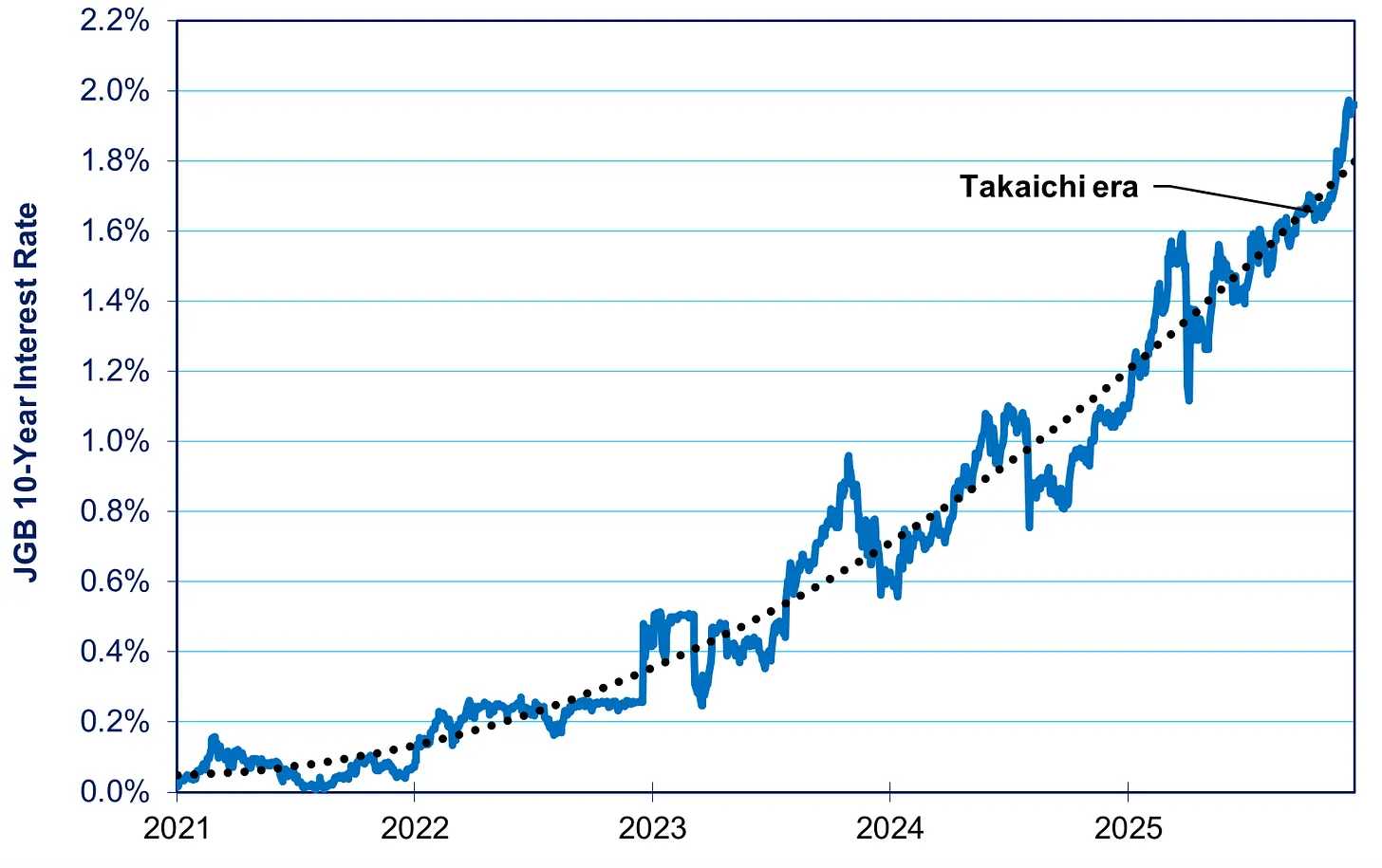
The Bank of Japan has raised interest rates to a 31-year high of 1%. Bitcoin miners in Oman have been told they must join Omanhash, the country’s sole official mining pool. Bybit has been added to the Monetary Authority of Singapore’s Investor Alert List, which warns that various platforms are not licensed in Singapore.
Bits and Pieces
CME Group plans to sue the CFTC for approving perpetual futures on Kalshi and Coinbase, arguing perps should be classified as swaps under the Dodd-Frank Act rather than futures. Illinois will impose a 0.2% tax on the value of crypto transactions from January 2027, though there are now efforts to repeal it. According to Tom Lee, Bitmine is set to join the Russell 1000 on June 26. A JPMorgan report suggests that Bitcoin has traded below its estimated production cost for 5 consecutive months. A Wall Street Journal investigation has found 1,105 fake videos of users supposedly winning US$900,000 (A$1.287M) between them on Polymarket. The WSJ report alleges the creators were paid to make dummy bets on a fake website.
The Moonshot Dispatch
Join us every Tuesday at 3pm (AEST) as we cover the latest crypto news, price movements and all the Bitcoin banter you may have missed. Tune in weekly on Twitter/X, YouTube, Instagram & TikTok.
Until next week, happy trading!