Market insights
Since June, the Bitcoin price has been trading in a range between the long-term realised price floor (US$52,699) and the short-term holder realised price (US$67,200). This week, Bitcoin traded within a narrow US$2,000 band around the Median Realised Price of US$63,200. Spot trading volumes are back at 2019 levels, and the on-chain transfer velocity is at a seven-year low.
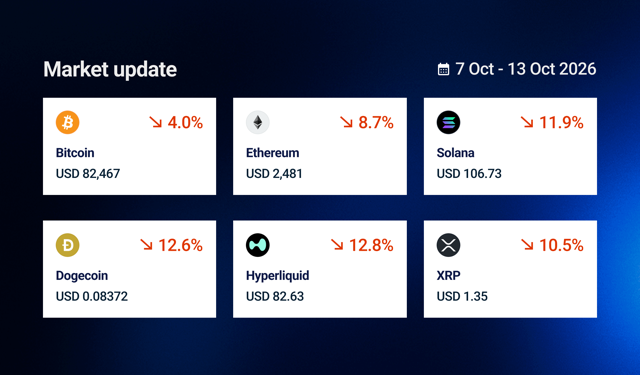
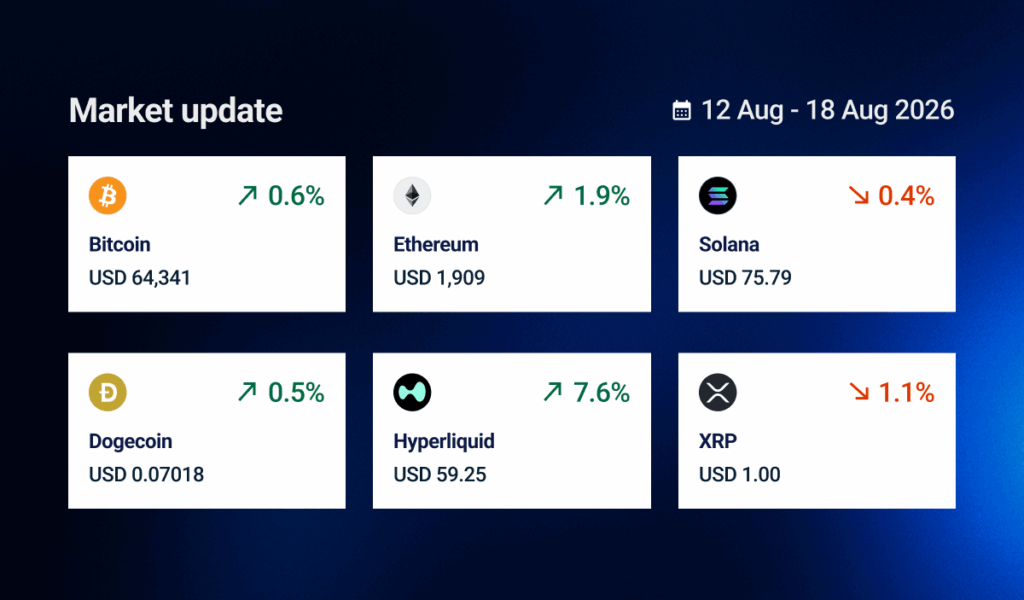
Bitcoin finishes the week flat at US$64,341, while Ethereum gained 1.9% to trade around US$1,909, XRP lost 1.1% and is trading just under the US$1 mark, while Solana and Dogecoin were both relatively flat.
The Bitcoin ETFs saw US$389.71 million in outflows last week, while the Ethereum ETFs saw US$2.26 million in outflows. Jane Street, the quant trading firm some blame for manipulating the Bitcoin price, has revealed in filings that it owns more than US$1.06 billion of Bitcoin ETFs.
There is a growing consensus that we’re nearing the end of the bear market, with analyst Benjamin Cowen stating we’re currently at day 1,365 of the cycle, while the past two cycles each bottomed around day 1,434. VanEck says its GEO framework metrics are showing “signs of near-bottoming that we believe may warrant beginning to scale in.”
October is the most commonly cited turnaround point, although Franklin Templeton’s Sandy Kaul said earlier this month that “the fact that everybody says by October the markets are going to turn, means it will probably turn sooner.”
The Crypto Fear and Greed Index is at 31, or Fear.
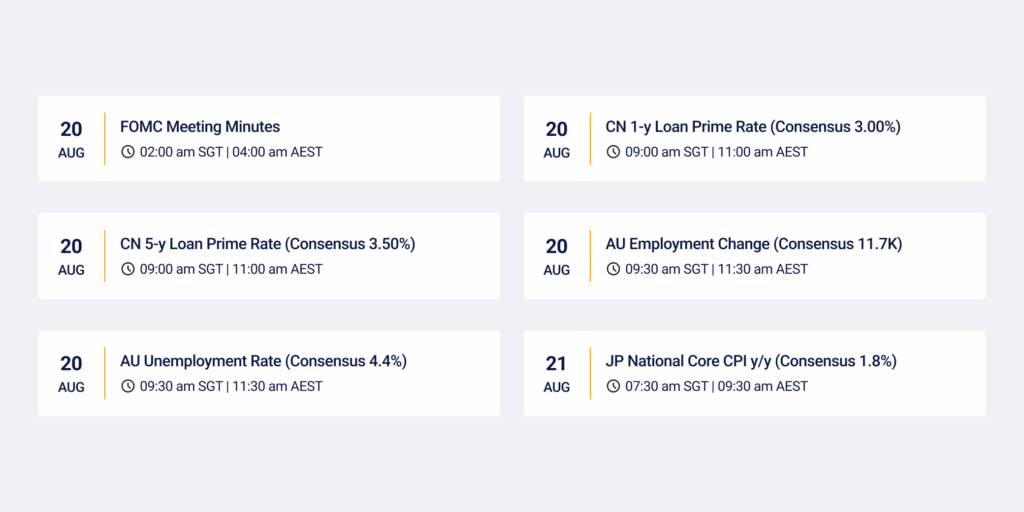
Key economic calendar events
In headlines
SEC cancels crypto rules meeting
The US SEC abruptly cancelled a planned meeting late last week to discuss its proposed new crypto rules following pushback from the White House. The SEC was set to vote on exemptions that would allow crypto startups to raise capital without complying with traditional securities offering rules. But a source told CoinDesk that the White House was concerned any move by the SEC on crypto regulations “could kick a hornet’s nest” while negotiations continue to pass the CLARITY Act.
White House crypto meeting
The White House will hold its own crypto meeting on Wednesday, with President Donald Trump likely to attend, along with SEC chair Paul Atkins and representatives from the NYSE and Nasdaq, Coinbase, a16z, Ripple and Chainlink, Kalshi, Paradigm and the Digital Chamber. The gathering will take place the day before the first meeting of the CFTC’s Innovation Advisory Committee to discuss crypto, AI, and prediction market rules. Galaxy Research has cut the odds of the CLARITY Act passing this year to just 10%, while Polymarket puts the odds at 20%. The Genius stablecoin rules have just entered a 60-day comment period before they take effect on January 18.
Ethereum’s ZK breakthrough
Ethereum researcher Justin Drake says a new breakthrough will enable the chain to adopt the much more battle-tested SHA or BLAKE hash functions as part of its post-quantum upgrades, rather than the more experimental Poseidon. Poseidon had been tailored to play nicely with zero-knowledge SNARKS, which are being used to compress the very large file sizes of post-quantum signatures. But the new breakthrough will instead enable ZK SNARKS to work with any hash function. “In hindsight, the key was not SNARK-friendly hashes, but hash-friendly SNARKs,” he said. In other news, creator Vitalik Buterin says Ethereum may incorporate elements of Bitcoin’s UTXO model to help speed up the chain, as the system requires about 99.8% less state storage. The Glamsterdam hard fork has just been released on the Plataberget testnet, and the devs are currently arguing about what should be included in the next Hegota hard fork, which has now been pushed back to 2027.
Strategy faces MSCI index removal, again
MSCI has reopened its push to exclude non-operating companies from its Global Investable Market Indexes, a proposal that could result in Strategy and Metaplanet being dropped once again. The index provider first floated excluding crypto treasury companies specifically in October 2025, before saying in January it would not exclude such companies “for the time being,” opting instead to examine non-operating companies more broadly. This time, the criteria are broader still, covering any company that primarily holds assets rather than runs an operating business, which also includes uranium investment firm Yellow Cake. Based on May 2026 data, all three would have been deleted under the new rules. JPMorgan analysts estimated last year that removing Strategy from MSCI indexes could trigger about US$2.8 billion in passive outflows. MSCI is accepting feedback until September 30, with a final decision due October 16, and any changes taking effect in the November index review.
Solana almost halts
Solana’s decentralisation is under fire once again after a routing glitch at a single hosting provider, Terraswitch, knocked 29% of staked SOL offline. CoinDesk reports the chain was within 19.9 million SOL of the one-third threshold that would have halted it. Solana cofounder Greg Fitzgerald said the incident was “an uncomfortable reminder that the hardest problem in crypto is incentivising decentralisation.”
Tether finally gets an audit
Tether has finally got a proper audit by a big four accounting firm, KPMG. The auditor issued a clean, unqualified opinion confirming Tether’s reserves exceed its liabilities by US$6.814 billion as of the end of 2025. Until now, Tether had only produced attestations, and a New York court found in 2021 that Tether was not fully backed for periods of 2017-2018. The audit itself has not been released.

Singapore and Hong Kong news
Singapore has published final regulations that require crypto platforms, brokers and exchanges to collect and report detailed user transaction data to the Inland Revenue Authority of Singapore (IRAS). The rules implement the OECD’s Crypto-Asset Reporting Framework (CARF) into Singapore’s domestic law and will take effect on January 1 2027 for new users, or on December 31 2027 for existing users. In Hong Kong, the Standard Chartered-led Anchorpoint Financial has begun a limited rollout of its Hong Kong dollar-backed stablecoin, HKDAP. The token is initially focused on institutional payments and could expand to retail users by the end of the year.
ASX blockchain saga continues
An ASX shareholder is seeking leave from the Federal Court to sue former ASX officers and directors over its ill-fated blockchain-based CHESS replacement project. The project began in 2016 and was delayed year after year to the point where ASIC sued the ASX for misleading the market by saying it was “progressing well.” This week, ASIC also took action against Yepbit-related websites for operating without the required licenses, following reports that customers were unable to access their funds.
Until next week, happy trading.