In markets
Global markets have had a tumultuous start to the week, with oil prices trading like a pump-and-dump memecoin. Oil prices gained almost 30% yesterday, trading at four-year highs, amid fears that the war in Iran will dramatically squeeze oil supplies through lower production and the closure of the Strait of Hormuz. Stock markets plunged, and NAB analysts warned Australian inflation could surge to 5% as a result. Bitcoin, however, held up well, leading some analysts to suggest the bottom is in.
But oil prices have subsequently reversed most of the surge and fallen back below US$90 a barrel. After G7 countries discussed releasing up to 400M barrels from their reserves to shore up supplies, it emerged that oil tankers are crossing the strait with transponders off and after President Trump told CBS, “the war could be over soon.” The Kobeissi Letter says this fits the Trump crisis playbook to a tee, although stopping a multi-country war is clearly a lot more difficult than walking back tariffs. We’re not out of the woods yet, with US jobs data suggesting the country lost 92,000 jobs in February, and oil prices remain much higher than a month ago.
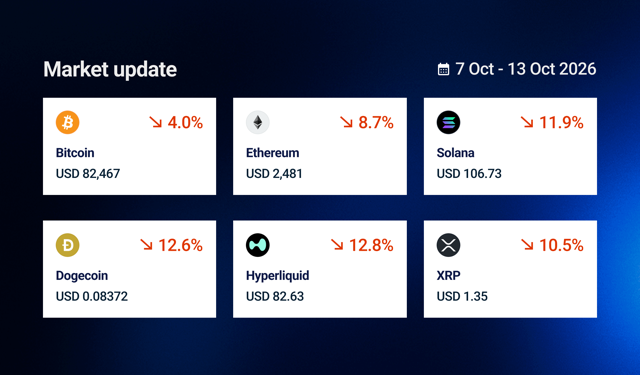
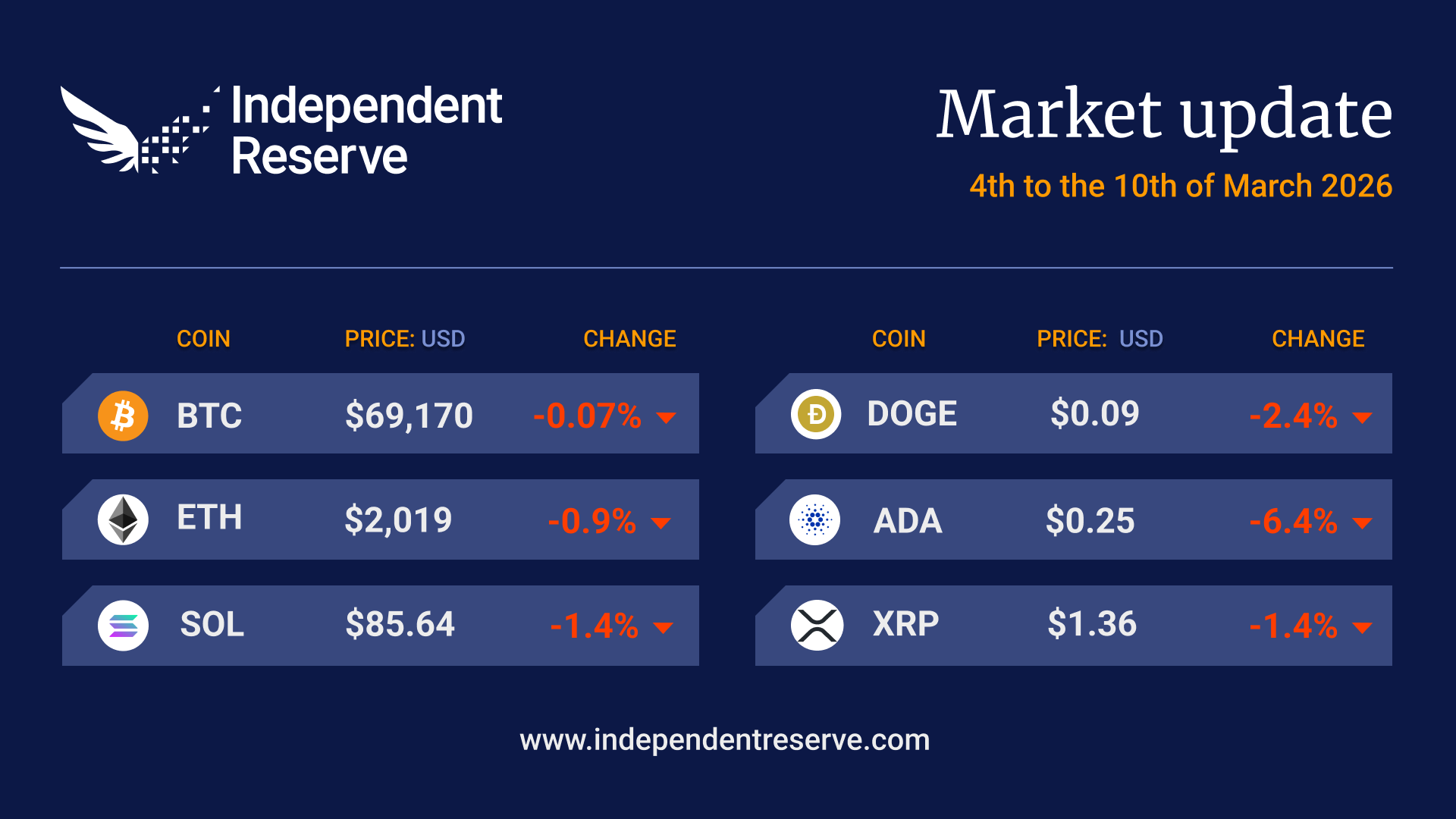
Bitcoin attempted a breakout above A$104K (US$74K) mid last week, but it didn’t hold. After all the drama, Bitcoin finishes the week pretty much where it began – around A$97,820 (US$69.1K). ETH fell by 1% to trade around A$2,856 (US$2,019). XRP lost 1.4%, Solana (-1.4%), Dogecoin (-2.4%) and Cardano (-6.4%). Strategy bought another 17,994 Bitcoin for A$1.8B (US$1.28B), in the largest acquisition since January, and the Crypto Fear and Greed Index is at 13, or Extreme Fear.
From the OTC desk
Corporate Bitcoin treasuries: Volatility amid geopolitical tensions
Digital asset treasury firms continue to influence cryptocurrency volatility in both directions. In late February 2026, Nasdaq-listed GD Culture Group (GDC) received approval to sell portions of its 7,500 Bitcoin holdings (worth roughly US$500 million) to fund a US$100 million share repurchase program. This rare sell-off sparked concern among traders due to potential downward pressure, in contrast to the typical accumulation trend. Meanwhile, Strategy (formerly MicroStrategy), the largest corporate Bitcoin holder, kept buying aggressively. Recent purchases included about 17,994 BTC for US$1.28 billion (average ~US$70,946 per coin), pushing its total to around 738,000–739,000 Bitcoin, with cumulative costs in the US$50 – 56 billion range.
Risk-on, risk-off
Escalating Middle East conflict has driven markets between risk-on and risk-off modes. Oil prices spiked toward or above $100 per barrel, acting as a risk-appetite gauge, while the CBOE Volatility Index(VIX) surged past 35, a level historically tied to Bitcoin market lows. Despite this, Bitcoin showed resilience, climbing above US$69,000 – US$70,000 amid equities’ relative weakness and volatility. This strength has affirmed trading perceptions that Bitcoin may serve as a safe-haven asset in uncertain times, with market participants choosing to derisk and convert assets into BTC.
OTC desk activity
- Mostly sell flows observed early last week, but starting to see buying resume in spot
- Starting to see a shift from off-ramps to on-ramps, and Tether is now trading at a premium instead of a discount
Key Economic Calendar Events (AEDT)
- Wednesday, Mar 11 2026 – 11:30 PM – US Core Inflation Rate YoY Feb (Consensus 2.5%)
- Friday, Mar 13 2026 – 01:30 PM – SG Unemployment Rate Final Q4 (Consensus 2.0%)
- Friday, Mar 13 2026 – 09:00 PM – EA Industrial Production MoM Jan (Consensus 0.5%)
- Friday, Mar 13 2026 – 11:30 PM – US GDP Growth Rate QoQ 2nd Est Q4 (Consensus 1.4%).
- Monday, Mar 16 2026 – 01:00 PM – CN Industrial Production YoY Jan-Feb (Consensus 5.0%).
- Monday, Mar 16 2026 – 01:00 PM – CN Retail Sales YoY Jan-Feb (Consensus 1.1%).
In headlines
Trump takes a swing at banks
Trump took time out of his busy schedule fighting a war to take a crack at the “unacceptable” behaviour of US banks in delaying the crypto market structure bill, the Clarity Act. In a post on Truth Social, Trump said that bankers are trying to undermine the already-passed GENIUS stablecoin act, and are holding the Clarity Act “hostage” over their opposition to stablecoin yield payouts. “The U.S. needs to get Market Structure done, ASAP. Americans should earn more money on their money,” he said in the post. “The Banks are hitting record profits, and we are not going to allow them to undermine our powerful Crypto Agenda that will end up going to China, and other Countries if we don’t get the Clarity Act taken care of.” The Senate Banking Committee has yet to reschedule markup on the bill.
20 million Bitcoin mined
There are only 1 million Bitcoin left to mine, after the supply crossed 20 million overnight. Owing to the four-year halving of the block reward, the final 1 million Bitcoin will take another 114 years to mine. Critics claim that unless Bitcoin’s price continues to double every 4 years, security may be compromised because transaction fees aren’t enough to cover the network’s operating costs. However, that analysis is hotly debated.

First crypto firm gets a Fed Master Account
US exchange Kraken has secured a “skinny” Federal Reserve Master Account, giving it access to the central bank’s payment rails. It’s the first crypto firm ever to do so, and gives the exchange the ability to hold reserves and settle in central bank money. The “skinny” moniker, however, means it can’t lend, access the Fed’s discount window or act like a traditional bank. Even so, it’s a significant turning point and means the Fed no longer considers the anti-money laundering and compliance practices in the crypto industry too risky for the traditional banking industry.
CFTC to clear the way for perps in US
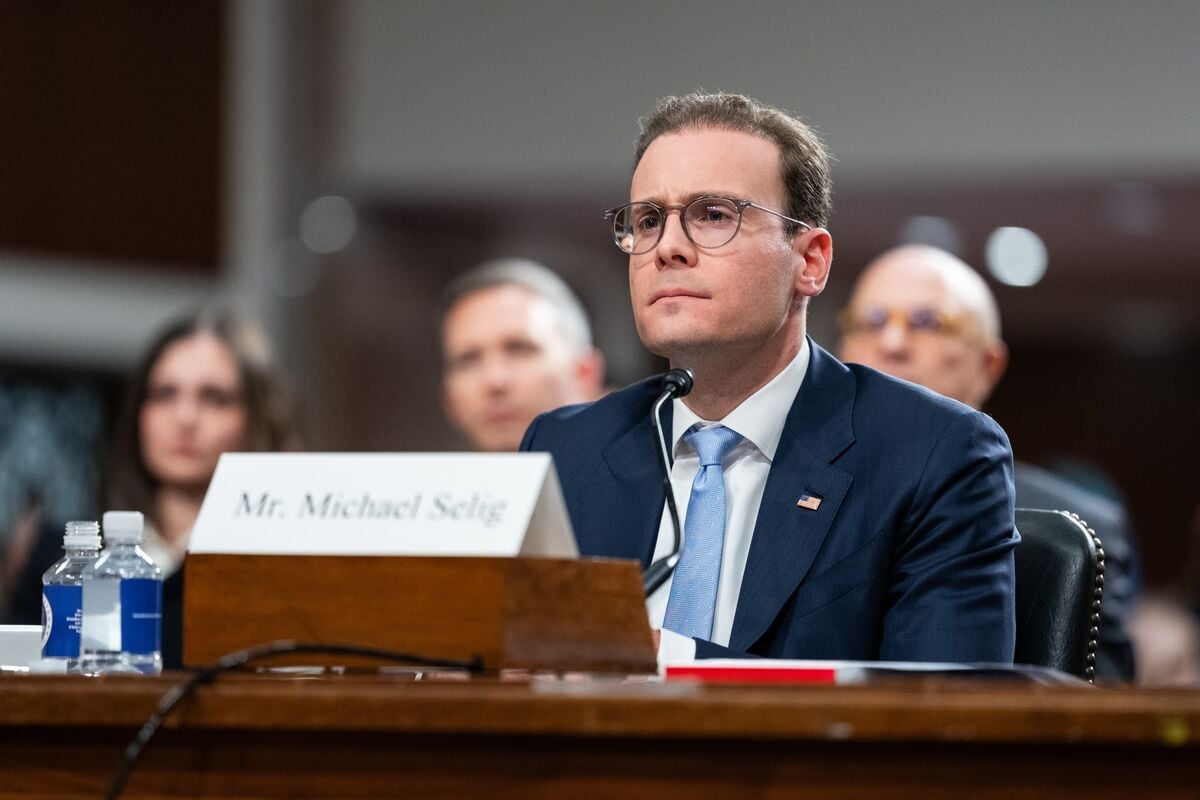
The Commodity Futures Trading Commission Chairman Mike Selig said the agency is close to unveiling new policies that would allow crypto-perpetual futures products in the US. Perps have largely developed outside of the US due to a lack of regulatory guidelines, but Selig said the CFTC is “working towards getting professional futures, true professional futures here in the U.S. within the next month or so. We expect to announce that very soon. The prior administration drove a lot of these firms and the liquidity offshore.” The CFTC also plans to serve as the lead regulator for prediction markets such as Polymarket and Kalshi. Polymarket has been blocked at the ISP level in Australia since August 2025.
Asia crypto news
South Korea’s ruling party and financial regulators have proposed capping shareholders of major exchanges to a maximum holding of 20%. The rule targets ownership concentration in local crypto trading platforms. The Beijing Academy of Blockchain and Edge Computing has reportedly designed a chip that can increase blockchain performance by 50%, but the People’s Bank of China is still warning its crackdown on crypto is ongoing. Following Facebook and X’s similar announcements, Asian messaging platform LINE NEXT has launched Unifi stablecoin wallet payments for its hundreds of millions of users.
Florida passes stablecoin rules
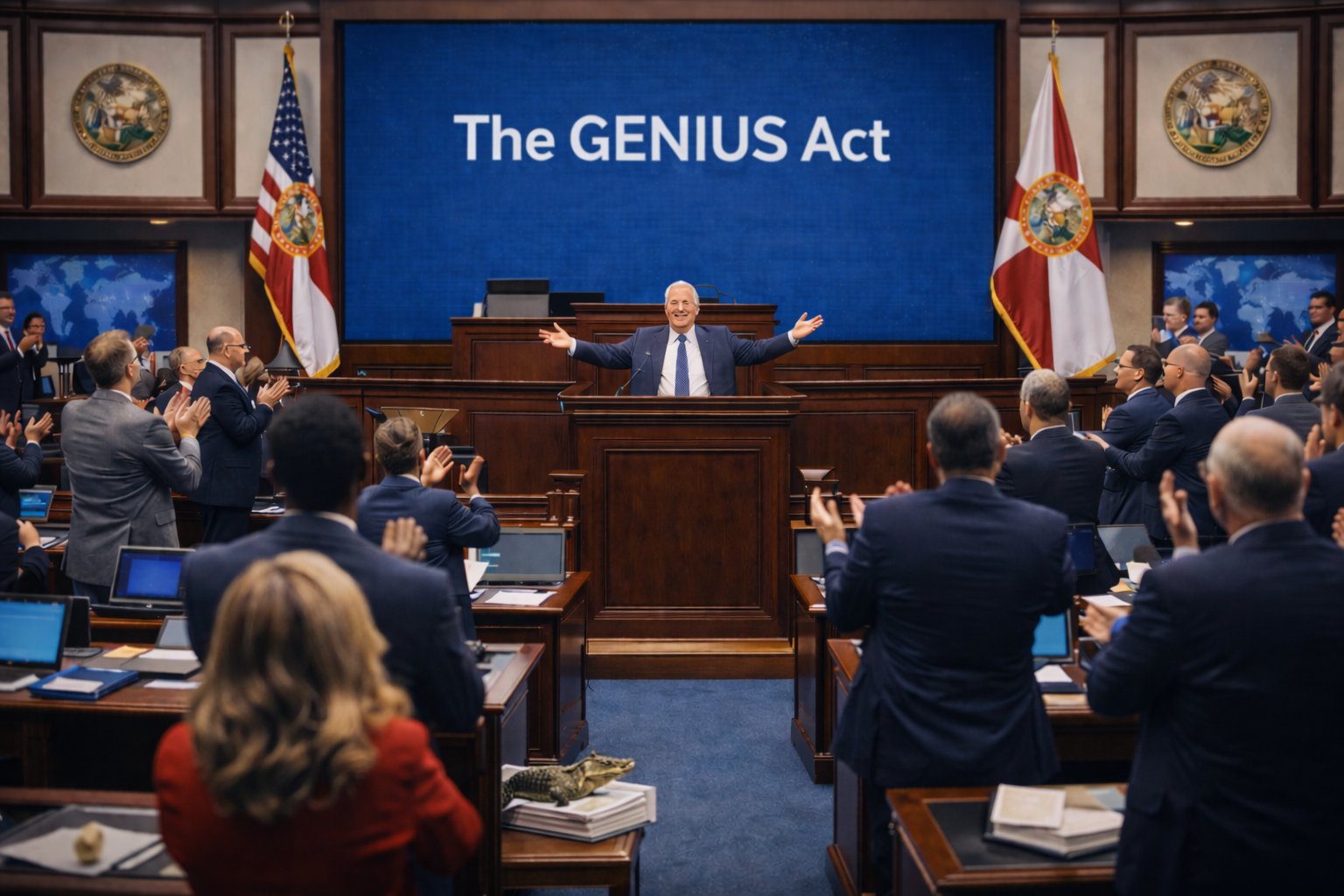
The US state of Florida has passed a stablecoin regulatory framework that classifies the tokens as non-securities and requires issuers to maintain 1:1 cash or Treasury reserves. Issuers exceeding US$10 billion (A$14.1B) must shift to federal oversight under the GENIUS Act, coming into force this year. The bill passed the legislature unanimously.
Why did gold surge and Bitcoin tank?
According to Chris Tipper, Ainslie Group chief economist, there’s a simple reason global liquidity is up, and gold soared in recent months, while Bitcoin fell 50%. He says it’s because global liquidity is being driven higher primarily by PBoC injections, which added a trillion in 2025, and likely another trillion this year. But Chinese liquidity doesn’t flow into Bitcoin, due to trading bans there, and instead “flows into gold reserves, domestic infrastructure, and the real economy.” He adds that things could change when “western liquidity momentum re-accelerates.’
Quantum computer under construction
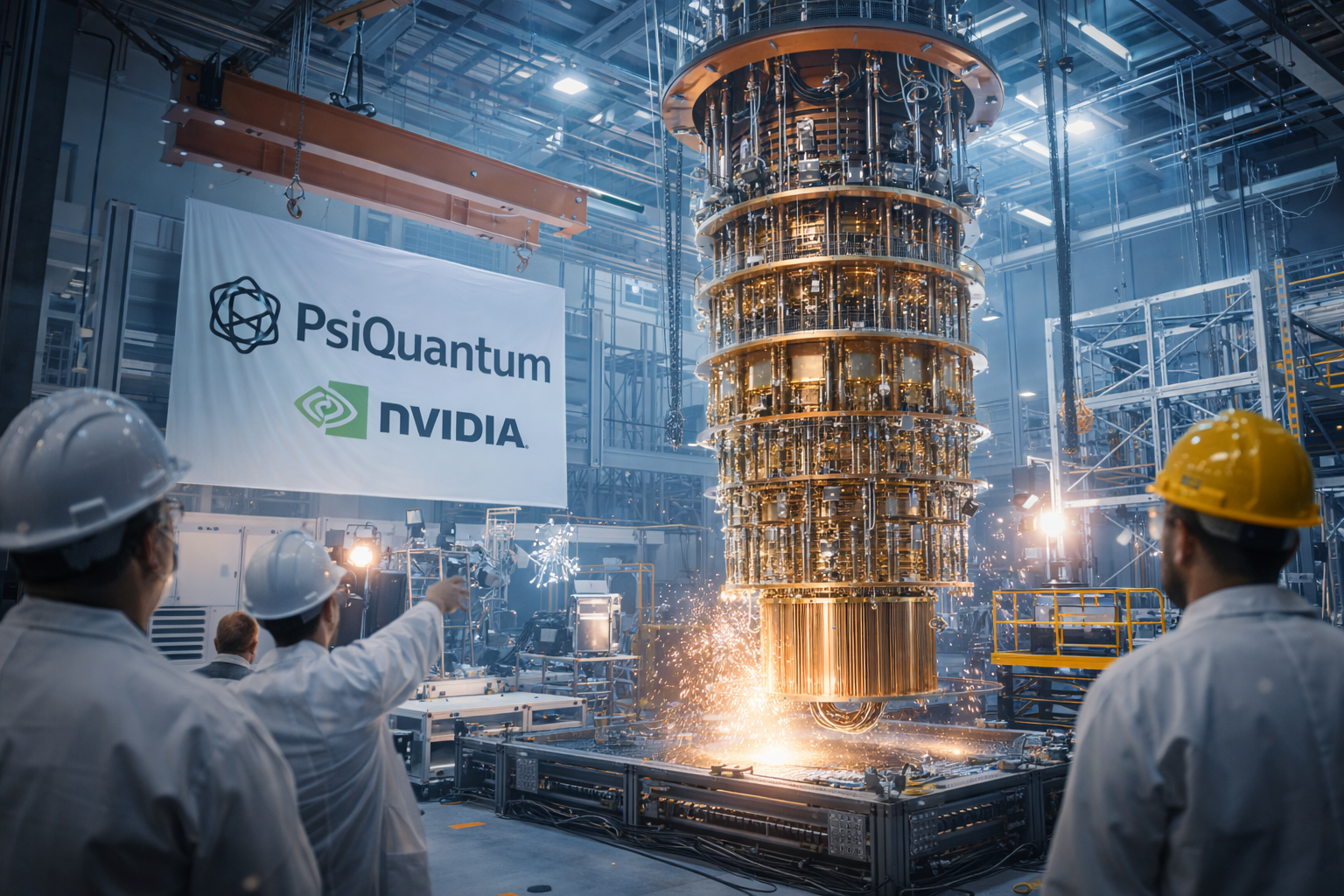
Many Bitcoiners believe the threat from quantum computers is at least a decade away. But this week, PsiQuantum began construction of a 1-million-qubit facility in Chicago, in partnership with Nvidia. The firm raised US$1 billion (A$1.4B) back in September at a $7 billion valuation from funds associated with BlackRock. To put the as-yet-unproven facility into perspective, the number of qubits estimated to break RSA encryption recently fell to just 100,000. Fortunately, PsiQuantum co-founder Terry Rudolph has said the firm has “no plans” to attack Bitcoin. “You can’t hide this stuff as well; it’s a company of hundreds of people.”
Nasdaq wants tokenised stocks on decentralised markets
Nasdaq, the world’s second-largest stock exchange, has announced a partnership with xStocks-issuer Backed and Kraken to allow tokenised equities to move seamlessly between regulated markets and global on-chain markets. Nasdaq expects the program to be operational starting in the first half of 2027. “This issuer‑sponsored approach for tokenised equity securities is designed to empower public companies and enhance global accessibility to US equity markets,” Nasdaq president Tal Cohen said.
The Moonshot Dispatch
Join us every Tuesday at 3 pm (AEDT) as we cover the latest crypto news, price movements and all the Bitcoin banter you may have missed. Tune in weekly on Twitter/X, YouTube, & TikTok.
Until next week, happy trading!