The 2026 edition of the Independent Reserve Cryptocurrency Index (IRCI) yielded interesting insights into cryptocurrency awareness in Singapore: general awareness remains high, with 86% of respondents familiar with at least one cryptocurrency.
While engaged segments like the sandwich class continue to show strong awareness, this represents an 8 percentage-point decline from 2025, though it may not necessarily be negative.
Crypto shifts to institutions
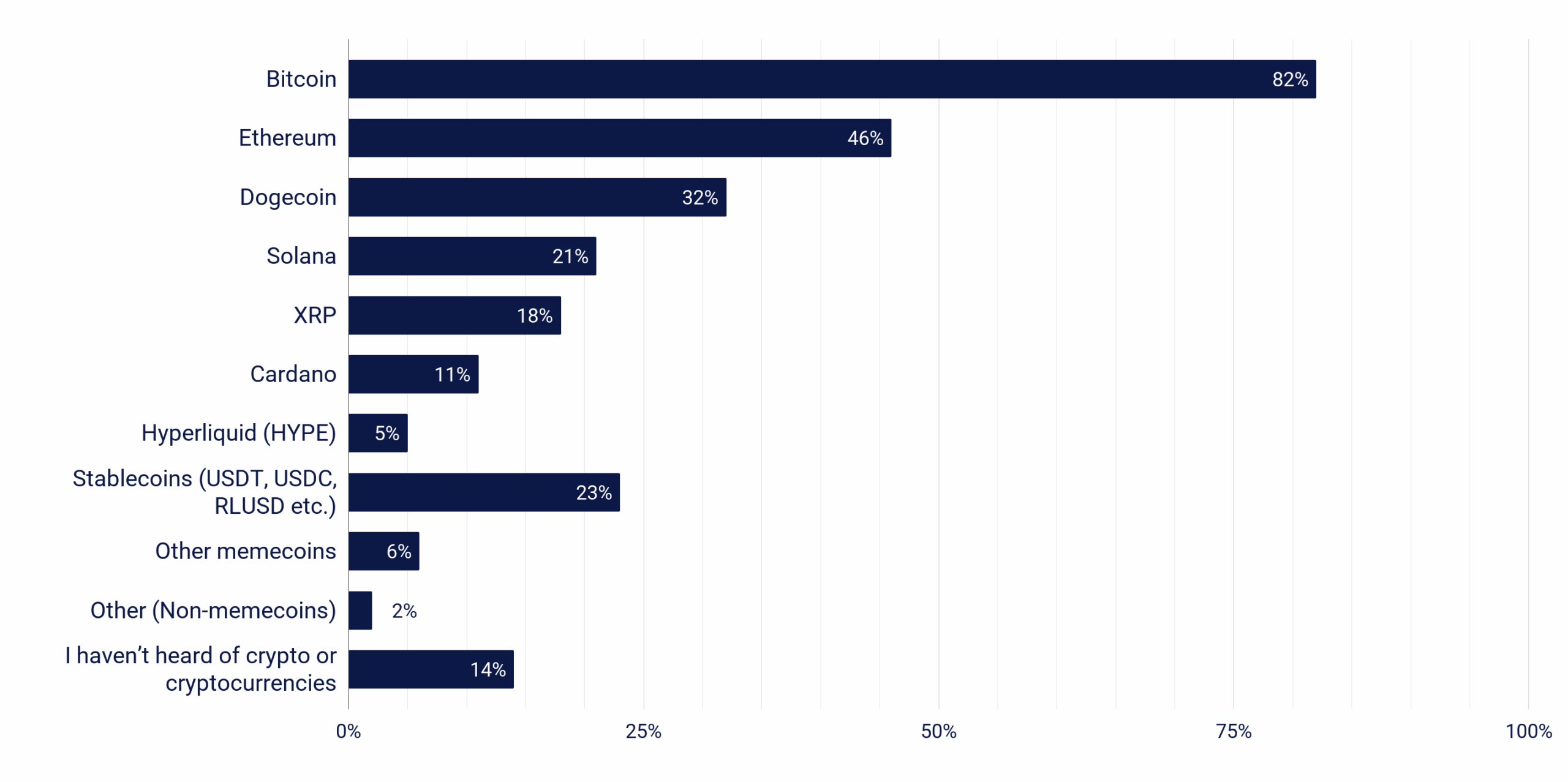
The overall dip may reflect a maturing industry, with institutional participation growing and narratives becoming more measured and less retail-driven. Bitcoin remains the most recognised cryptocurrency, with 82% awareness overall, while Ethereum also sees strong traction in this segment, with 52% awareness.
In contrast, memecoins appear to be losing momentum. Overall, Dogecoin awareness has fallen by 9pp, while other memecoins declined by 1pp, reinforcing signs of a maturing market.
Most known cryptocurrencies in Singapore
Unintended effects
Stricter controls on crypto advertising, introduced to better protect less financially literate investors, may also be contributing to a decline in overall awareness. Yet, this segment continues to engage: approximately 89% of the Gen Z (18 – 24 years old) have heard of cryptocurrency, and 36% have held crypto at some point.
Crypto awareness among Singaporeans across different ages
Undeniable effect
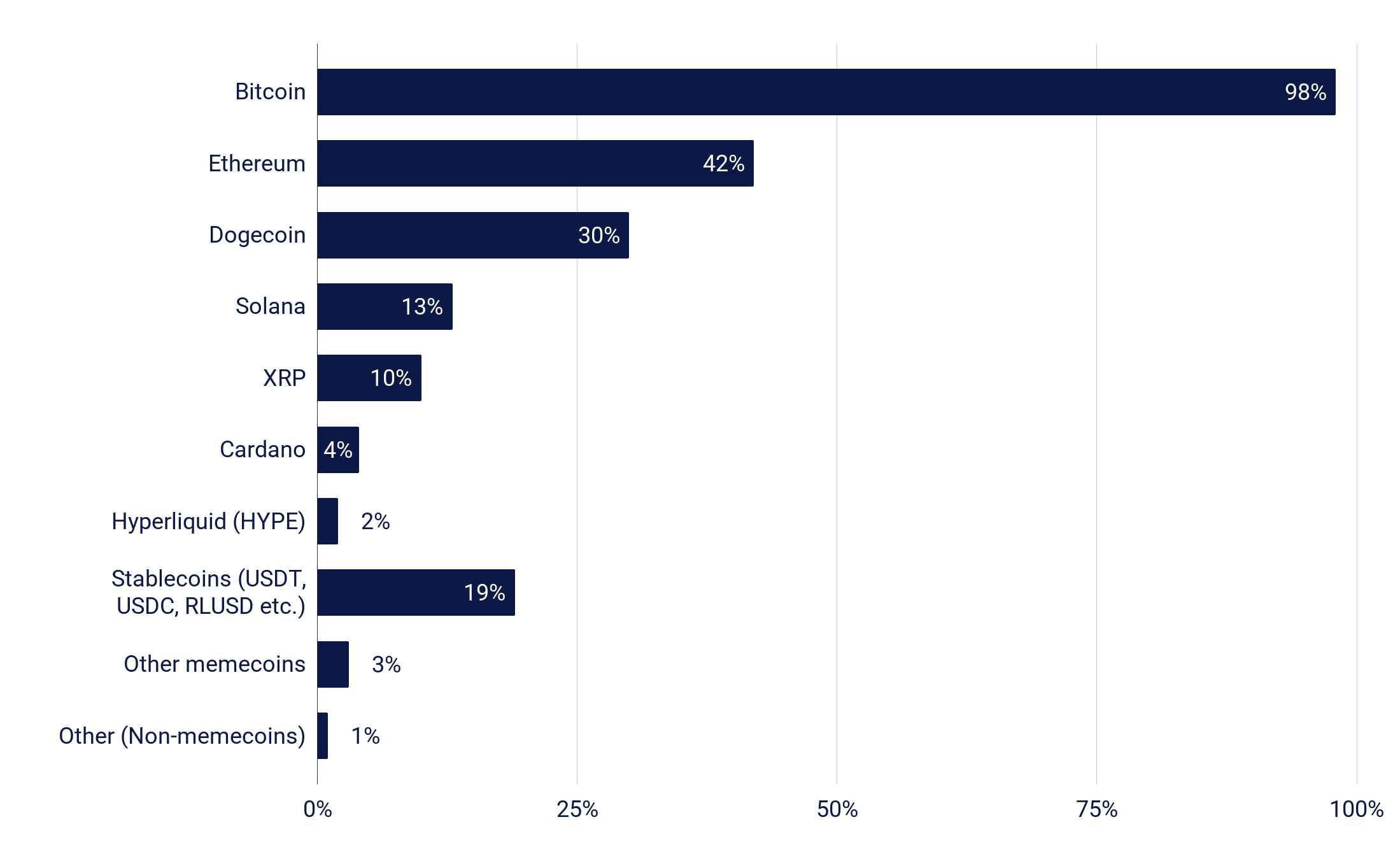
Crypto’s ubiquity is clear, even among non-investors. The report found that non-investors are the most aware of Bitcoin, with 98% awareness, followed by Ethereum at 42%, Dogecoin at 30%, and stablecoins at 19%.
Unsurprisingly, their likeliness to recommend crypto to others is low, with 90% saying they would not, 14 percentage points higher than the general population. They are also sceptical about its future, with only 17% believing crypto will become widely accepted by businesses and everyday people.
Which cryptocurrencies are non-investors most aware of
Preferences across the segments
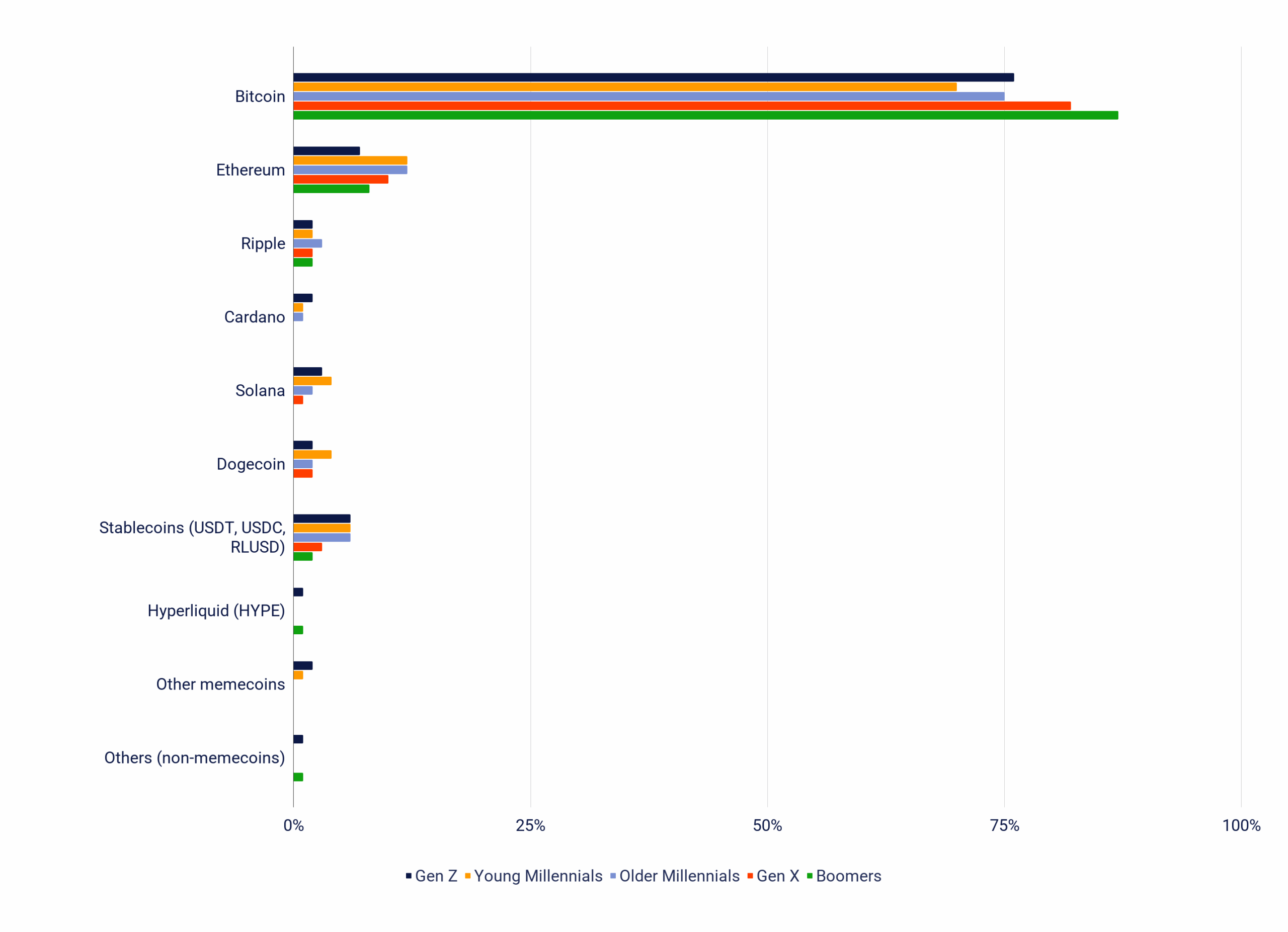
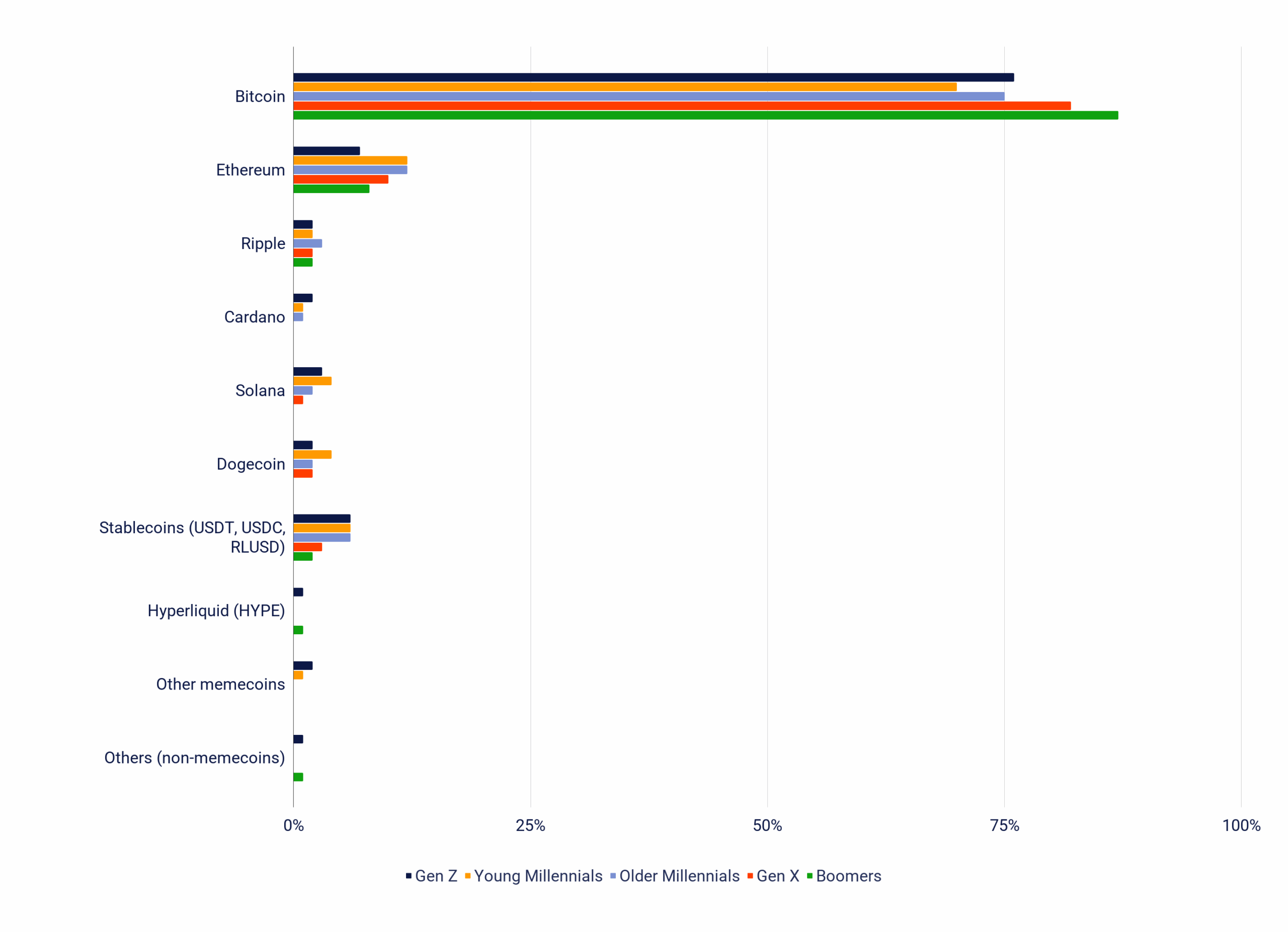
Perhaps the best divider for crypto preferences is age, with the survey revealing just how differently each cohorts engage with the asset class.
Diversification peaks among Young Millennials (25 – 34 years old), indicating the lowest reliance on Bitcoin and the strongest engagement with alternative cryptocurrencies. This group has the highest level of familiarity and comfort navigating different crypto assets.
Among the older segments, preferences begin to consolidate. Bitcoin’s dominance increases steadily, rising to 82% among Gen X (45–54 year olds) and reaching 87% among Boomers 55+ years old). At the same time, interest in altcoins declines, with minimal engagement beyond the most established assets.
Crypto preferences across age groups
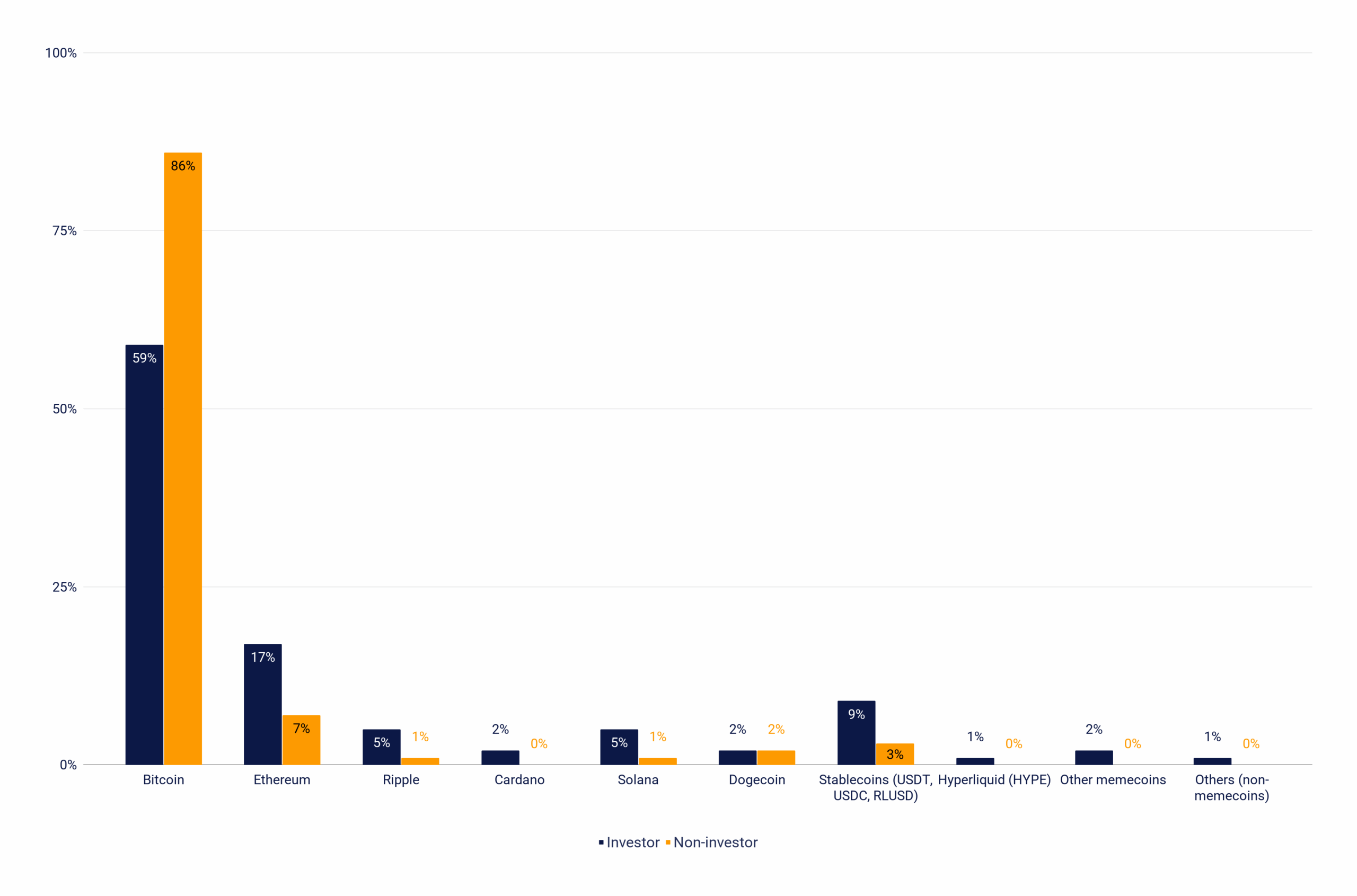
Crypto investors and non-investors also show major differences in their crypto interest. Investors show a balanced interest across assets, with 59% preferring Bitcoin, followed by Ethereum (17%), stablecoins (9%), and smaller shares in XRP and SOL (5%). In contrast, non-investors are heavily interested in Bitcoin (86%), with limited interest in Ethereum (7%) and virtually no engagement with altcoins.
Crypto preferences across investors and non-investors